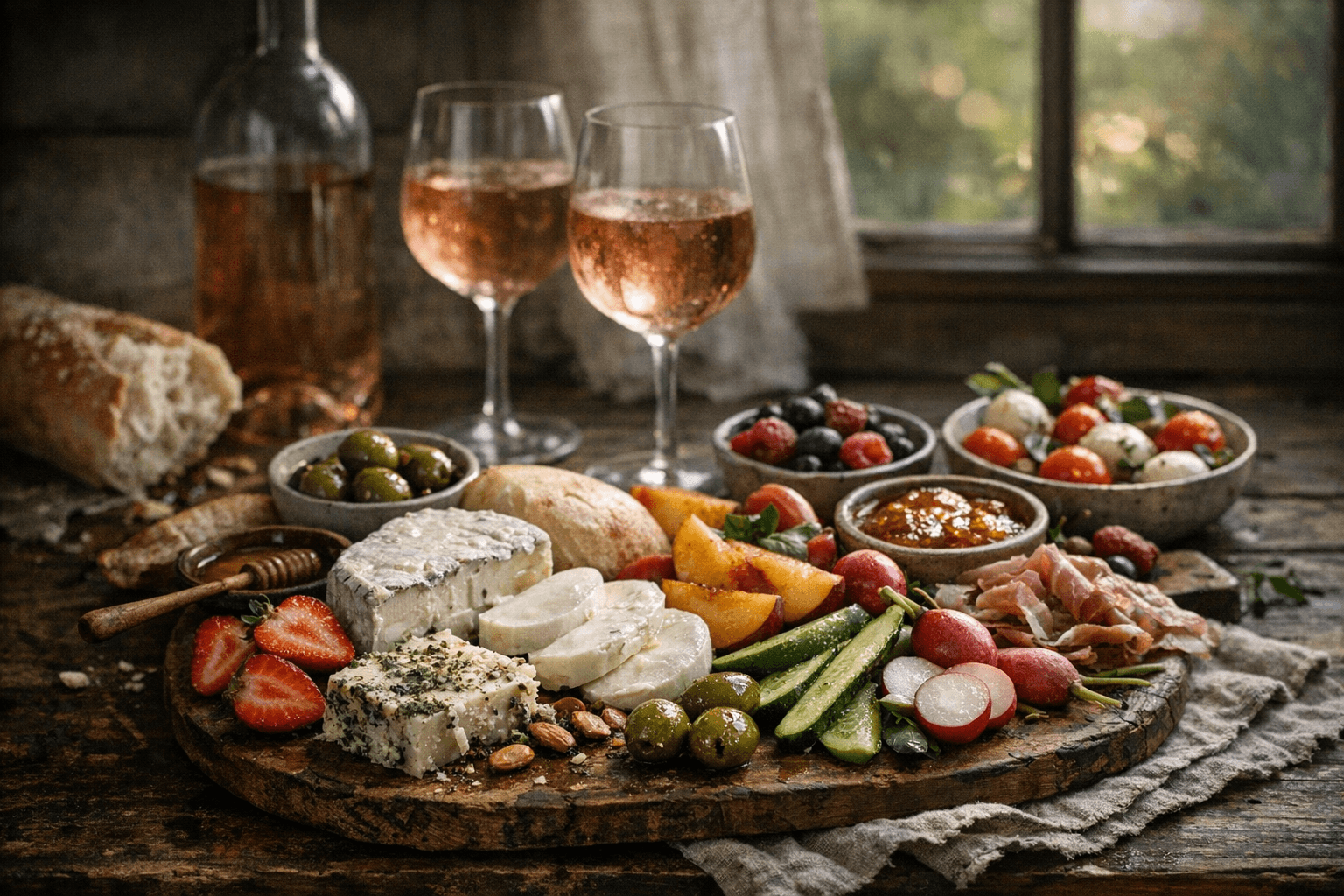
Hosting a wine and cheese dinner party is not complicated. The industry will try to convince you otherwise, because complicated sells courses. Here is what actually works.
Somewhere between the third pairing chart and the second tasting-notes worksheet, the wine and cheese dinner party stopped being fun and became a seminar. This is entirely the fault of the hospitality-content complex, which has a vested interest in making you feel underprepared so that you will purchase a $49 online course about fromage accompaniment. The truth — and this has been verified across multiple field studies conducted in actual dining rooms — is that a wine and cheese dinner party has exactly two requirements: wine and cheese. Everything else is logistics, and logistics can be managed without a certificate.
The Pairing Question, Answered Once and Then Set Aside
Wine and cheese pairing is a real sensory science subject, which is both reassuring and mildly absurd. Researchers at George Brown College ran a 248-participant study to test perceived wine-and-food matches across a spectrum from novice to expert. A separate Dijon study used 60 consumers, three wines, and three cheeses to measure pairing effects with something called temporal dominance of sensations, which sounds like a post-apocalyptic novel but is actually a rigorous methodology. The consistent finding across this body of work — which also includes a 54-person Australian Shiraz study and a Swedish cheese-pairing test with between 36 and 59 participants, depending on the wine style — is that pairing preferences exist, are measurable, and also vary meaningfully by taster.
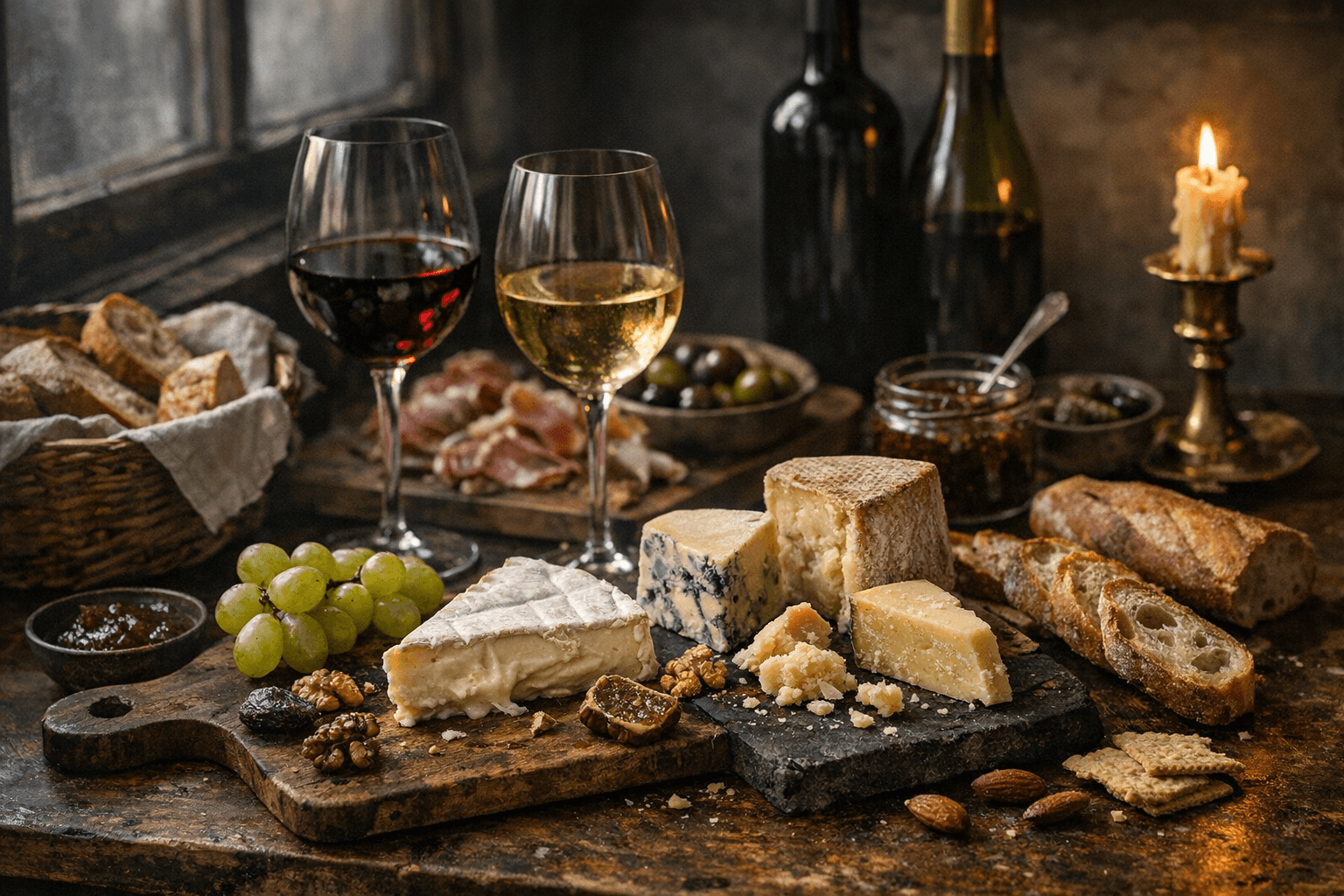
What this means practically: your cheese board is not a clinical trial. The principles that hold up across most of the research are textural and intensity-based rather than mystical. Fat in cheese softens tannins in red wine, which is why a young Cabernet and an aged manchego do not fight each other. Acid in wine cuts through richness, which is why a crisp white alongside a triple-crème brie is not a coincidence. Salt amplifies both. Build from those three rules and the rest is preference, which is to say the rest is up to your guests and not a pairing chart on the internet.
The Progression: Light to Heavy, Not Chaos to Regret
The structure of a well-run wine and cheese dinner party is borrowed from the same logic as a tasting menu: you begin with restraint and work toward richness. This is not so the host can demonstrate sophistication. It is so that no one's palate is obliterated by a smoky gouda in the first fifteen minutes, leaving the remaining hour and a half without useful sensory information. Start with something sparkling or crisp — a Champagne, a Chablis, a Crémant if you are being practical about the budget — paired with younger, fresher cheeses. A chèvre, a young comté, a ricotta salata. This is the opening act, and its job is to wake people up rather than slow them down.
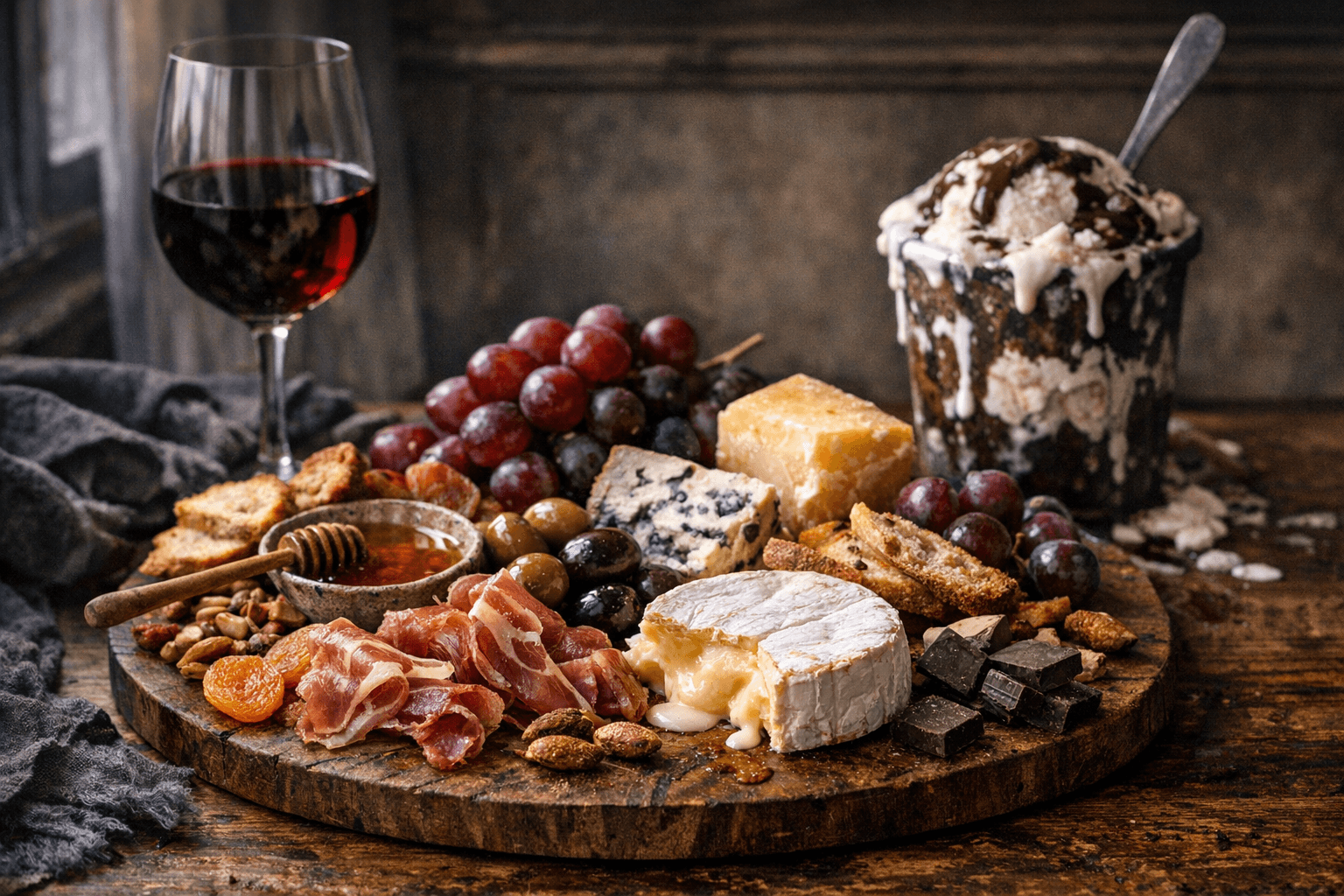
From there, move toward medium-bodied reds and aged cheeses. A Pinot Noir alongside a gruyère or an aged gouda is not experimental — it is a reliable middle chapter. France produces roughly 1.5 million tons of cow's-milk cheese annually through October, and Italy produces just over a million tons in the same period, which means neither country is running short of options for this portion of the evening. The final pairing, if you choose to go there, is where you earn your reputation: a fortified wine, a late-harvest Riesling, or something with real intensity alongside a blue cheese or a washed-rind that the more cautious guests were eyeing nervously from across the board. This is the Protocol's closing argument, and it should feel conclusive.
Portions, Timing, and the Hospitality Variables No One Talks About
The standard recommendation for a cheese board is roughly two to three ounces of cheese per person per pairing round, which nobody follows and which nobody should feel guilty about adjusting. What actually governs portion size is how many rounds you are running and whether the cheese course is the meal or a prelude to one. If wine and cheese is the main event, scale up and plan for three to four cheeses with three wines over ninety minutes. If it is a prelude to dinner, scale down and do not let a generous brie situation ruin your guests for whatever comes next.
Timing is less about precision and more about reading the room — a skill that no amount of hosting content can replace, but which can be approximated by a simple rule: pour the next wine when the conversation has settled into a groove with the current one. The mistake most hosts make is moving too quickly, which turns a dinner party into a tasting flight and a tasting flight into a pace that feels more like a deposition than an evening. The other mistake is forgetting that bread, fruit, and a small amount of charcuterie exist to give guests somewhere to put their attention between sips and bites. These are palate reset tools, not decorative elements. Treat them accordingly.
One note on the health-halo framing that tends to surround these evenings: some observational studies have found associations between moderate wine consumption and certain cardiovascular markers, and the wellness industry has been dining out on those associations for years. The clinically honest version is more cautious — the evidence is observational, the populations studied are specific, and none of it justifies wine as a health intervention. What it does justify, at least within the parameters of this publication, is a reasonable glass of Burgundy without a side of guilt. The enjoyment is its own argument.
The wine and cheese dinner party does not require a theme, a certified sommelier, or a monologue about the winemaker's relationship with the terroir. It requires good cheese, wine that complements rather than competes, a progression that respects your guests' palates, and enough bread to keep things grounded. France has been producing cheese at an industrial scale for centuries without needing a hosting guide, and the underlying principle has not changed: bring things that taste good, put them near each other, and let people enjoy themselves. The Protocol is that simple, and anyone who tells you otherwise is selling a course.
* This article contains opinions, satire, and possibly correct information about wine and cheese. It is not medical advice.