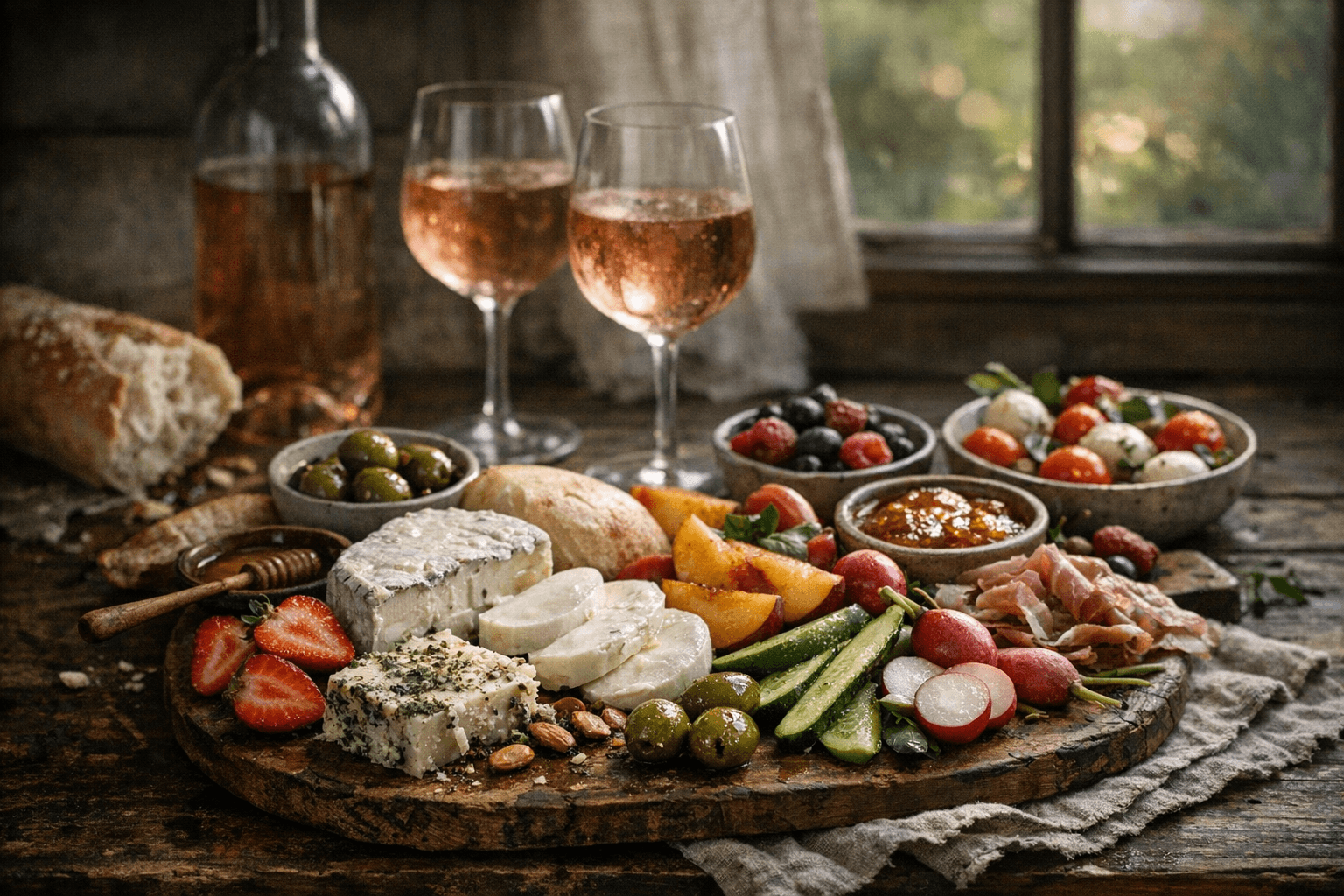
A clinically unverified but structurally sound case for cheese as emotional infrastructure. Ice cream is a slump. A board is a decision.
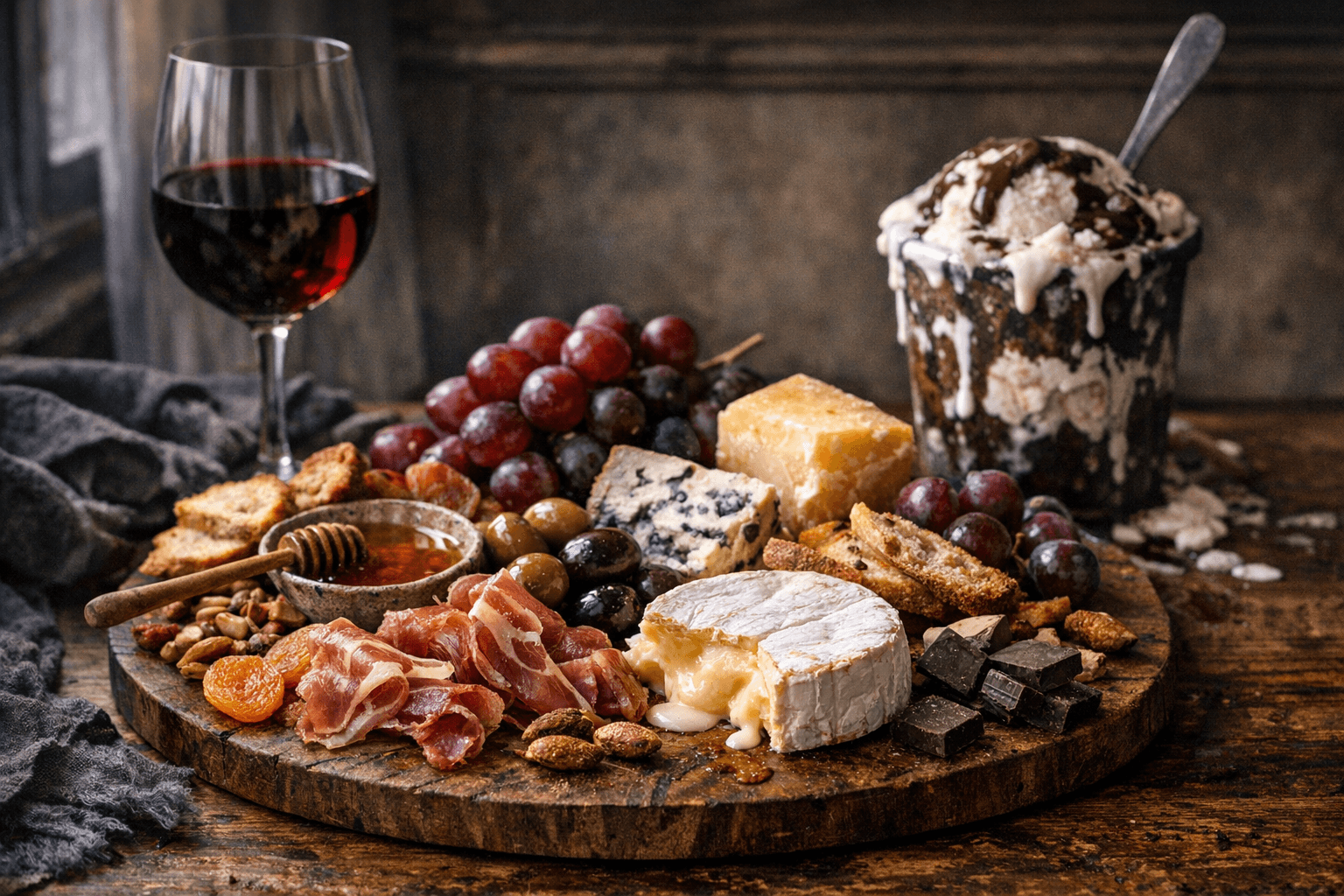
Somewhere between the third text you didn't send and the moment you opened the freezer, a decision was made. The pint of ice cream looked reliable. Familiar. It had a cartoon on the lid. What nobody tells you — and what the $72 billion wellness industry has conspicuously failed to monetize — is that ice cream is structurally a slump, while a cheese board is structurally a plan. One requires a spoon and no witnesses. The other requires a wooden surface, some deliberate selection, and the faint suggestion that you are a person who has things together. The Protocol does not tell you what to feel. It tells you what to arrange.
The Science, Such As It Is
Cheese contains casein, the dominant milk protein, and casein — when digested — can yield bioactive peptides including a class called β-casomorphins. These are opioid-like peptides, meaning they bind to opioid receptors in the body. They are not narcotics. That distinction matters, legally and editorially. Peer-reviewed literature describes β-casomorphins as opioid receptor ligands and notes their presence across multiple cheese varieties, with Gorgonzola appearing in at least one dataset with the highest total β-casomorphin level among cheeses sampled. Brie shows up in several peptide surveys with measurable β-casomorphin-7, though the reported values vary so wildly between studies — from 0.15 μg/g to 15 μg/g — that the main takeaway is that cheese chemistry is complicated and anyone selling you a simple answer is probably also selling a supplement.
Tryptophan is also present in cheese, and this is where the wellness industry tends to sprint ahead of the data. What the 2024 literature actually documents is tryptamine — a neuroactive compound formed when lactic acid bacteria convert tryptophan through a process called decarboxylation. A study of 300 cheese samples representing 201 varieties found tryptamine in 16 percent of them, at levels ranging from 3.20 mg/kg to over 3,000 mg/kg, with 4.7 percent of samples above thresholds described as potentially toxic. The correct response to this information is not panic. It is calibration. Cheese contains interesting chemistry. Interesting chemistry is not the same as a prescription.
The Ice Cream Problem, Examined Without Malice
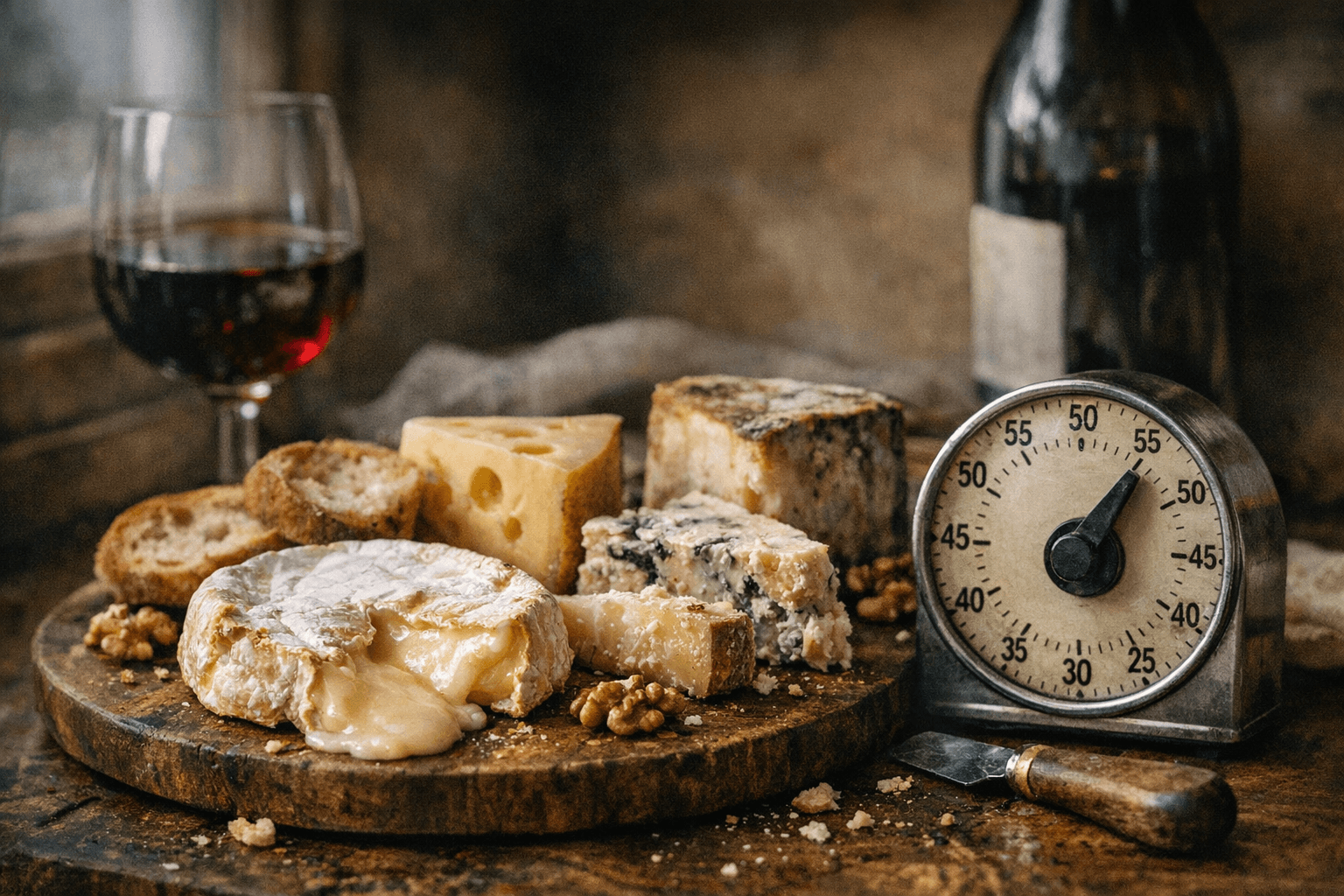
The comfort food case has been examined by researchers, and the results are not particularly comforting for the comfort food hypothesis. A study summarized by PBS found that comfort food did not improve mood any more than non-comfort food did. The subjects felt better over time regardless of what they ate, which suggests that time — rather than the specific macronutrient profile of a half-eaten pint — is doing most of the emotional work. The ice cream, in other words, is taking credit for the passage of forty-five minutes.
This does not mean ice cream is without merit. It means ice cream is not medication, which is also true of cheese. The difference, and this is the part The Protocol would like you to sit with, is that a cheese board requires you to be slightly upright. You have to decide between Brie and Cheddar. You have to locate a knife. These are small acts of agency, and small acts of agency are, in the field-study sense, better than none. A board is a structure. A structure implies a future.
Board Construction as Emotional Architecture
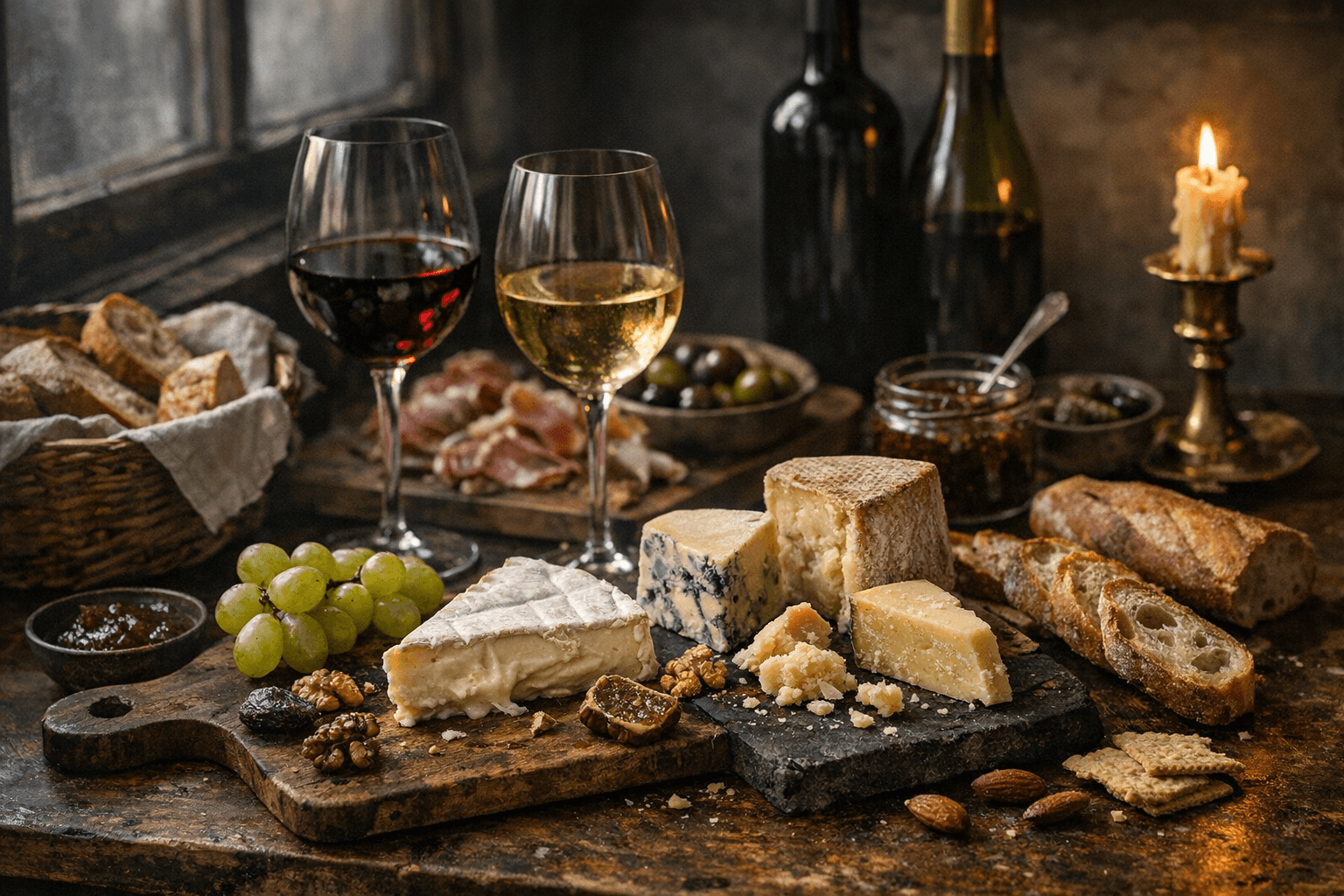
If the cheese board is to function as post-breakup infrastructure, some curatorial judgment is required. Consider the personalities involved. Brie is the dramatic one — soft, yielding, documented in multiple peptide studies, prone to overripening if left unattended, which is relatable. Gorgonzola is the complicated one — intense, a little aggressive, highest β-casomorphin readings in the relevant literature, the cheese equivalent of someone who texts at 2 a.m. with something interesting to say. Cheddar is the dependable one — BCM-7 detected at 0.11 μg/g in one analysis, present, steady, asks nothing of you. You want all three. You want the full range.
Pair with a Pinot Noir, which has enough structure to hold its own against a washed rind but enough softness not to make the evening feel adversarial. Add something honey-adjacent. Add something with crackers that have a name you cannot fully pronounce. The ritual matters not because of the opioid-like peptides, which are clinically unverified as mood interventions, but because assembly is an act of care directed at yourself. The $72 billion wellness industry would like to charge you a subscription fee for that insight. Here, it is included.
The Post-Breakup Cheese Board Protocol℞ carries no clinical endorsements, no peer-reviewed emotional outcomes, and no guarantee of results beyond the immediate sensory ones. What it offers instead is this: cheese has more interesting biochemistry than ice cream, a board requires more intention than a spoon, and the act of building something — even something you eat alone on a Tuesday — is not nothing. Comfort food research suggests the food itself is not doing the healing. Fine. Let the time do the healing. The cheese is just good company while you wait.
* This article contains opinions, satire, and possibly correct information about wine and cheese. It is not medical advice.