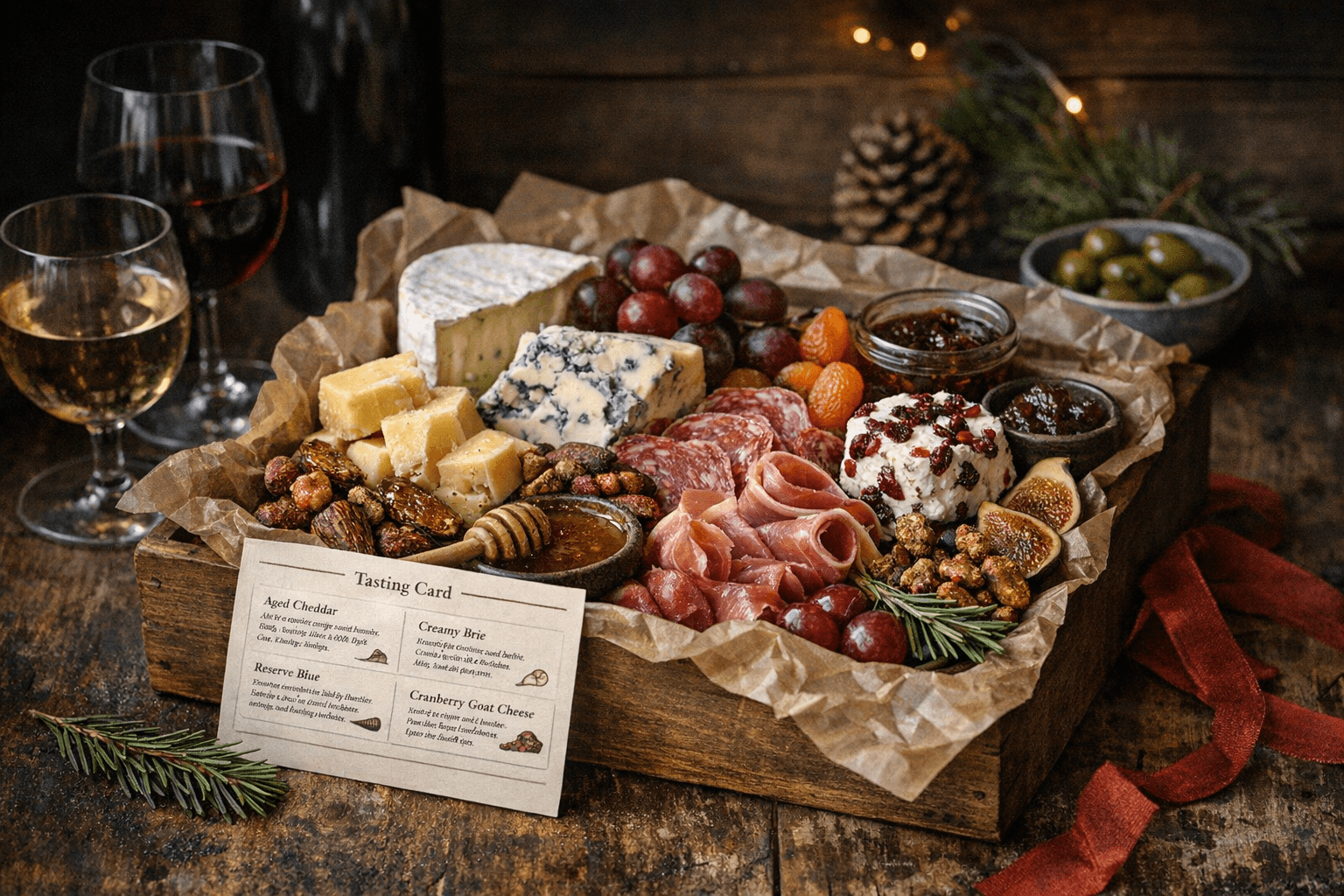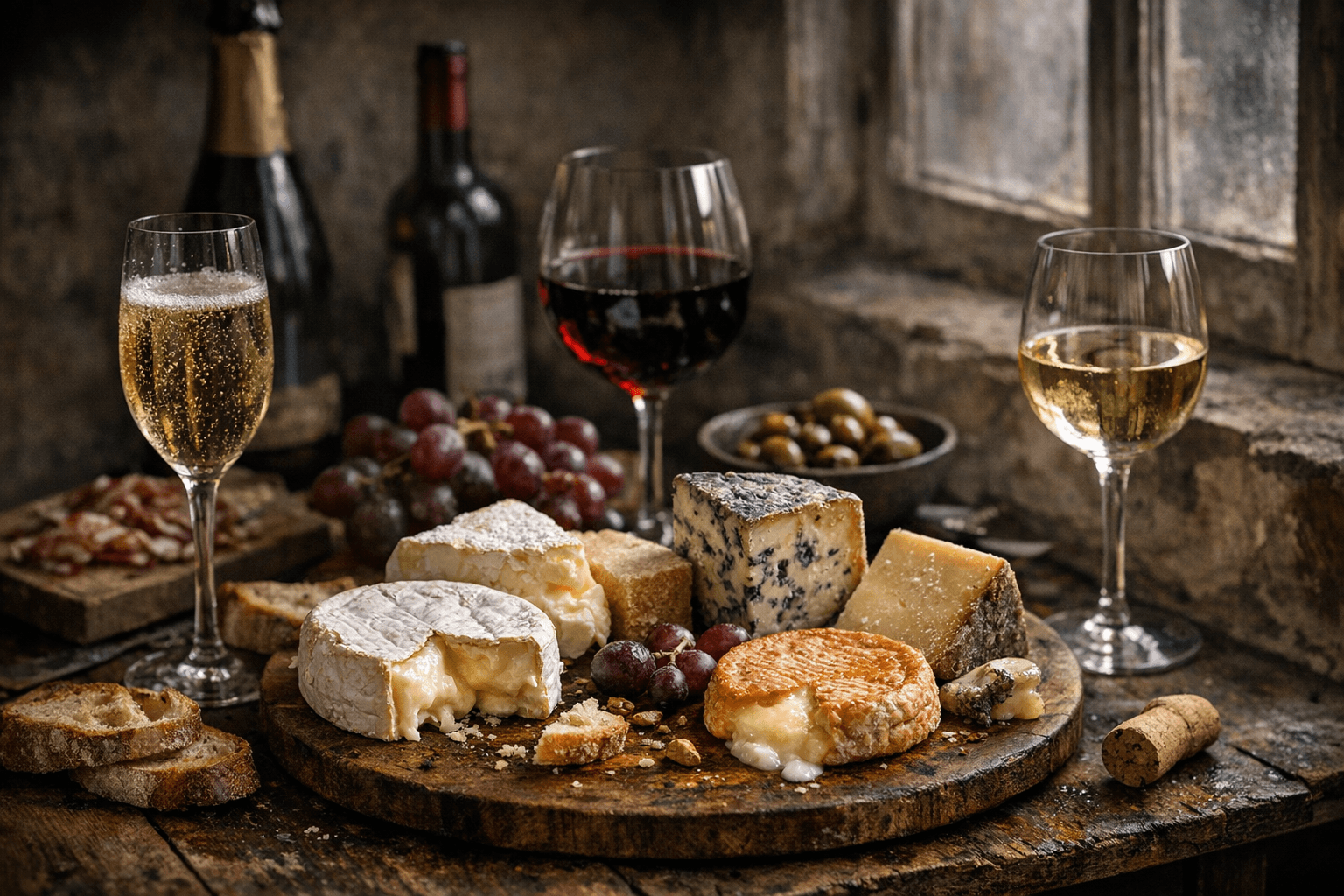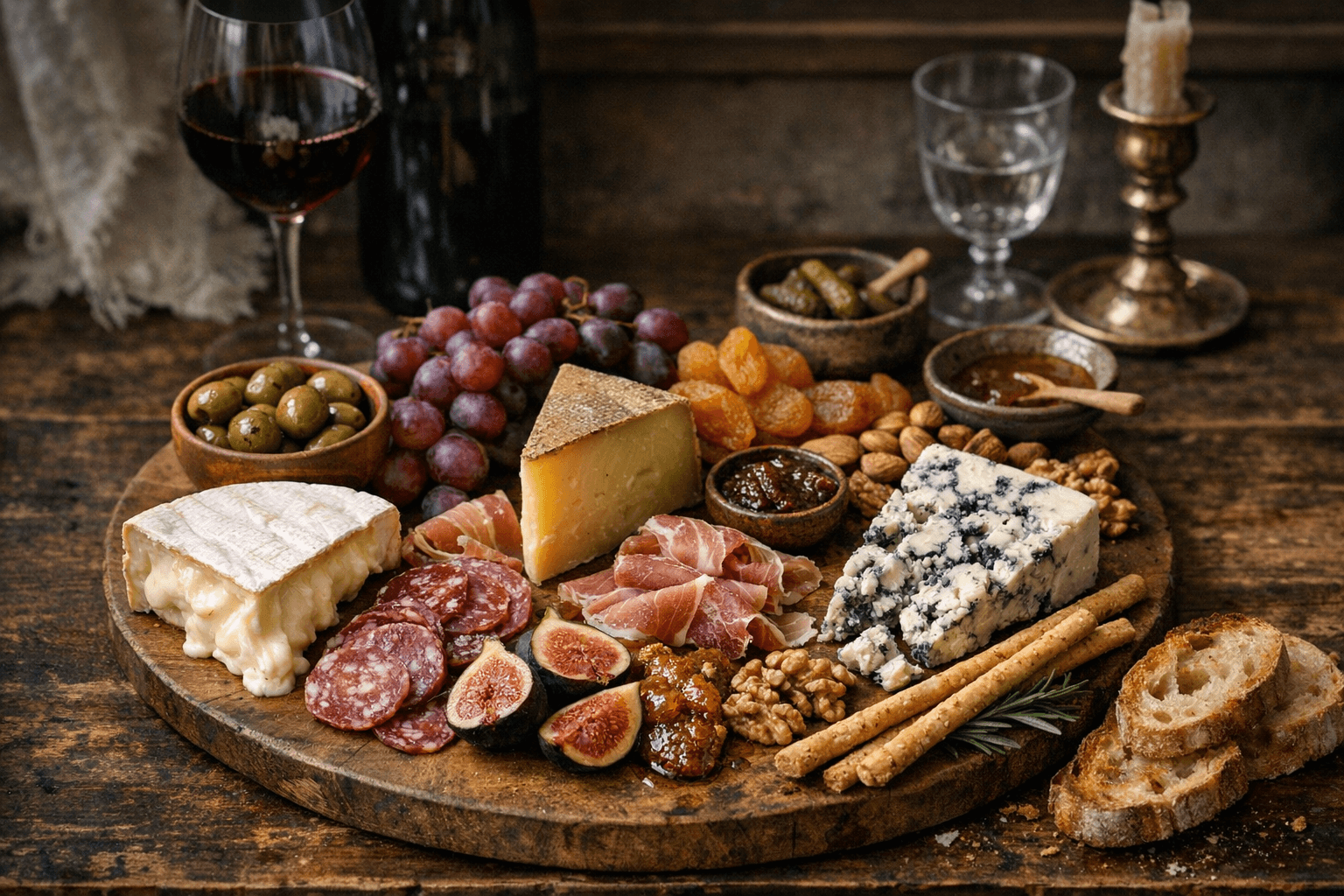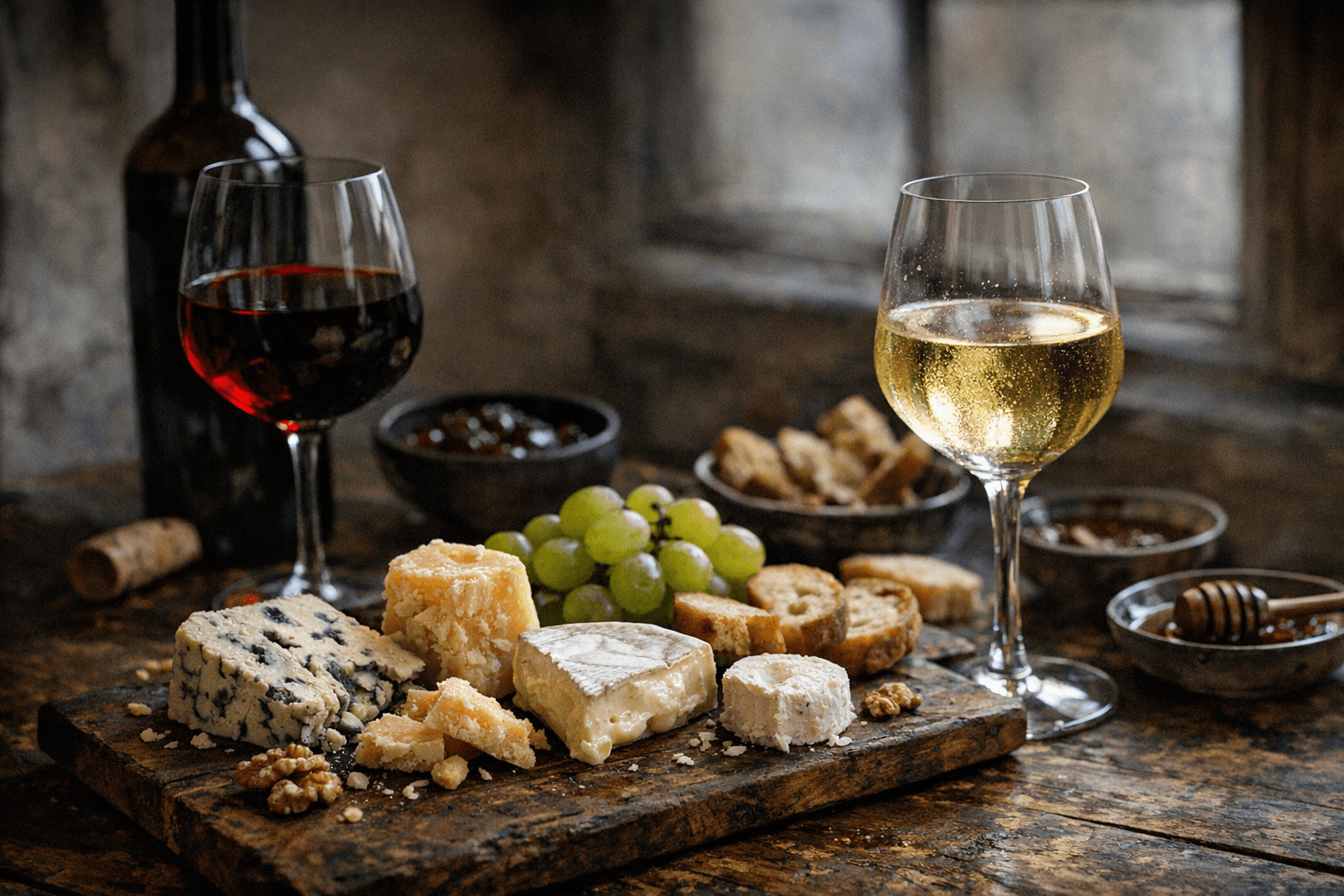
Red wine and cheese is one of the most confident assumptions in food culture, and it is wrong often enough to matter. Here is what the sensory science actually says, and why acidity beats tannin most of the time.
At some point, red wine became the official mascot of the cheese board. Nobody voted on this. It just happened, probably at a party, and now it is deeply lodged in cultural memory alongside other confident assumptions that do not fully hold up. The truth, supported by a reasonable body of sensory research, is that white wine is the more reliable partner for most cheeses. Not always — there are real exceptions — but often enough that defaulting to a Cabernet Sauvignon when you have a wedge of Pierre Robert triple-crème on the board is, structurally speaking, a mistake. The reason comes down to two things: acidity and tannin, and what each one does when it meets fat.
Why Tannin and Soft Cheese Have a Disagreement
Tannins are polyphenolic compounds found primarily in red wine — extracted from grape skins, seeds, and stems during fermentation. In sensory terms, they create astringency: that drying, gripping sensation on your tongue and gums. On its own, this is not a flaw. In a well-structured red, tannin provides architecture. The problem arrives when tannin meets a soft, creamy, or young cheese.
Soft cheeses — think Brie de Meaux, fresh chèvre, or a young Époisses — are high in fat and moisture. When high-tannin wine meets that environment, the result can amplify the astringency rather than soften it, making the wine taste thinner, more bitter, and drier than it actually is. A University of Arkansas sensory study on wine and food pairing found that higher perceived tannin directly decreased match ratings when paired with chèvre, which is about as soft and fatty as a cheese gets. Sonoma County wine education materials make the same point more plainly: soft cheeses can make red wines seem thin and overly tannic. Virginia Tech's enology guidance echoes this, noting that soft, fatty, or creamy cheeses tend to make most red wines taste dull. Three separate institutions, same conclusion.
What Acidity Actually Does at the Table
Acidity is the structural feature that makes white wine work so well with cheese, and the mechanism is straightforward. Cheese is rich, fatty, and often quite salty. Acidity cuts through that richness, refreshes the palate between bites, and resets your ability to taste both the wine and the cheese clearly. It is the sensory equivalent of a reset button, which is exactly what you want when you are eating something with the fat content of a Brillat-Savarin.
This is not folklore. Cheese-fat and wine-acidity interactions are consistently described in sensory research as real, measurable effects. A Chablis Premier Cru from Domaine William Fèvre, with its sharp, mineral-driven acidity, does not fight with the fat in a Camembert de Normandie — it organizes the experience. A Grüner Veltliner from Weingut Brundlmayer in the Kamptal does the same with an aged Gruyère. The acidity acts as a counterweight, and cheese boards built around high-acid whites tend to be more coherent because of it. A French sensory study published in the Journal of Food Science found that cheese increased perceived fruitiness in wine and reduced the duration of astringency — which suggests the relationship is genuinely reciprocal, not one-sided. Cheese edits the wine, and the wine edits the cheese, and when acidity is the structural bridge, both come out better.
The Exception That Is Worth Knowing
The aged, firm cheese category is where tannic reds earn their place at the board, and it is a real exception, not a token concession. A 2024 in vitro study published in PMC, "Exploring Cheese and Red Wine Pairing," found that semi-hard cheese was the best pairing option for the two experimental red wines tested, with the cheese materially changing how residual tannins behaved. The reason is textural and compositional: aged, firm cheeses like a 24-month Parmigiano-Reggiano from a Consorzio-certified producer, a well-aged Manchego from La Mancha, or a three-year Comté from Marcel Petite have lower moisture, more concentrated proteins, and a denser structure. That structure gives tannin something to work against rather than amplify. A Barolo from Giacomo Conterno paired with aged Parmigiano is a pairing with actual logic behind it — the cheese softens the tannin's grip and brings out the wine's fruit. A UC Davis wine research summary on ideal wine and cheese combinations confirms what most experienced palates already know: these pairings are not subjective preferences but measurable sensory outcomes.
The practical implication is this: if your cheese board skews hard and aged, a medium-to-full-bodied red with structural tannin is a defensible choice. If your board has anything soft, fresh, creamy, or young on it — and most boards do — the white wine is not the timid option. It is the correct one.
Red wine is not wrong with cheese the way a factual error is wrong. It is more that the assumption runs ahead of the evidence. For most of what actually appears on most cheese boards — soft-ripened rounds, fresh goat cheeses, young semi-firm wedges — a high-acid white is doing more useful structural work than a tannic red. A Sancerre from Henri Bourgeois, a Vermentino from Argiolas in Sardinia, an off-dry Riesling from Dr. Loosen in the Mosel: these are not compromise choices. They are the wines that make cheese taste more like itself. Red wine gets the reputation. White wine gets the result.
* This article contains opinions, satire, and possibly correct information about wine and cheese. It is not medical advice.