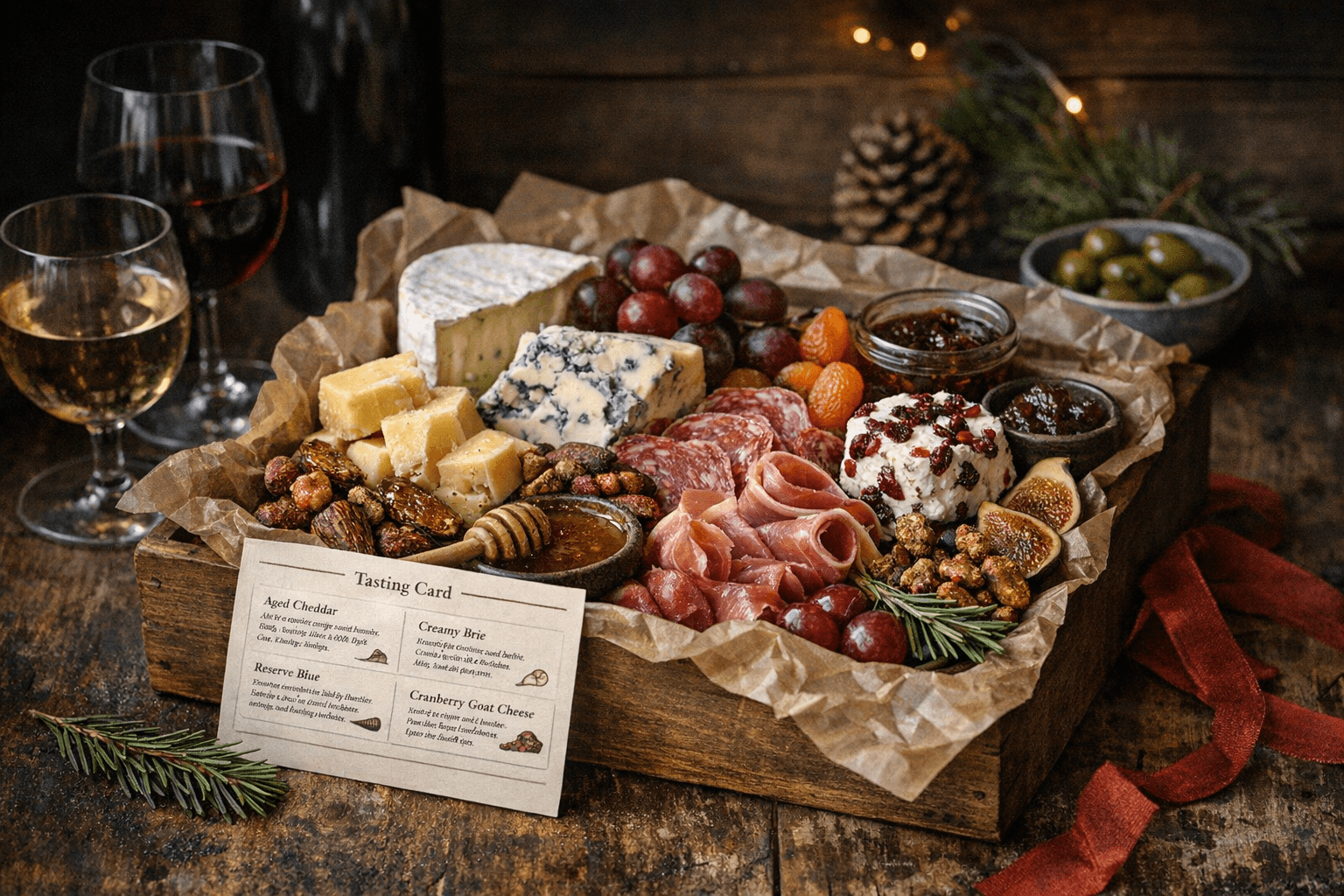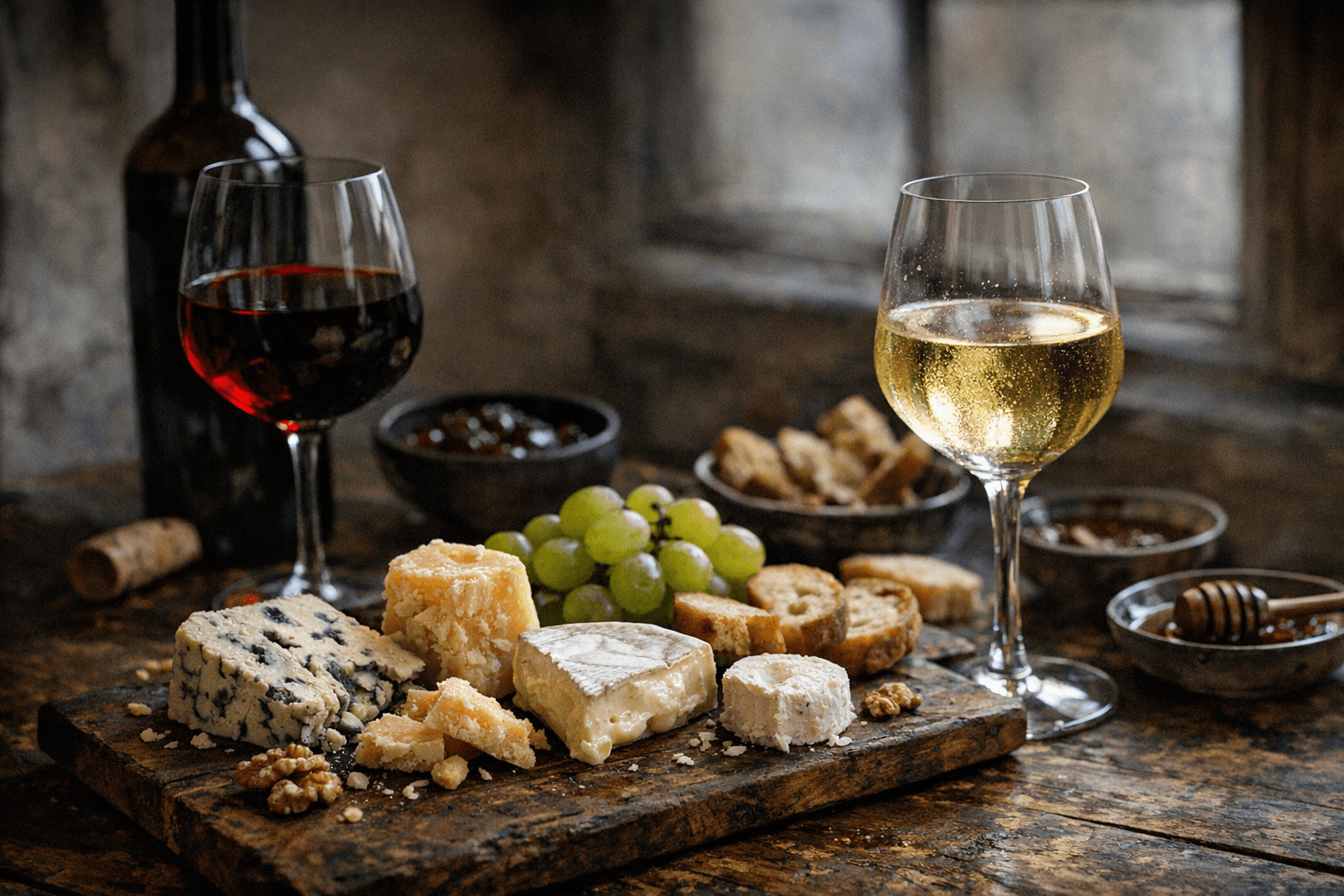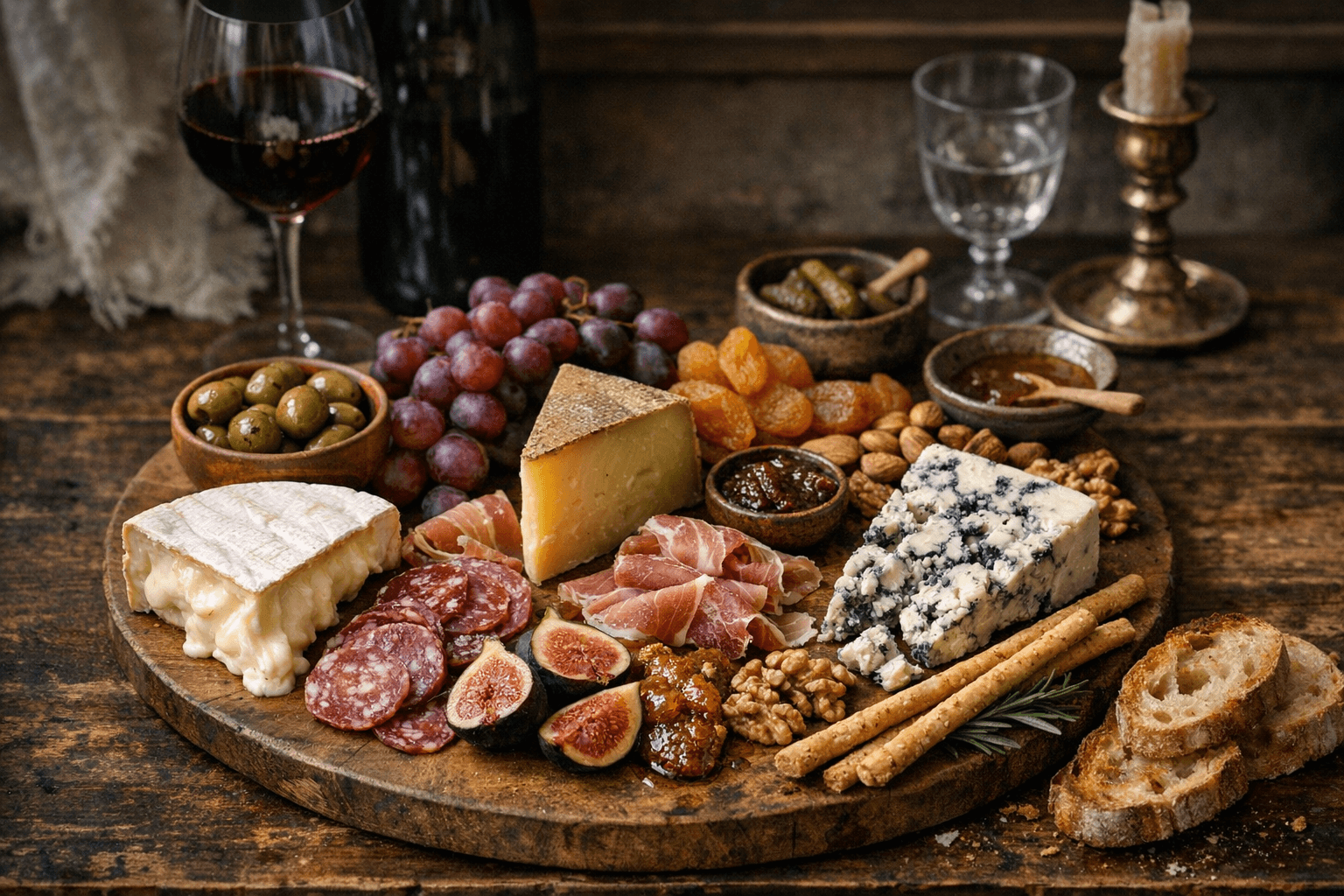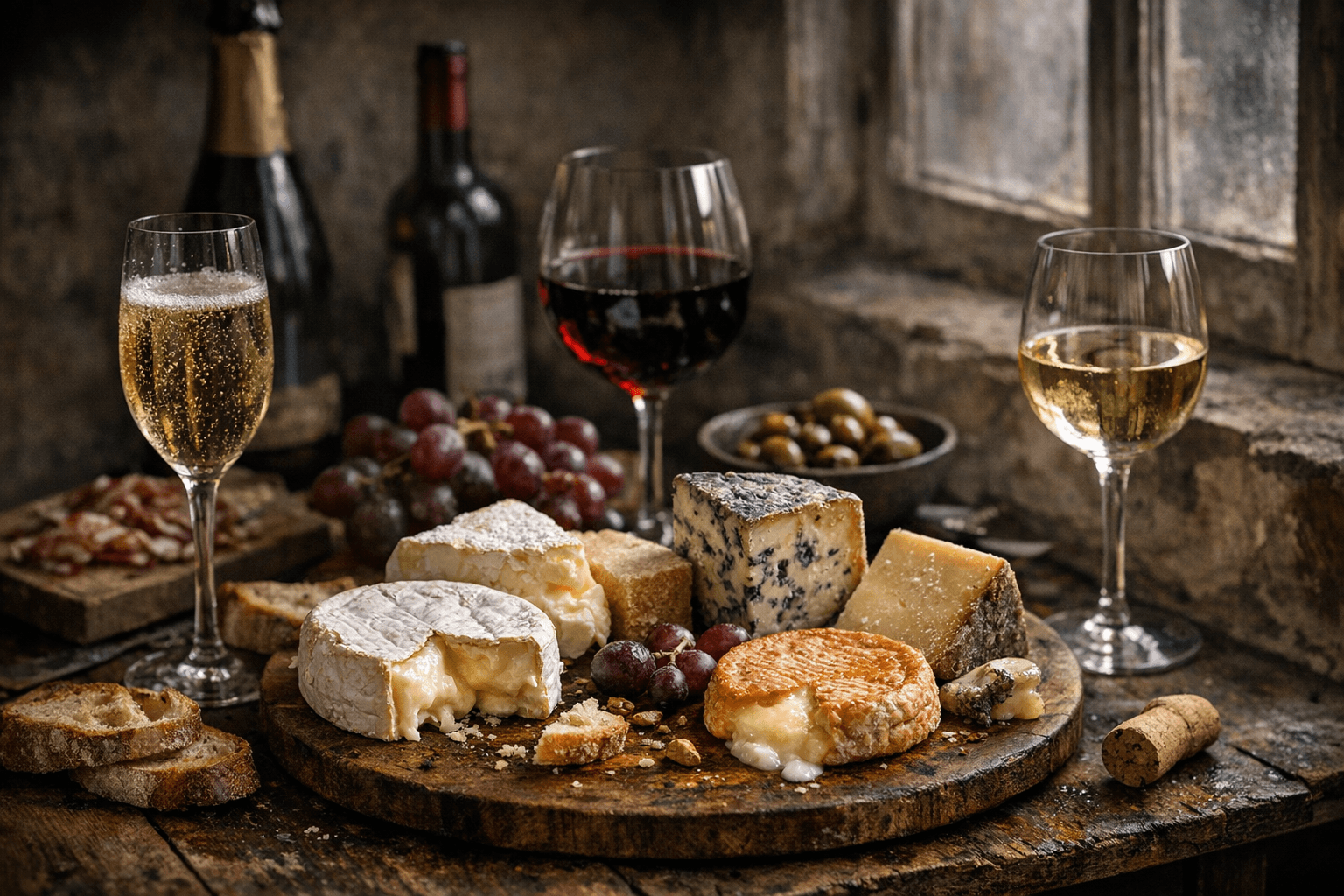
Centuries of French wisdom distilled into four foolproof rules that prevent both social embarrassment and palate disasters.
Wine and cheese pairing advice tends to sound like mystical incantations whispered by sommelier druids. The truth is simpler. Four rules govern nearly every successful pairing, and they're based on chemistry, not magic. Master these, and you can confidently pair anything from a gas station Gouda to a $300-per-pound Époisses without looking like you're guessing.
Rule 1: Acid Cuts Fat (The Camembert Effect)
High-acidity wines break down fat molecules in cheese, preventing that greasy film that makes your mouth feel like you licked a butter stick. The fat, in return, softens the wine's acidity and binds tannins, creating what cheese scientists call the Camembert effect. This isn't poetry—it's molecular gastronomy happening in real time.
Sancerre from the Loire Valley exemplifies this principle. Its Sauvignon Blanc grapes produce wines with enough acidity to cut through a wheel of aged Crottin de Chavignol without breaking a sweat. The region produces roughly 60,000 hectoliters annually, most of which pairs beautifully with the local goat cheeses that have been made there since the 16th century. Coincidence? Unlikely.
Rule 2: Match Your Weight Class
Pairing intensity is like matchmaking—put a delicate Muscadet with a robust Roquefort and you've created an abusive relationship where the cheese dominates completely. Fatty, rich cheeses need bold, high-acid or tannic wines to avoid what sommeliers diplomatically call 'flabby results.'
A proper example: Barolo from Piedmont, with its Nebbiolo grapes producing wines that can age for decades, stands up beautifully to aged Parmigiano-Reggiano. Both have developed complexity over years and neither backs down from the other. Meanwhile, pairing that same Barolo with fresh mozzarella would be like bringing a flamethrower to a pillow fight.
Rule 3: Bubbles Conquer Bloomy Rinds
Sparkling wines and bloomy-rind cheeses share what might be the most reliable pairing relationship in the food world. The effervescence and high acidity in Champagne cuts through the creamy, fatty texture of Camembert or Brie like a precision instrument.
This isn't accidental. Champagne houses like Bollinger have been pairing their wines with Normandy's bloomy-rind cheeses since the 19th century. The bubbles literally scrub your palate clean between bites, preventing the cheese from coating your mouth and dulling your taste buds. It's like having a tiny dishwasher in your glass.
Rule 4: When in Doubt, Go Regional
Regional pairings work because they evolved together over centuries. The same soil, climate, and cultural preferences that shaped local winemaking also influenced local cheesemaking. This isn't romantic—it's practical.
Consider Valpolicella and Gorgonzola from Northern Italy. The Corvina-based wines from Veneto, producing about 300,000 hectoliters annually, developed alongside the region's blue cheeses. Both benefit from the area's cool temperatures and limestone-rich soils. The wine's bright acidity naturally complements the cheese's creamy saltiness because they're essentially products of the same terroir. Your ancestors figured this out through trial and error so you don't have to.
These four rules eliminate the guesswork from wine and cheese pairing. They're not suggestions—they're molecular realities that have been tested by countless generations of people who cared deeply about not wasting good wine on bad matches. Follow them, and you'll never serve a pairing that makes your guests question your judgment or your palate.
* This article contains opinions, satire, and possibly correct information about wine and cheese. It is not medical advice.