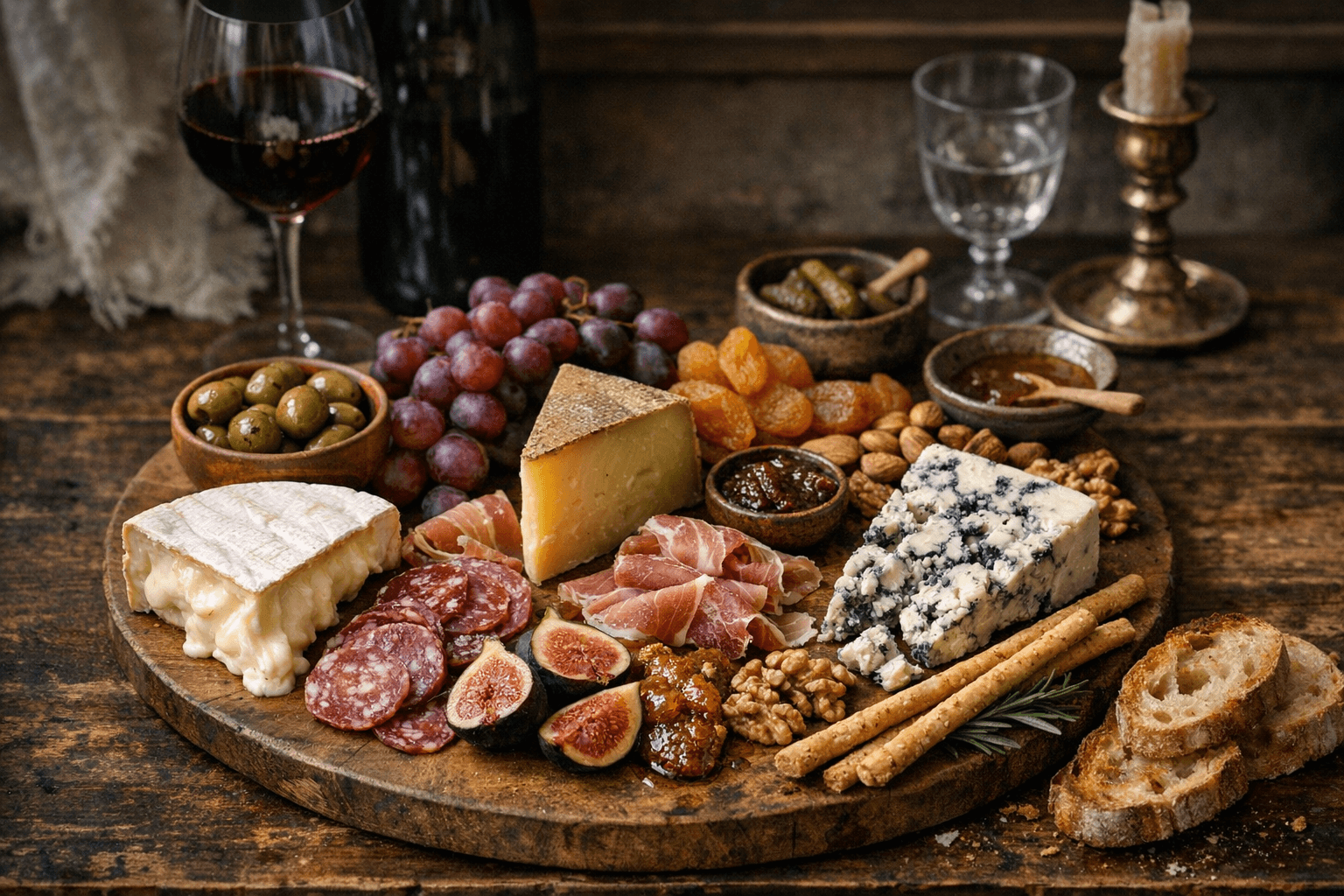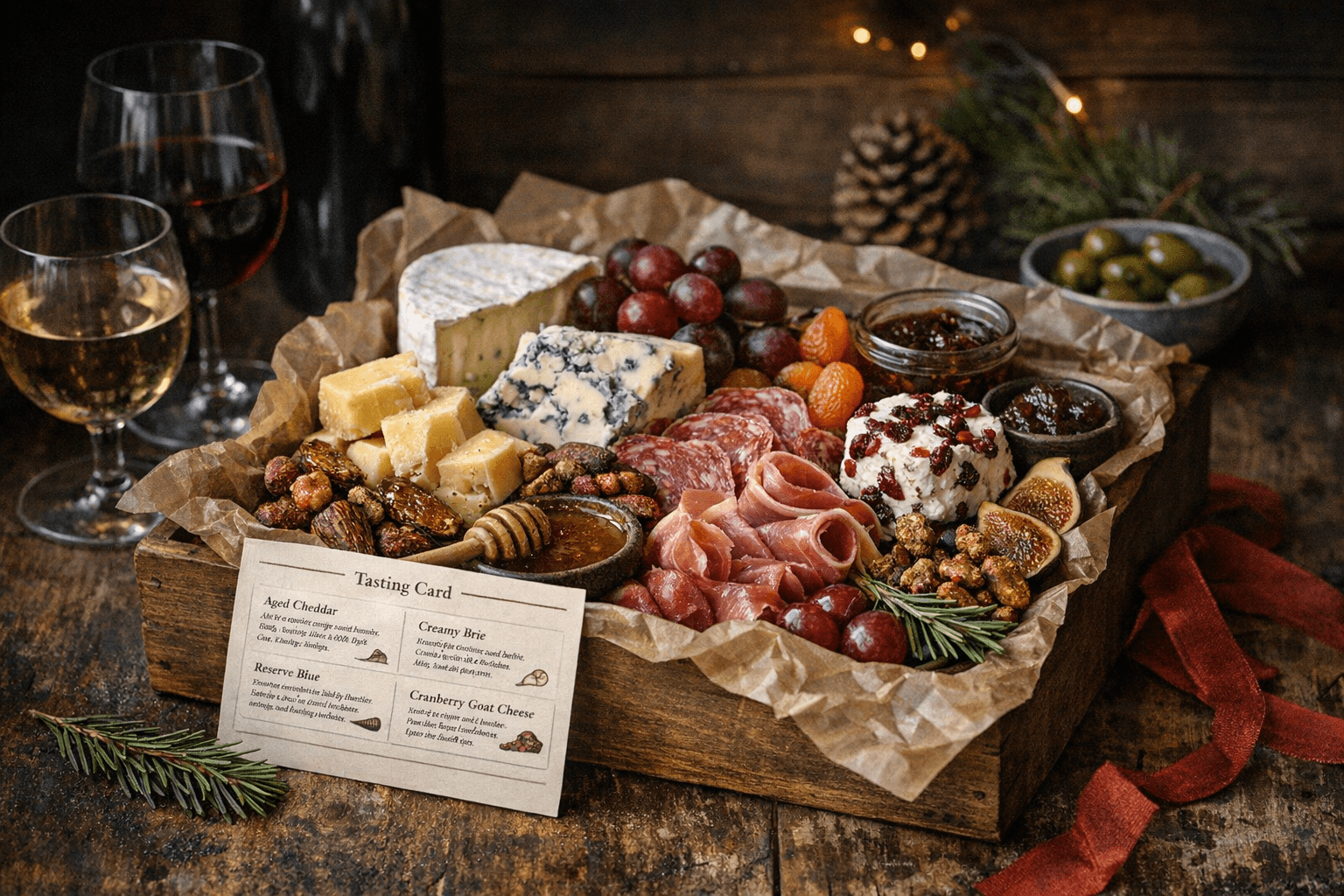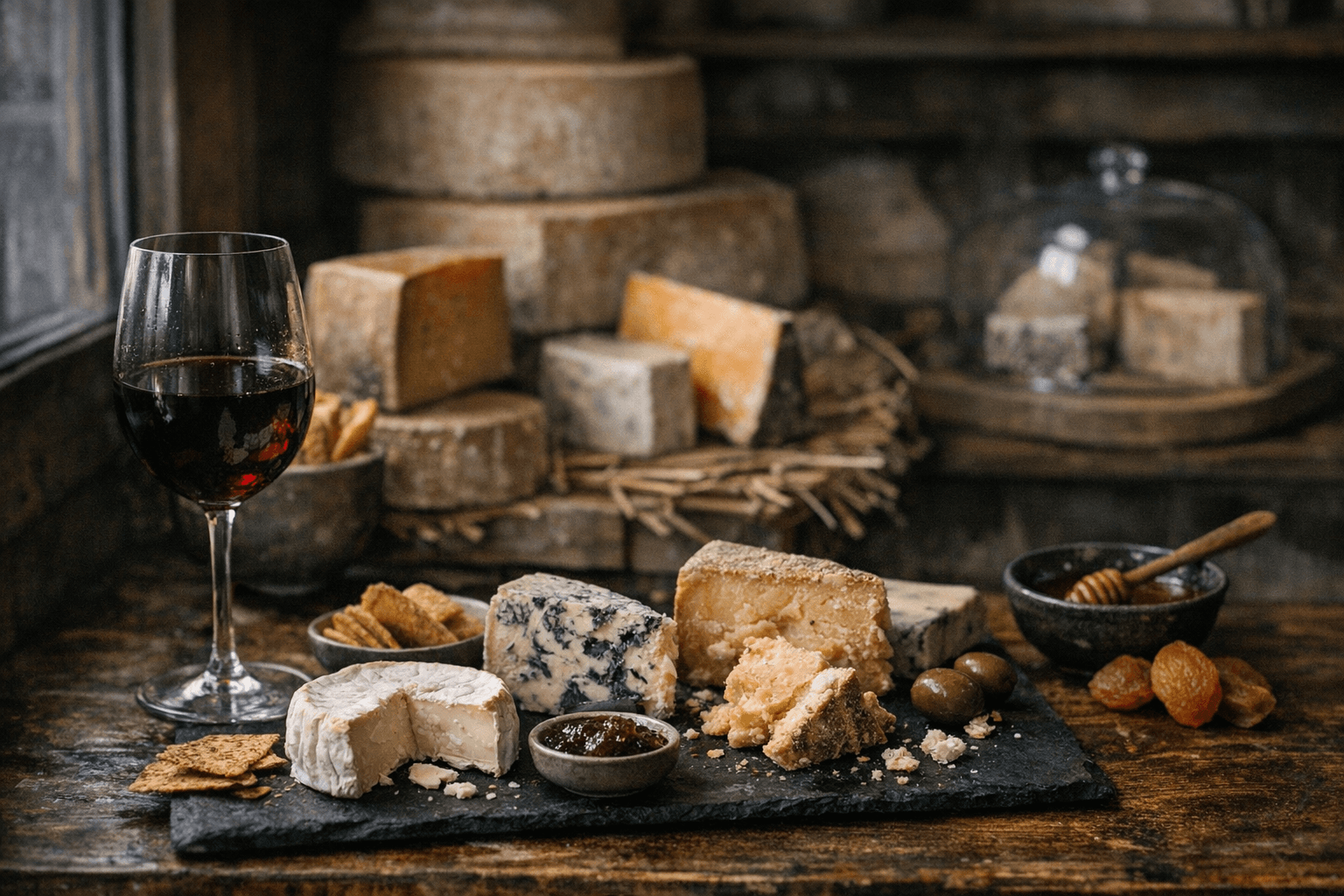
A proper cheese shop is not a test you forgot to study for. Here is what to say, what to ask, and how to taste like someone who has done this before — even if you haven't.
At some point, most people walk into a proper cheese shop, look at the case, and immediately feel like they have wandered into a room where everyone else received a briefing they did not. There are rinds you do not recognize. Someone next to you just casually said 'washed rind' like that is a normal thing to say. The person behind the counter is looking at you. This is fine. The cheesemonger is not judging you. They are thinking about cheese. That is genuinely most of what they think about, and they would like nothing more than to tell you about it.
The Cheesemonger Is On Your Side, Not The Cheese's
A cheesemonger's entire professional purpose is to match the right cheese to the right person. They are not gatekeepers. They are more like a very opinionated friend who happens to have Comté from the Jura Mountains aging behind them. The best opening move you have is honesty. 'What's your favorite right now' is a completely legitimate first sentence. So is 'I like things that are creamy' or 'I want something nutty' or even 'I had a cheese once that was kind of funky and I want more of that.' These are not embarrassing things to say. These are exactly the things a cheesemonger needs to hear to do their job.
Flavor vocabulary helps, and you probably already have more of it than you think. Creamy. Sharp. Buttery. Salty. Funky. Caramelized. Crunchy — which, in aged cheeses like a 24-month Parmigiano Reggiano from Emilia-Romagna, refers to the tyrosine crystals that form during aging and are genuinely one of the better things you can eat. You do not need to know the word tyrosine. You just have to say you like the crunch.
Samples Are Not a Privilege, They Are the Point
You are allowed to taste before you buy. This is not an imposition. A 2020 study published in Appetite found that taste sampling increases purchase confidence by 37 percent in specialty food retail settings, which is a very scientific way of saying that trying the cheese before you commit to it is just sensible. Good cheese shops expect this. The social contract is reasonable: narrow it down to one or two genuine contenders before you start asking for tastes, rather than sampling the entire case while your parking meter runs out.
When you find something you like, the standard buy for a cheese you have never tried before is a quarter pound — four ounces. That is enough to eat with a glass of wine, decide if you love it, and still have opinions the next day. For a cheese board with guests, plan for one to two ounces per person per cheese, and three cheeses is plenty. Nobody has ever left a cheese board thinking there was too little variety. They have left thinking they ate too much Manchego, which, from La Mancha in Spain, aged around six months from sheep's milk, is a completely understandable outcome.
What to Do With It When You Get Home
Cheese is alive in a way that plastic wrap does not accommodate. If your cheesemonger cuts and wraps your cheese fresh — and you should look for a cut-and-wrap date within the last two days, especially on softer styles — they will likely use cheese paper, which has a slightly perforated surface that lets the cheese breathe without drying out. Keep it in that. If you buy something pre-packaged in plastic, rewrap it in parchment or wax paper when you get home, place it loosely in a zip-lock bag, and open that bag once a day to let in some air. This is not precious. It takes four seconds and it is the difference between a cheese that stays interesting for a week and one that tastes like the inside of a refrigerator.
A triple-crème brie, a young Gorgonzola from Lombardy, or anything from Cowgirl Creamery in Point Reyes, California will be more forgiving stored at the warmer end of your fridge — the cheese drawer, if you have one, or wrapped loosely on a shelf away from the fan. Hard cheeses like Parmigiano Reggiano or an aged Idiazábal from the Basque Country, smoked and made from sheep's milk, can handle the cold better and will last longer once cut. The general rule is: the softer the cheese, the faster you should eat it. This is not a hardship.
The cheese shop is not somewhere you need to perform knowledge you do not have. It is somewhere you go to get better cheese than you can find anywhere else, talked through by someone who has tasted a lot more of it than you and is genuinely pleased that you showed up. Tell them what you like. Ask what is new. Try what they recommend. Buy a quarter pound. Wrap it properly. Open a Riesling if it is funky, a Pinot Noir if it is nutty, a Champagne if it is creamy, and eat it before the week is out. That is the whole system.
* This article contains opinions, satire, and possibly correct information about wine and cheese. It is not medical advice.