Jules didn't wait until her daughters were old enough to drink. She started with the stones. A dispatch on terroir, inheritance, and the things worth passing down before the car keys ever enter the picture.
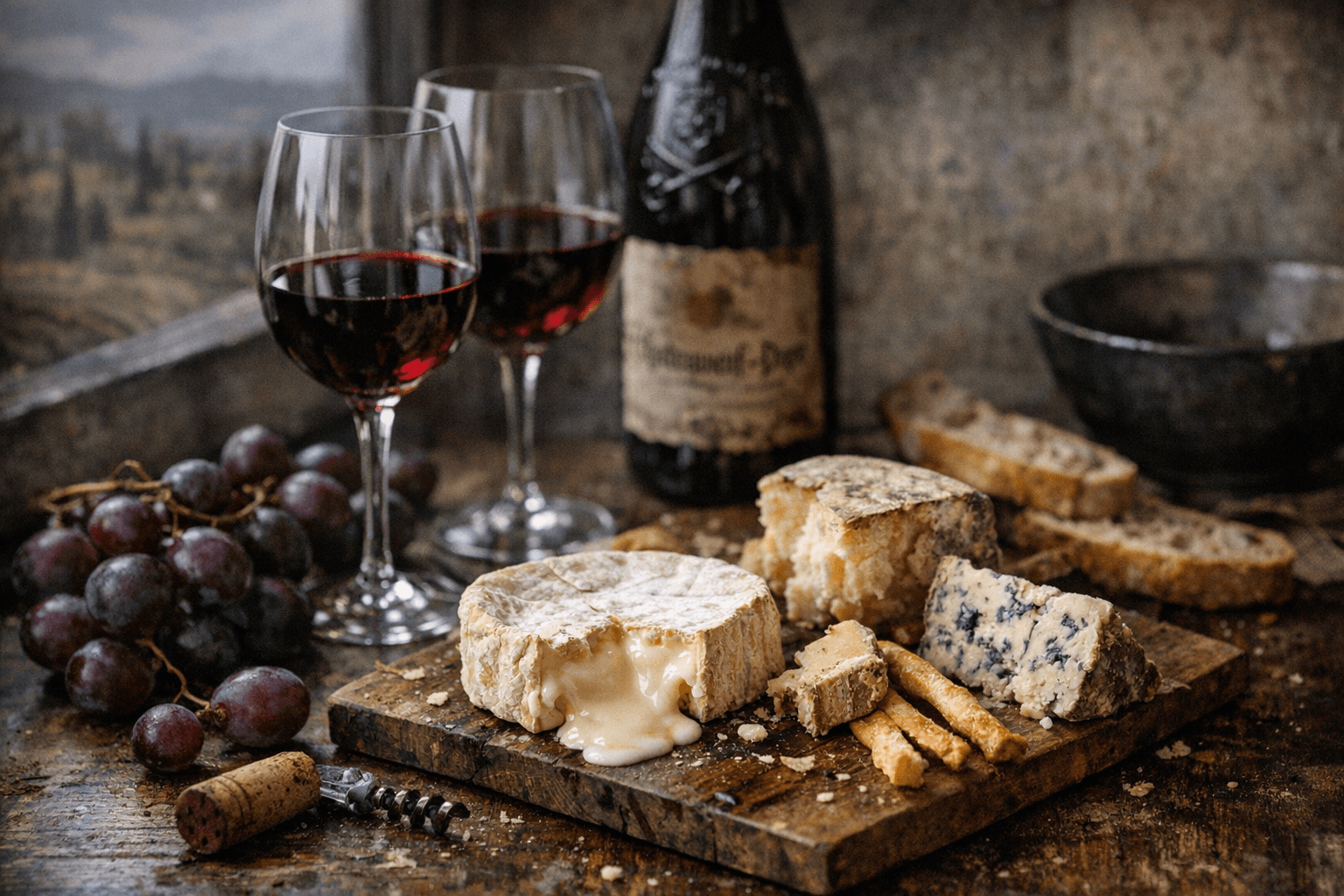
My daughters could not yet operate a motor vehicle when I first explained to them that the most important thing in the glass is usually what happened on the ground. We were not in France. We were in a kitchen in the American Midwest, somewhere between homework and dinner, and I was opening a bottle of Châteauneuf-du-Pape — a wine from the southern Rhône that has been quietly becoming what it is for approximately seven centuries — because it was a Tuesday and because some lessons are time-sensitive. They were skeptical. One of them was eating a granola bar. The other had opinions about the color of the cork. Neither of them asked for this education, which is precisely when education tends to stick.
The Galets Roulés: Why Châteauneuf-du-Pape Terroir Starts on the Ground
The first thing I told them — before Grenache, before the Pope, before any of the narrative window dressing that makes wine people insufferable at dinner parties — was about the stones. Galets roulés. Rounded quartzite pebbles, deposited across the Rhône Valley floor by Alpine glaciers and the river itself over what geologists politely describe as a very long time. The stones are large, smooth, and warm to the touch well into the evening, which is the entire point. They absorb heat from the Mediterranean sun during the day and release it slowly at night, turning the vineyard floor into something functionally equivalent to a radiant heating system for grapes.
My younger daughter found this satisfying in a way she couldn't quite articulate. The older one asked whether the grapes could feel it. In a manner of speaking, yes — higher soil temperature means faster ripening, which means more sugar accumulation, which is why Châteauneuf-du-Pape carries a mandatory minimum alcohol level of 12.5 percent and regularly clears 14 to 15.5 in practice. France has codified into law that this wine must be substantial. The government has opinions about your evening. This is, I told them, one of the more reasonable things a government has ever done.
The Châteauneuf-du-Pape Grenache Blend: One Variety to Rule Them All
The appellation officially permits somewhere between 13 and 18 grape varieties depending on how carefully you count, which is the kind of fact that sounds impressive until you learn that Grenache Noir accounts for roughly 75 to 90 percent of what is actually in the ground. The other varieties — Syrah, Mourvèdre, and a rotating cast of supporting characters — are present the way interns are present at a large company: technically contributing, occasionally essential, fully aware of the organizational hierarchy.
Grenache is generous in the way that confident things tend to be. It gives you dark fruit, warmth, a certain round softness. Young Châteauneuf can also be tannic, earthy, and faintly gamey — wine writers call this complex; everyone else calls it a lot — but it opens with time. The Mistral wind deserves mention here too, because no honest account of this terroir omits it: a dry, cold, seasonal force that tears through the valley and does the unglamorous work of keeping vines healthy, clearing the moisture and disease pressure that would otherwise compromise the fruit. The wine tastes like all of it. Earthy and warm and slightly wild.
What a 14th-Century Pope Has to Do With Your Tuesday Bottle
There was a Pope — John XXII, based in Avignon in the fourteenth century, during the period when the papacy briefly relocated to southern France for reasons that are historically complicated and spiritually ambiguous — who took a serious interest in the local vineyards. He improved them. He built things. He understood, on some level, that good wine is infrastructure. The name Châteauneuf-du-Pape translates literally to 'new castle of the Pope,' which is the kind of origin story that makes a $28 bottle feel like an artifact.
My daughters received this with the particular silence that means they are deciding whether history is interesting or merely old. Both, I told them, which is the honest answer. The point is not the Pope. The point is that people have been paying attention to this specific piece of ground — these specific stones, this specific relationship between sun and soil and wind — for seven centuries. That kind of accumulated attention produces something. It produces a red wine that tastes like the earth it came from: earthy, spiced, occasionally suggesting tar and leather in a way that is a compliment in the vocabulary of terroir and would be alarming in any other context.
Neither of my daughters will be old enough to drink a glass of Châteauneuf-du-Pape for some time yet. But they know what galets roulés are. They know that Grenache runs the show. They know that a wind with an actual name shaped the flavor of something in a bottle, and that a medieval Pope cared enough about a vineyard to give it his address. Elsewhere, a wellness industry running well into the tens of billions — Statista placed the global dietary supplement market alone above $150 billion in 2023 — is working hard to convince them that health is something you subscribe to and inflammation is something you optimize away with a powder. The wine, meanwhile, has been doing one thing in one place for seven hundred years, without a rebrand. Some things do not require a protocol. They just require patience, and occasionally a Tuesday.
* This article contains opinions, satire, and possibly correct information about wine and cheese. It is not medical advice.