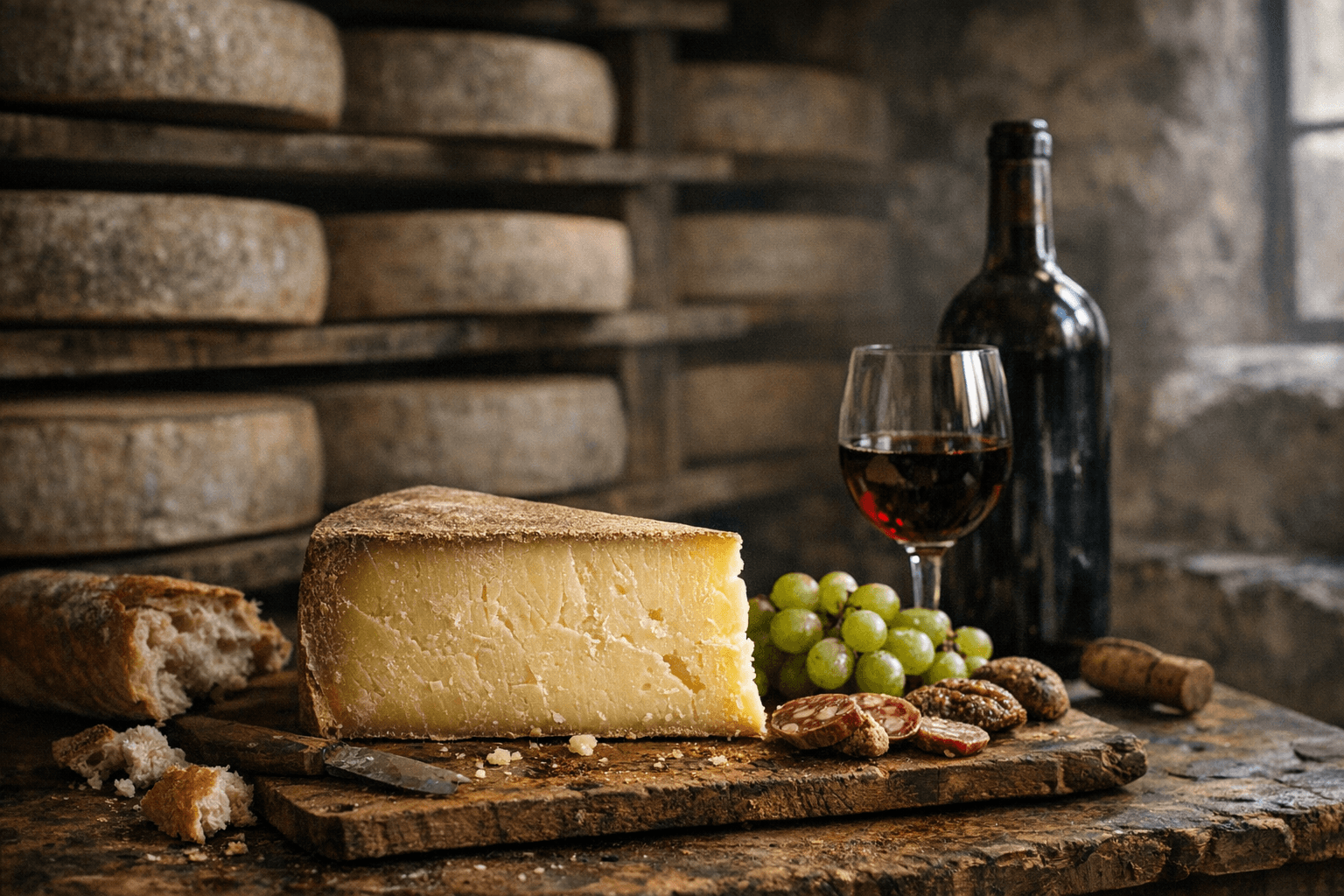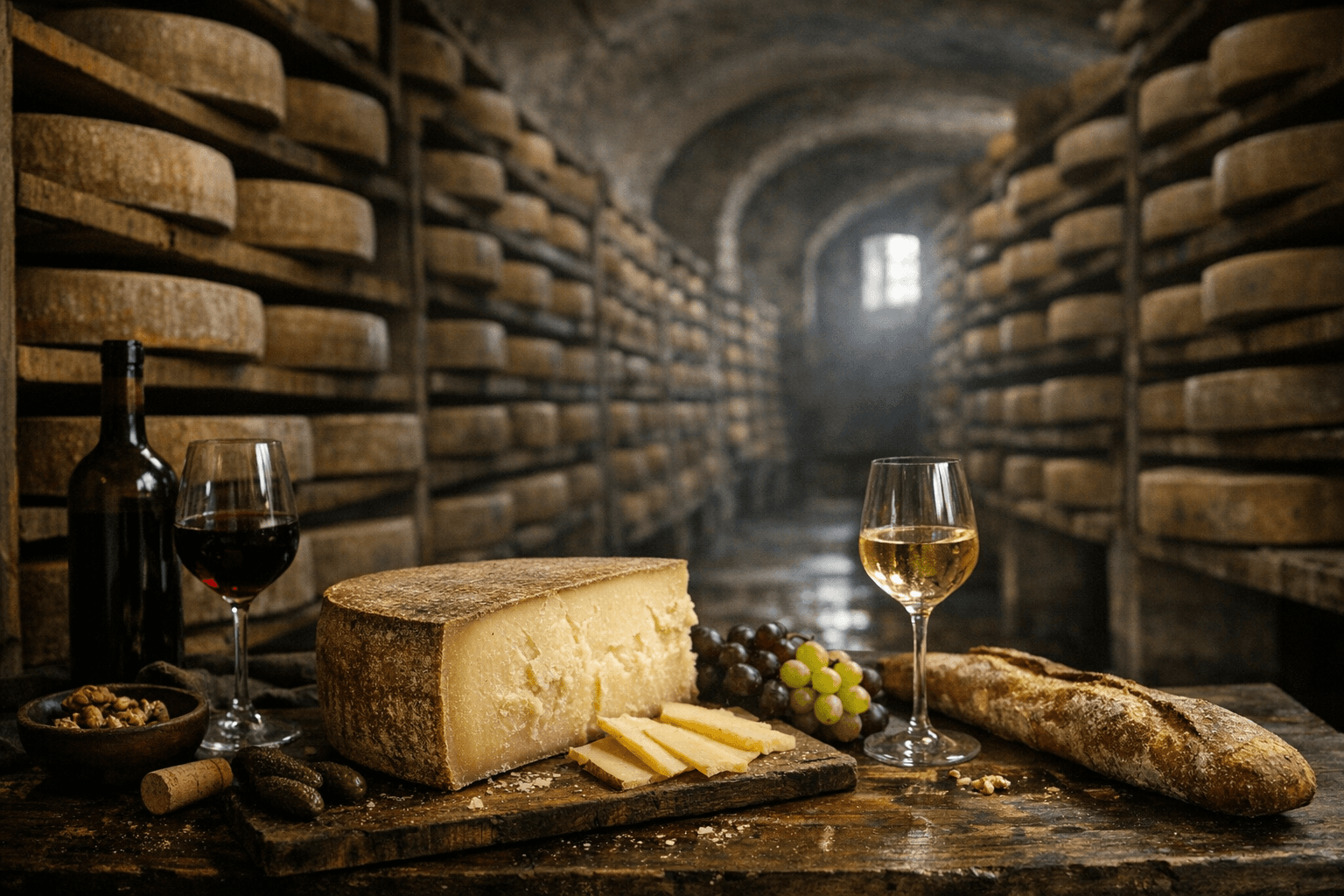
France's second-largest military fortress now houses 140,000 wheels of Comte cheese in underground stone vaults. Each wheel develops distinct flavors based on terroir and aging conditions.
Napoleon designed Fort des Rousses to house 3,500 soldiers and 2,000 horses in the Jura Mountains. Today, it holds 140,000 wheels of Comte cheese instead. The conversion from military stronghold to cheese sanctuary happened in 1997 when Jean-Charles Arnaud purchased the fortress from France's Ministry of Defence. The 21-hectare complex sits at 1,150 meters elevation, where thick stone walls and underground vaults create perfect aging conditions that no modern facility can replicate.
From Cavalry Quarters to Cheese Caves
The fortress spans 50,000 square meters of vaulted rooms connected by kilometers of underground tunnels, all protected by a 14-meter-high bailey wall stretching 2.5 kilometers. Construction began in the 1840s and took nearly 70 years to complete. The original military architects unknowingly designed an ideal cheese aging environment. The stone vaults create natural air circulation through what affineurs call the 'vault effect,' while the massive walls and soil cover maintain stable temperature and humidity year-round.
Fromageries Arnaud, which operates the facility under their JURAFLORE label, receives wheels at two weeks old weighing 36-40 kilograms each. These wheels represent 400-500 liters of raw Montbéliarde cow milk from pasture-fed herds grazing on Jura mountain grass and hay. Robots now patrol the tunnels daily, turning and moistening wheels that once would have required an army of workers.
Terroir in Every 80-Pound Wheel
Each wheel develops distinct flavor profiles based on its origin fruitière and aging conditions within the fort. The raw milk comes from approximately 150 cooperative fruitières scattered across the Jura region, each reflecting specific meadow conditions and seasonal variations. A wheel might taste of dried fruit and almonds if it originated from higher-elevation pastures, or develop earthier notes with citrus hints from lower-valley cooperatives.
The fort's natural aging environment amplifies these terroir differences. Some wheels develop fruity characteristics, others lean roasted, lactic, vegetable, animal, or spicy. The stone walls and elevation create microclimates within different vault sections, meaning wheels aged in the former horse stables might taste different from those in the old soldiers' quarters. Daily tastings of 200-300 wheels help affineurs track how each batch develops over the minimum 12-month aging period, with some wheels maturing for up to 36 months.
The Economics of Fortress Aging
Each wheel represents a €600-700 investment by the time it leaves the fort. The fortress model works because the stone infrastructure provides aging conditions that would cost millions to recreate artificially. Fort Saint-Antoine, another converted military facility in the nearby Haut-Doubs, operates similarly with Marcel Petite aging over 100,000 wheels using comparable methods.
The fortress aging system demonstrates how historical architecture can serve modern food production. The same thick walls that protected against 19th-century invasions now protect cheese from temperature fluctuations and humidity changes that would compromise flavor development. What Napoleon intended as a military advantage has become a terroir advantage, creating aging conditions that produce some of France's most complex cheese flavors.
Fort des Rousses proves that the best cheese aging happens when you work with existing conditions rather than fighting them. The fortress offers something no modern facility can provide: time-tested architecture that has already survived everything the Jura Mountains can deliver. While your refrigerator maintains consistent temperature, it cannot replicate the complex interplay of stone, elevation, and centuries of accumulated environmental wisdom that makes each wheel of Comte from Fort des Rousses taste like it grew from the mountain itself.
* This article contains opinions, satire, and possibly correct information about wine and cheese. It is not medical advice.