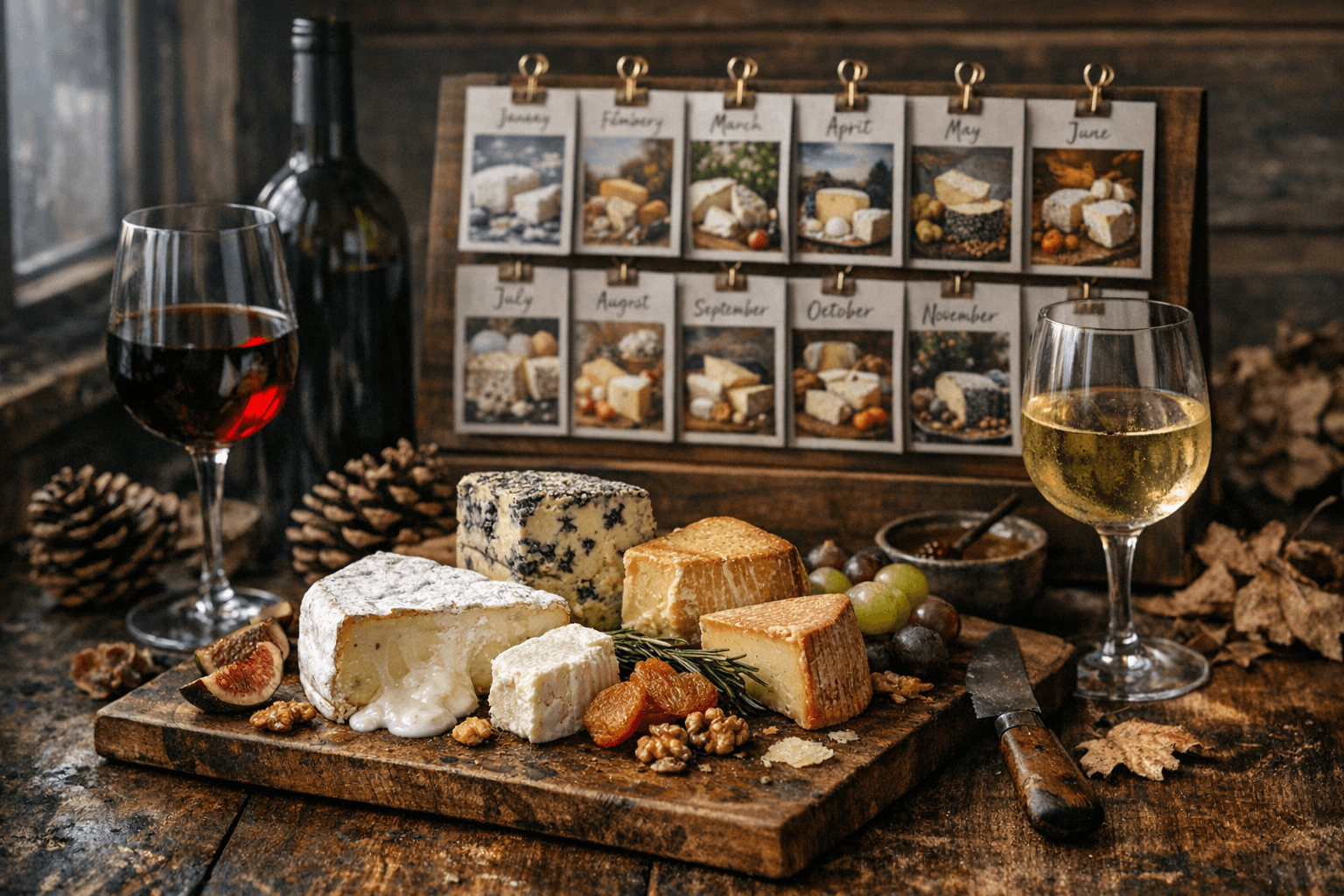
A comprehensive seasonal prescription for cheese boards, because apparently the weather now requires a dairy strategy. Spring chèvre through winter alpine wheels, with wine pairings and zero detox claims.
The wellness industry has spent decades trying to convince you that eating well requires a personal philosophy, a subscription box, and a fairly aggressive relationship with your phone's camera. The cheese board has, until now, largely escaped this fate. It sits on the counter, it does not ask you to track your macros, and it has never once suggested that you journal about it afterward. There is, however, a rational seasonal logic to building a good seasonal cheese board guide — not a wellness logic, not a healing logic, just the quiet, sensible logic of eating what is good when it is good. This is The Protocol. It has four phases. It is clinically unverified. It works.
Spring Cheese Board: Fresh Chèvre and the Case for Eating Outside Eventually
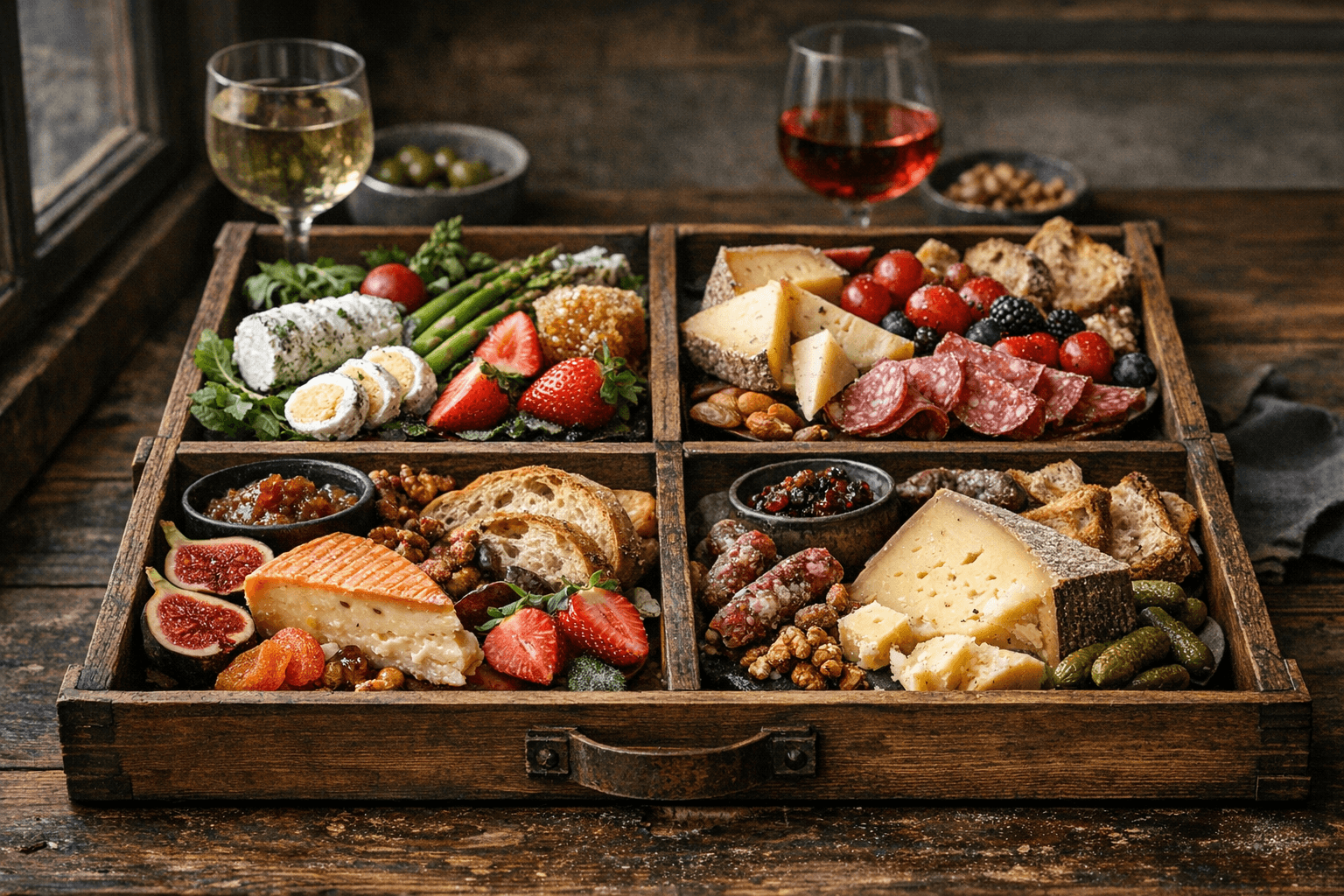
Fresh chèvre is not exclusively a spring cheese — modern dairies manage production year-round — but it is spiritually a spring cheese, which is a distinction that matters more at the board than it does in the literature. Young, moist, bright, and mild, it carries the flavors that spring produce is already organized around: peas, asparagus, radishes, strawberries, herbs that smell like someone finally opened a window. The Loire Valley has been making this argument for centuries, through Crottin de Chavignol, Sainte-Maure de Touraine, and Valençay — each a protected designation, each a more convincing case for French regional identity than most things written about French regional identity.
The wine prescription here is high-acid and unambiguous: Sauvignon Blanc, Chenin Blanc, or a dry rosé. A Sancerre alongside a fresh chèvre spring cheese board is not a pairing so much as a geographic confirmation. The cheese is fresh, the herbs are fresh, and your commitment to outdoor entertaining remains entirely theoretical until someone actually carries the board outside. That is fine. The board works indoors too. It always has. A cheese board by season begins, reliably, here.
Summer Cheese Board: Tomme and the Diplomacy of Rustic Sophistication
Tomme is not a single standardized cheese. It is a broad French-style category — semi-firm, washed or natural rind, made from cow, goat, or sheep milk depending on the region and the producer — which means that Tomme de Savoie is a specific and distinct cheese with its own production rules, while a farmstead tomme from the Pyrenees is something else entirely. This is not a problem. It is actually the point. Tomme is the diplomatic cheese: rustic enough for the backyard, respectable enough for company, specific enough to have terroir, and approachable enough to require no explanatory remarks at a Tuesday gathering.
Build a summer board with stone fruit, sliced tomatoes if they are actually ripe, grilled vegetables, and a few good pickles. A chilled light red or a white from the Savoie — Jacquère or Altesse both work — moves alongside it without demanding introduction. The heat will not harm Tomme. The board will survive the afternoon. These are the modest seasonal promises that count.
Autumn Cheese Board: Washed Rinds and What That Aroma Is Supposed to Mean
Washed-rind cheeses are, by design, assertive. The process involves repeatedly washing the rind during aging with brine, beer, wine, or spirits, which encourages specific surface microbes responsible for the characteristic orange-to-reddish rind and the aroma that some describe as barnyard and others describe as a closed car in August. Époisses de Bourgogne is the canonical example — AOC-protected, made from Burgundian cow's milk, aged a minimum of four to six weeks, and fully capable of clearing a room. Munster, Livarot, Taleggio: all in the same general family, all varying considerably in intensity. If you are new to washed rinds, Taleggio is the reasonable starting point — milder in aroma, yielding in texture, and less likely to surprise a guest who came expecting brie.
Strong aroma is not spoilage. A washed rind that smells powerful is doing what it was designed to do. Pair autumn's washed rinds with apples, pears, roasted squash, walnuts, dark bread, farmhouse ale, or cider. A Pinot Noir works well here — and a Burgundy Pinot Noir alongside Époisses is a regional pairing that functions less as a rule and more as a coherent cultural argument. Aromatic whites also hold their own. The serving size, as always, remains negotiable.
Winter Cheese Board: Aged Alpine Wheels and What to Serve When Patience Is the Ingredient
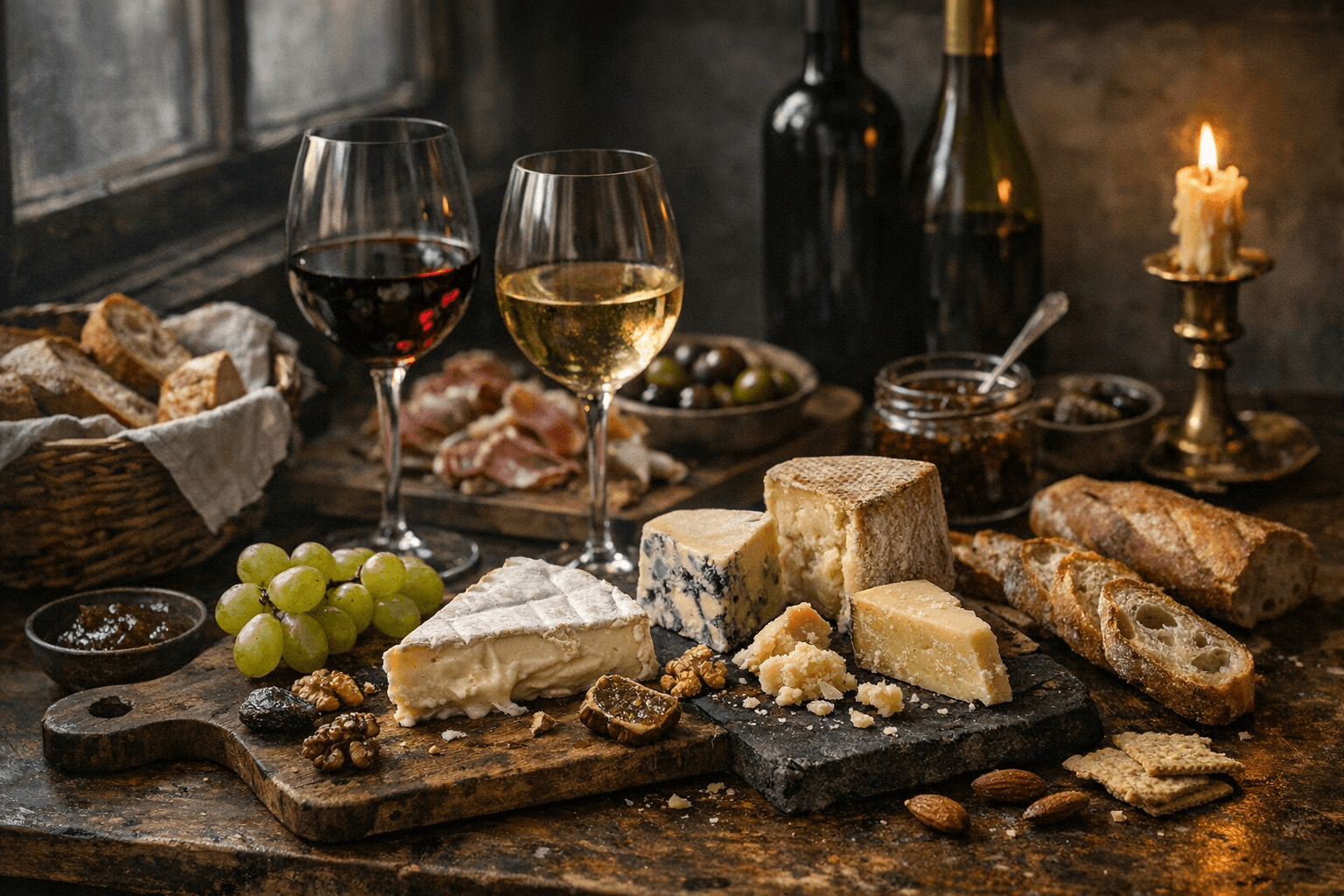
If you are deciding what cheese to serve in winter, the answer is almost always something that has been waiting longer than you have. A twelve-month-aged cheese is the closest thing the board has to a long-term commitment. Comté — made from the raw milk of Montbéliarde or French Simmental cows in the Jura and Doubs regions, aged anywhere from four months to over thirty — is perhaps the clearest argument for patience as a production philosophy. Gruyère, Beaufort, and Emmental each bring their own regional identity and production rules; calling all of them simply alpine is a stylistic convenience, not a geographic claim. Aged Gouda, while not from the Alps, earns its place at the winter board through sheer structural confidence and the crystalline crunch of long aging.
The winter board is built for density and staying power: toasted nuts, dried fruit, quince paste, whole-grain mustard, rye crackers. The wines shift accordingly toward fuller-bodied whites — a Jura Chardonnay or, for those genuinely committed to the experience, a Vin Jaune alongside Comté, which is not a casual recommendation but a correct one. A structured red or even a dry sparkling wine against aged alpine cheese also works. None of this is a medical intervention. It is just winter, handled correctly.
The $72 billion wellness industry would prefer you to organize your eating around deprivation, optimization, and the quarterly launch of a new framework with a Greek prefix. The four-season cheese board calendar asks considerably less of you. It asks only that you pay attention to what is good in a given month, buy cheese with some specificity about what it actually is and where it actually comes from, open a bottle that makes sense alongside it, and then eat the board rather than photograph it for seven minutes first. Cheese can fit into a balanced diet. It cannot, however, balance the diet by itself — a distinction that has never once stopped anyone from cutting another slice of Comté, nor should it.
* This article contains opinions, satire, and possibly correct information about wine and cheese. It is not medical advice.