While the $72 billion wellness industry was busy inventing new reasons to feel bad about eating, France spent several centuries quietly perfecting a dessert course built on sweet wine and aggressively funky sheep's-milk cheese.
Somewhere in the south of France, in a limestone cave outside a village called Roquefort-sur-Soulzon, a wheel of sheep's-milk cheese is aging in the dark and minding its own business. It has been doing this, more or less, since before Pliny the Elder thought to write it down — which was before 79 CE, if you want to feel briefly humbled by your own snack choices. The wine it would eventually be paired with, a golden, honey-laced Bordeaux sweet wine now known as Sauternes, came along somewhat later. Together, they became one of the most durable pairings in French culinary tradition. No app required. No macros tracked. No 'clinically verified' benefit beyond the straightforward one of tasting exceptional.
What Noble Rot and Cave Mold Have in Common
Sauternes is made from grapes that have been deliberately allowed to succumb to a fungus called Botrytis cinerea — noble rot, in the polite translation. The fungus shrivels the grapes, concentrates their sugars, and leaves behind an apricot-and-honey richness that is unlike anything else produced in Bordeaux. The resulting wine is deeply sweet, but it carries enough natural acidity to keep from becoming cloying. That tension — sweetness checked by brightness — is precisely the mechanism that makes it useful at a table with Roquefort.
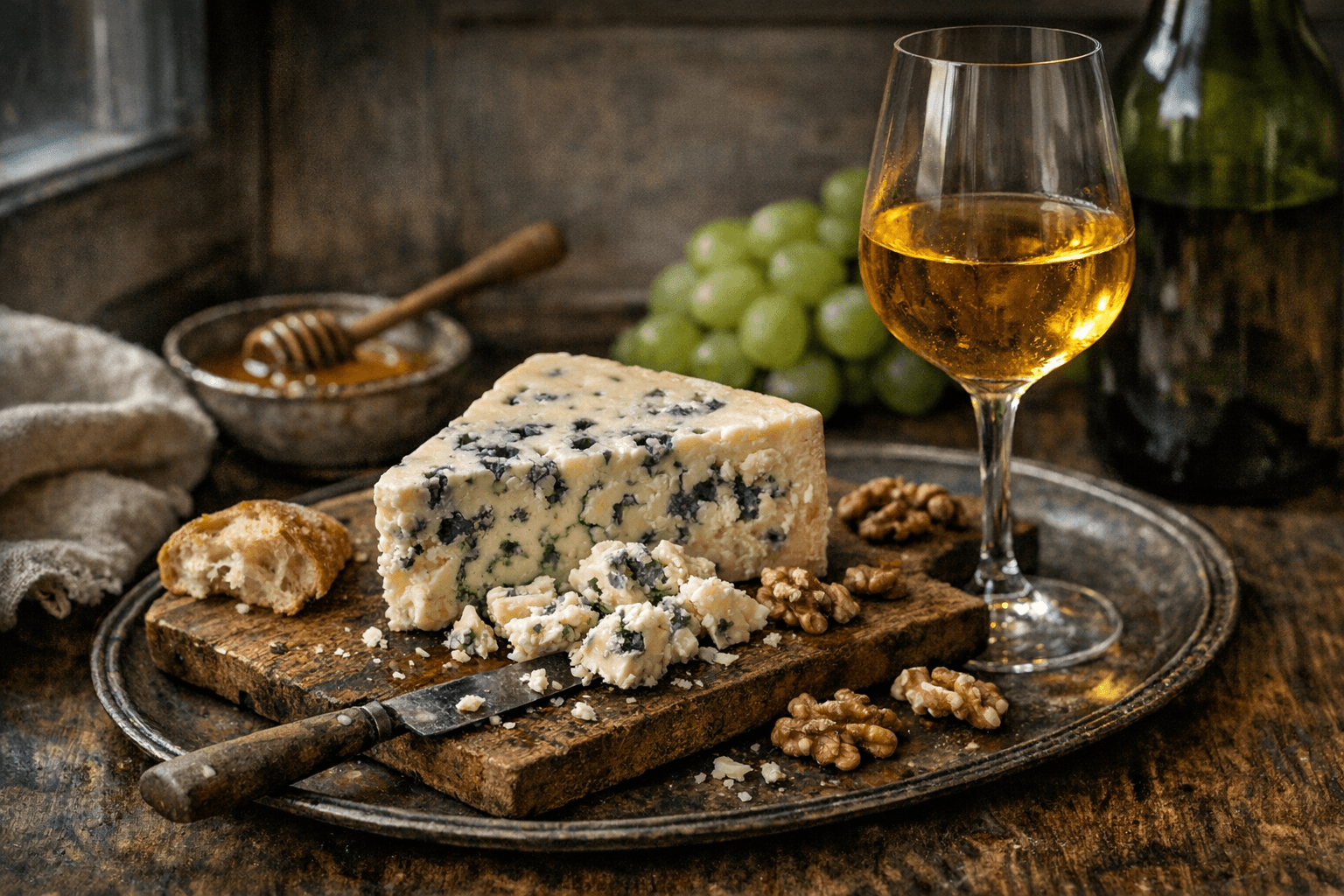
Roquefort, meanwhile, is sharp, salty, and creamy in the specific way that only ewe's milk and Penicillium roqueforti cave mold can produce together. It is, to borrow a clinical framing, aggressively expressive. Most wines flinch. Sauternes does not. The sweetness in the wine softens the salt. The acidity cuts through the fat. The richness of each amplifies the richness of the other rather than collapsing it. This is not a verified peer-reviewed finding about this exact combination — no such study has been commissioned, presumably because the French found the answer empirically and moved on — but it is sound sensory logic applied to two ingredients that have been field-tested for centuries.
The Protocol: Serving Without Embarrassing Yourself
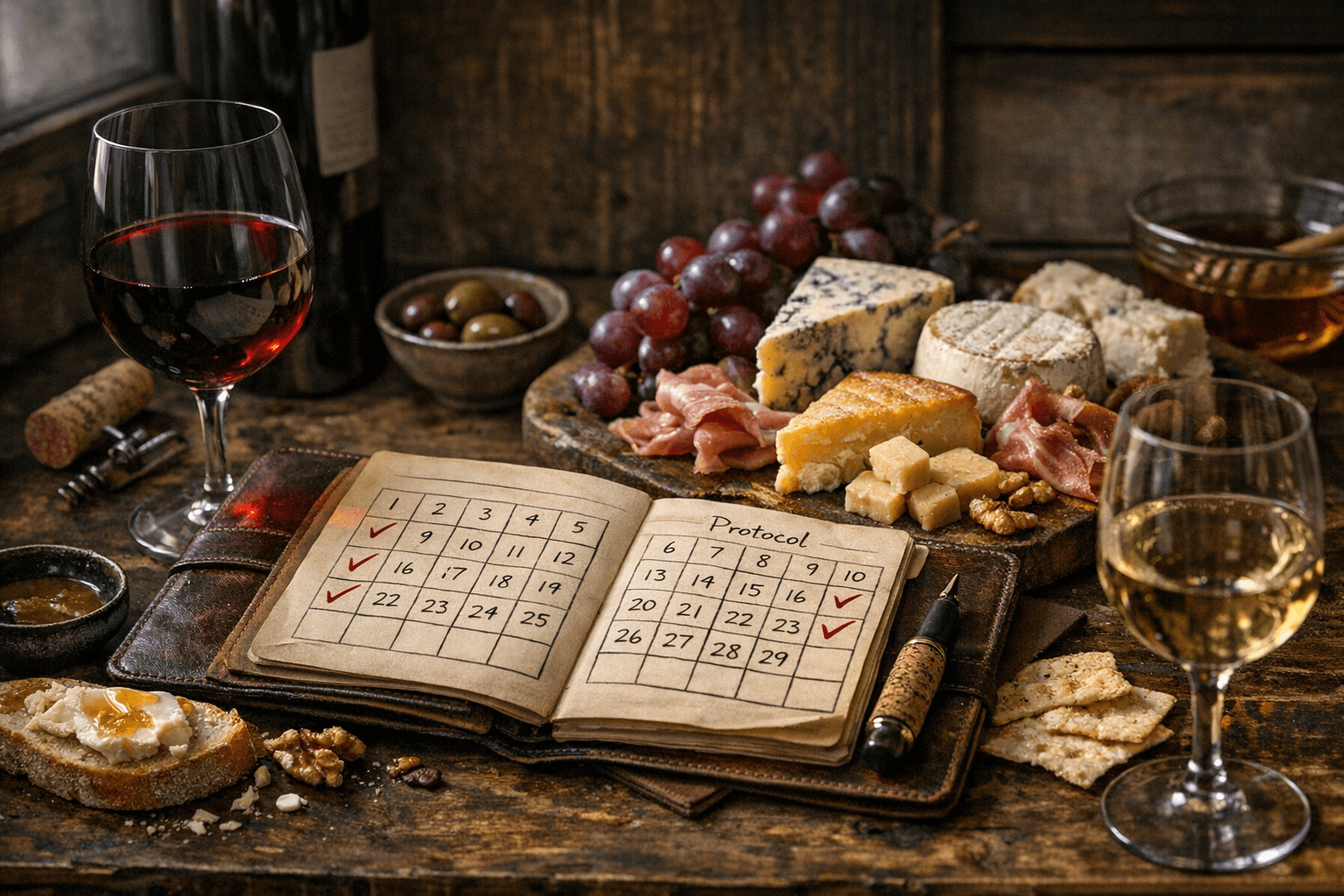
The ℞ here is straightforward, which is its own form of radical departure from modern wellness doctrine. Serve the Sauternes cold — properly cool, not room temperature, not 'whatever the bottle felt like in the car.' Serve the Roquefort at approximately 14 to 16 degrees Celsius, which means pulling it from the refrigerator about thirty to forty-five minutes before anyone sits down. A cold blue cheese is a closed blue cheese. At the right temperature, it opens aromatically in a way that justifies the entire exercise.
The ratio is not complicated. A small pour of Sauternes. A wedge of Roquefort. Perhaps some plain crackers or a thin slice of walnut bread to give the cheese somewhere to rest. The pairing does not require embellishment. It requires only that you resist the modern instinct to add twelve more components and call it a 'board.'
The $30 Field Study, Conducted in Your Own Kitchen
A half-bottle of entry-level Sauternes — a 375ml, which is the appropriate format for a dessert wine unless you are feeding a table of eight — runs between fifteen and twenty-two dollars at most wine retailers. A wedge of genuine Roquefort, bearing the protected designation that guarantees it was made from the right milk in the right caves, typically lands between eight and twelve dollars at a cheese counter. The total comes in under thirty dollars. For context, that is meaningfully less than a single month of most subscription wellness platforms, which will sell you an app, a tracker, and the ambient anxiety that you are not optimizing correctly.
What you get instead is approximately two glasses of one of France's most historically significant sweet wines and enough blue cheese to constitute a proper course. The experience is not optimized. It is simply very good, in the way that things with a few centuries of refinement behind them tend to be.
The diet industry would like you to believe that pleasure requires justification — a macronutrient ratio, a functional benefit, a protocol that transforms indulgence into self-improvement. Sauternes and Roquefort offer none of that framing. They are a pairing that existed before wellness was an industry, before cheese came with ingredient labels, before anyone thought to assign a score to what they were eating. They work because two intensely flavored things made in specific regions of France, by people who had been doing it long enough to stop questioning why, happen to balance each other beautifully. That is the whole mechanism. It has been clinically unverified for approximately two thousand years, and the pairing has not suffered for it.
* This article contains opinions, satire, and possibly correct information about wine and cheese. It is not medical advice.