According to Loire folklore, a retreating army abandoned their goats in 732 and accidentally founded one of France's great cheese traditions. Historians call it a legend. The French call it terroir.
The story goes like this. In 732, Muslim forces retreating after the Battle of Tours left their goats behind in the Loire Valley, and the local population — being French, and therefore constitutionally incapable of leaving a food resource unexplored — looked at the abandoned animals and thought: cheese. This is the founding legend of Loire Valley goat cheese, and historians classify it exactly where it belongs: as folklore. The goats may or may not have been there. The legend is definitely there. And the five protected-origin chèvres that the region produces today are, whatever their actual origin, empirically real and worth discussing on their own considerable merits.
What the Legend Gets Right, Despite Itself
Local legend credits the Saracen retreat after Tours with seeding goat husbandry across the Loire Valley. Historians treat this as a good story, which is not the same thing as a documented supply chain. The available evidence supports the existence of the tale, not its factual accuracy — a distinction the wellness industry has never once observed, but one that matters here.
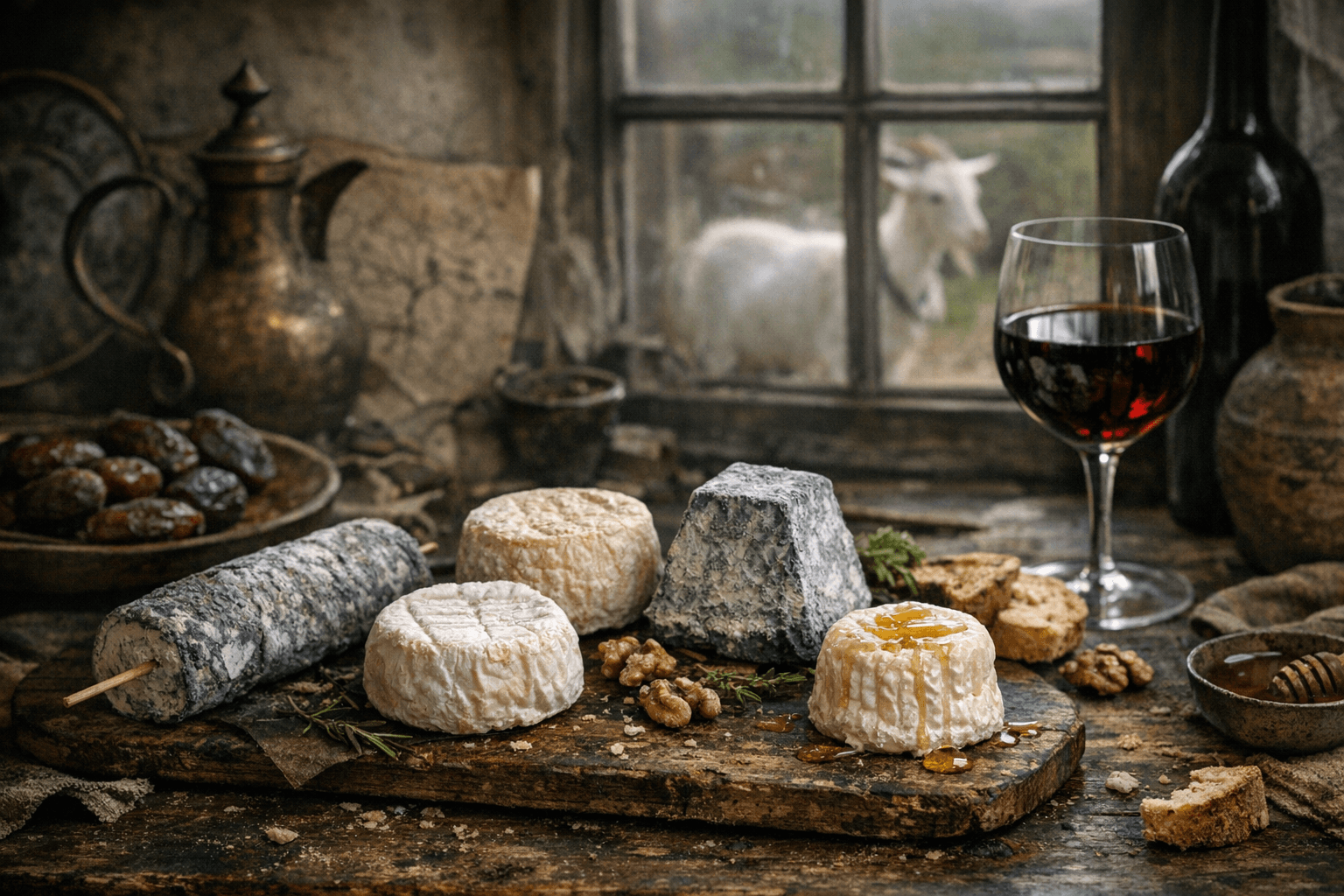
What is not in dispute is the geography. Centre-Val de Loire produces five goat cheeses carrying AOP protection: Crottin de Chavignol, Pouligny-Saint-Pierre, Sainte-Maure de Touraine, Selles-sur-Cher, and Valençay. Five cheeses. One region. Produced from Alpine, Saanen, and Poitevine goats — breeds whose ancestry is more verifiable than the Saracen theory, though no one has formally pressed the issue. The AOP system is the French government's way of doing what the legend does romantically: asserting that a place and a product are inseparable. In that sense, the bureaucracy and the folklore agree, even if the historians do not.
Loire Valley AOP Chèvre: Five Cheeses That Did Not Need the Story to Be True
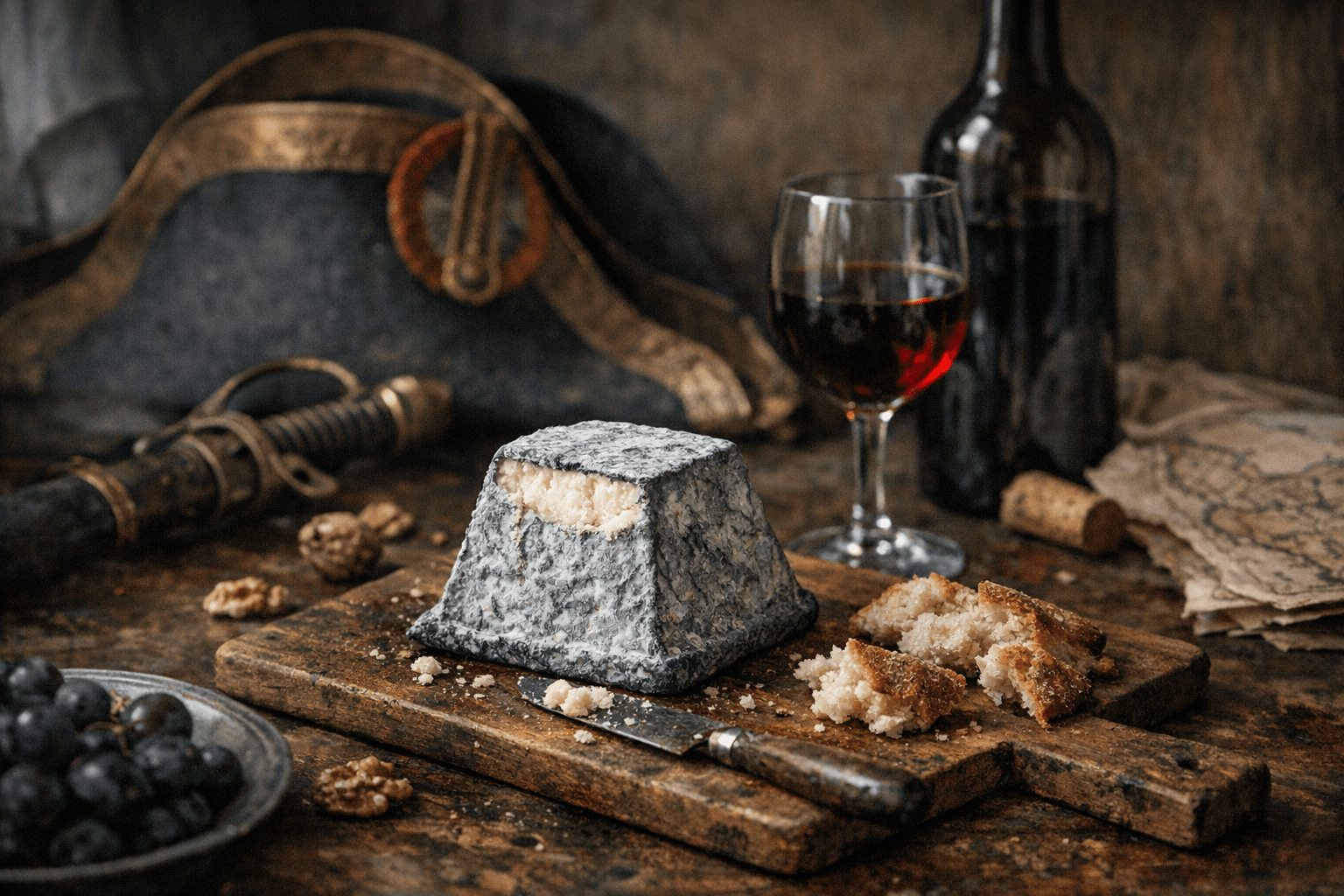
Crottin de Chavignol has held AOP status since 1996 and is aged a minimum of ten days, during which it progresses from mild and chalky to sharp and concentrated, depending on how patient you are and how seriously you take your cheese course. Sainte-Maure de Touraine is a log-shaped chèvre traditionally pierced lengthwise by a rye straw — originally a structural solution to keep the soft cheese from collapsing, now a format so distinctive it functions as a kind of edible trademark. Selles-sur-Cher is dusted in ash and ringed with a thin blue-grey exterior that suggests sophistication without announcing it. Valençay is the truncated pyramid whose flat top, according to one persistent account, was ordered by Napoleon himself upon returning from a failed Egyptian campaign — the original shape reminded him of a conquered pyramid, and he was not in the mood. Pouligny-Saint-Pierre stands tall and tapered, and is sometimes called the Eiffel Tower of chèvre, which tells you something about French architectural self-regard.
In terms of production volume, Sainte-Maure de Touraine is the dominant format, with 1,829 tonnes recorded in 2024, while Crottin de Chavignol produced 656 tonnes that same year — down from 897 tonnes in 2020. The overall trend across all five AOP chèvres has been modestly declining since 2022, which is either a story about shifting agricultural economics or simply the natural result of making a product with genuine geographic constraints. The region cannot expand to meet demand by relocating to a business park outside Lyon. That is, more or less, the point of the appellation system.
The Protocol: Clinically Unverified, Historically Unconfirmed, Thoroughly Recommended
A peer-reviewed intervention study did examine goat cheese consumption in a controlled setting — 60 grams daily, within a hypocaloric diet, with exercise — and found meaningful changes in certain cardiovascular markers. This is worth knowing and worth not overstating. The study involved a specially enriched cheese, a structured caloric deficit, and physical activity requirements. It is not a license to describe Loire chèvre as cardioprotective, and it would be professionally irresponsible to imply otherwise. What it does suggest is that goat cheese, consumed within a diet that is also doing the other things a diet is supposed to do, is not working against you. That is the accurate claim.
What the wellness industry will do with 'a study involving goat cheese showed improvements in HDL cholesterol' is a separate and more alarming question, one best left unanswered.
The Saracens may or may not have left their goats in the Loire Valley. The French may or may not have turned a 732 military withdrawal into a regional food tradition that now carries five government-protected designations and generates nearly four thousand tonnes of chèvre annually. What is not folklore is the rye straw in the Sainte-Maure de Touraine, or the ash on the Selles-sur-Cher, or the particular sharpness of a well-aged Crottin de Chavignol eaten with a glass of Sancerre at a temperature that suggests someone planned ahead. The legend does what all good origin stories do: it makes the thing feel inevitable. The cheese, to its credit, earns that on its own.
* This article contains opinions, satire, and possibly correct information about wine and cheese. It is not medical advice.