The marriage was fine until the macro calculator moved in. A darkly comic dispatch from the front lines of ketogenic domestic warfare.
The marriage was fine until the macro calculator moved in. Like most couples, we had survived disagreements about money, in-laws, and whose turn it was to take out the trash. But nothing prepared us for the quiet domestic terrorism of tracking net carbs. What started as a health experiment became a spreadsheet with feelings, and almond flour became the expensive, gritty symbol of everything wrong with our new life.
The Replacement Economy Takes Over
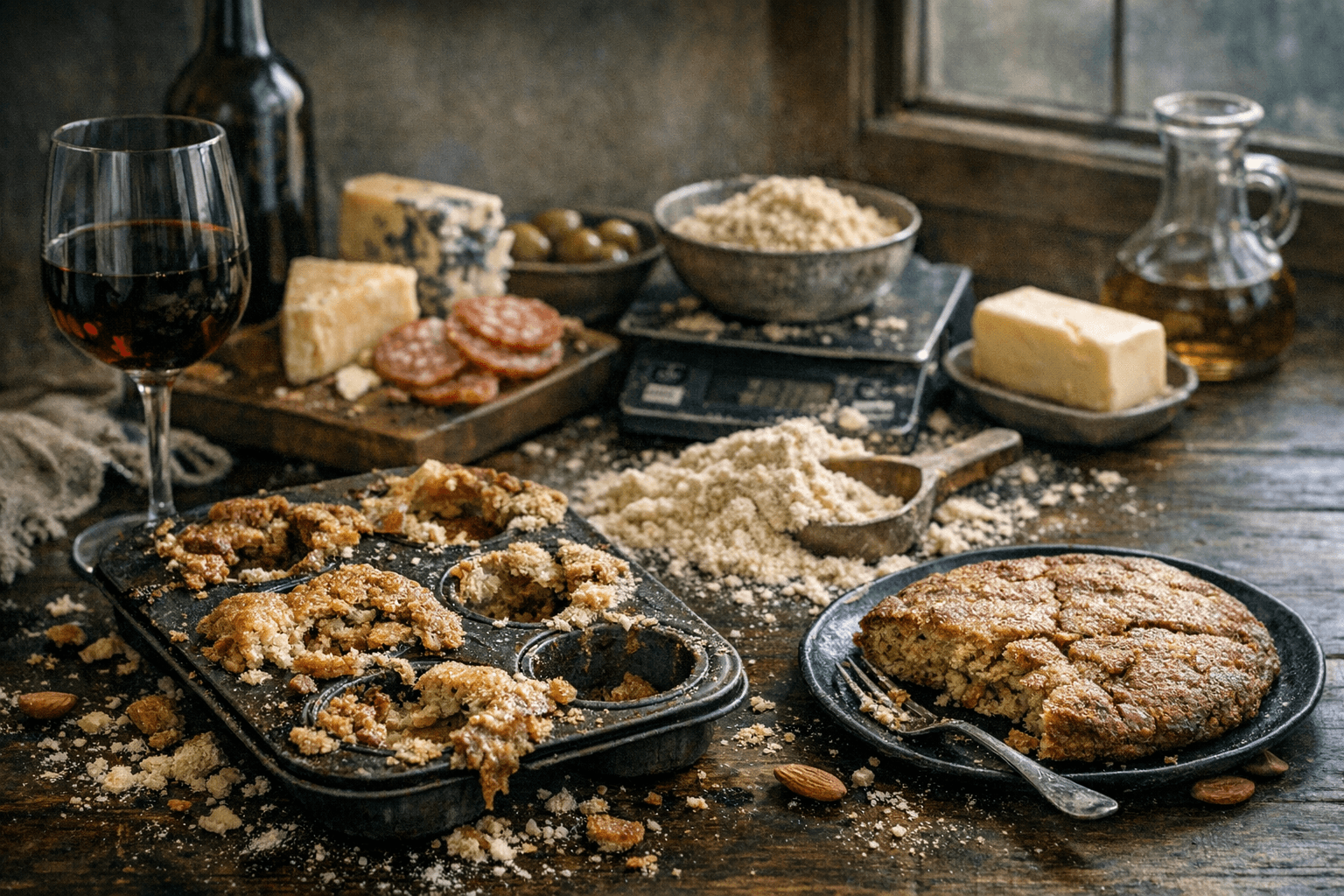
Keto doesn't just remove carbs—it replaces them with ingredients that cost three times as much and require a chemistry degree to use properly. Almond flour entered our kitchen like an expensive houseguest who never leaves. At $12 a bag, it promised to restore normalcy to our carb-free existence. Instead, it delivered cupcakes with the texture of wet sand and the emotional weight of failure.
The ketogenic baking aisle became our crime scene. While peer-reviewed research suggests almond flour actually produces moister, more tender results than coconut flour in ketogenic cupcakes, our kitchen told a different story. Every failed attempt at 'keto-friendly' desserts became evidence of our collective inadequacy. We weren't just bad at baking—we were bad at being good for ourselves.
When Dinner Becomes a Spreadsheet
The real carb in keto is emotional labor. Every meal required negotiation, calculation, and the kind of advance planning usually reserved for space missions. My spouse would eye my dinner plate like an auditor, mentally calculating whether my Brussels sprouts put us over our daily allowance. Romance died somewhere between the MyFitnessPal notification and the third argument about whether olives counted as a snack or a garnish.
Dr. Eric Westman's 'prescription strength' keto approaches actually recommend avoiding nut flours and nut butters initially to keep carbs very low. We learned this after six months of fighting over increasingly elaborate almond flour contraptions that were neither satisfying nor sustainable. The irony was perfect: we were failing at a diet that explicitly warned against what we were doing.
The Tiny, Expensive Problem We Kept Buying in Bulk
Almond flour is the relationship equivalent of a tiny, expensive problem you keep buying in bulk. Each bag represented hope. This time, the keto bread would work. This time, the fat bombs wouldn't taste like desperation. This time, we'd crack the code of making dietary restriction feel like abundance instead of punishment.
The flour accumulated in our pantry like evidence of shared delusion. Costco-sized bags of potential, each one a monument to our inability to accept that some problems can't be baked away. Meanwhile, our actual relationship starved for the kind of nourishment that doesn't come with macronutrient profiles and ingredient lists longer than wedding vows.
The Recovery Process
Recovery required a formal intervention with ourselves. We agreed to a 30-day moratorium on all alternative flours and macro tracking apps. The silence was deafening. Without the constant background hum of dietary optimization, we remembered what it felt like to eat without performing calculations. We rediscovered the revolutionary concept of stopping when full, rather than stopping when the app said we'd hit our daily fat target.
The hardest part wasn't giving up ketosis—it was giving up the shared mission. Couples need projects, and keto had been ours. Without macros to track, we had to find new ways to feel productive together. Turns out, arguing about Netflix selections produces significantly less cortisol than arguing about net carb counts.
We eventually called a ceasefire. Not because keto was inherently evil, but because we'd confused a dietary experiment with a moral obligation. The almond flour bags still lurk in our pantry, expensive reminders that health culture's promise of transformation often costs more than advertised. These days, we eat actual bread sometimes, track nothing, and save our calculations for things that matter. Some carbs are worth the fight. Others just aren't worth the marriage.
* This article contains opinions, satire, and possibly correct information about wine and cheese. It is not medical advice.