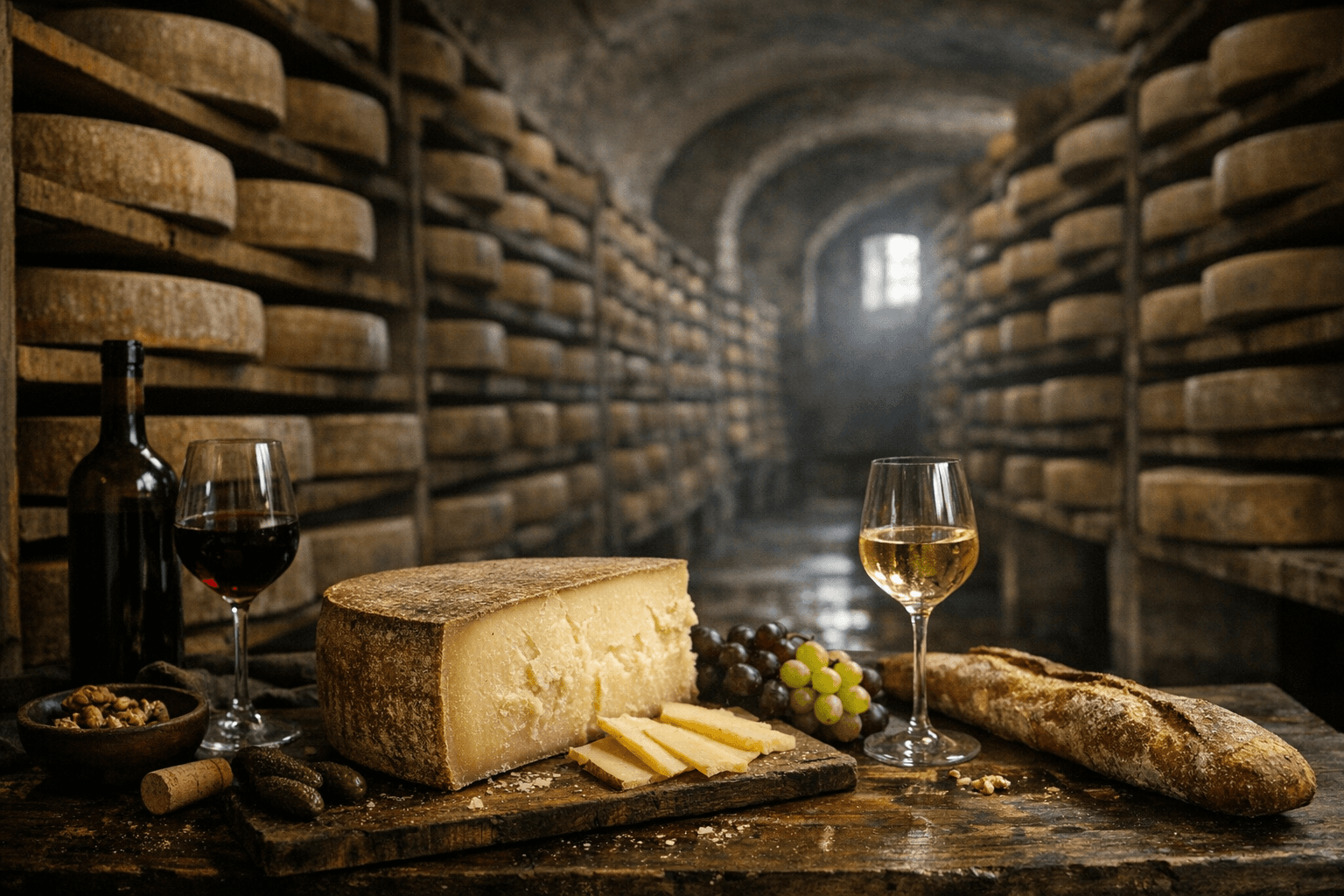
Inside a 19th-century Jura fortress, master affineur Arnaud tends to roughly 100,000 wheels of Comté with the patience of a man who has never once been impressed by a countdown timer.
Somewhere in the Jura mountains of eastern France, inside a 19th-century military fortress that never fired a meaningful shot in defense of the republic, approximately 100,000 wheels of Comté are aging in the dark. The fort was built to guard against Prussian invasion. It now guards against the possibility of your cheese being mediocre. In the wellness industry, this kind of repurposing would be called a pivot. In the Jura, they just call it Tuesday.
What Napoleon's Engineers Built, the Dairy Industry Quietly Annexed
Fort des Rousses sits at Les Rousses in the high Jura, a place where the winters are serious and the cheese is treated with corresponding gravity. The fortress was constructed in the 1800s with the military logic of the era: thick stone walls, vaulted underground galleries, a temperature that holds at a steady 8°C year-round regardless of what the season is doing above ground. The Prussians never came. But the Comté did, and it turns out the fort's defining architectural features — constant cold, deep stone, humidity that doesn't waver — are precisely what you need to age 40-kilogram wheels of raw-milk cheese for twelve to twenty-four months without incident.
The caves d'affinage now operated by master affineur Arnaud occupy kilometers of those underground galleries, stacked floor to ceiling with wheels in a configuration that is equal parts warehouse logistics and monastic commitment. This is not a boutique operation. The numbers alone — roughly 95,000 wheels on any given day, rounded up to 100,000 in every brochure because 95,000 lacks a certain rhetorical punch — suggest an enterprise that has moved well past charming and into something closer to awe-inducing. The $72 billion wellness industry would call this a "mindful slow-food ecosystem." Arnaud, one suspects, would not use those words.
The Protocol: Sensory Expertise, Administered Cold
The affineur's role is clinically unverified by any wellness certification body, which is probably why it actually works. Arnaud's practice is built on touch, sound, and smell rather than an app subscription. Each wheel is tapped with a small hammer — the hollow resonance tells an experienced hand whether the interior is developing correctly or beginning to fail. The rind is monitored. The salt balance is assessed. The environment is trusted to do its work at 8°C while the affineur supplies the one variable the cave cannot provide on its own: judgment.
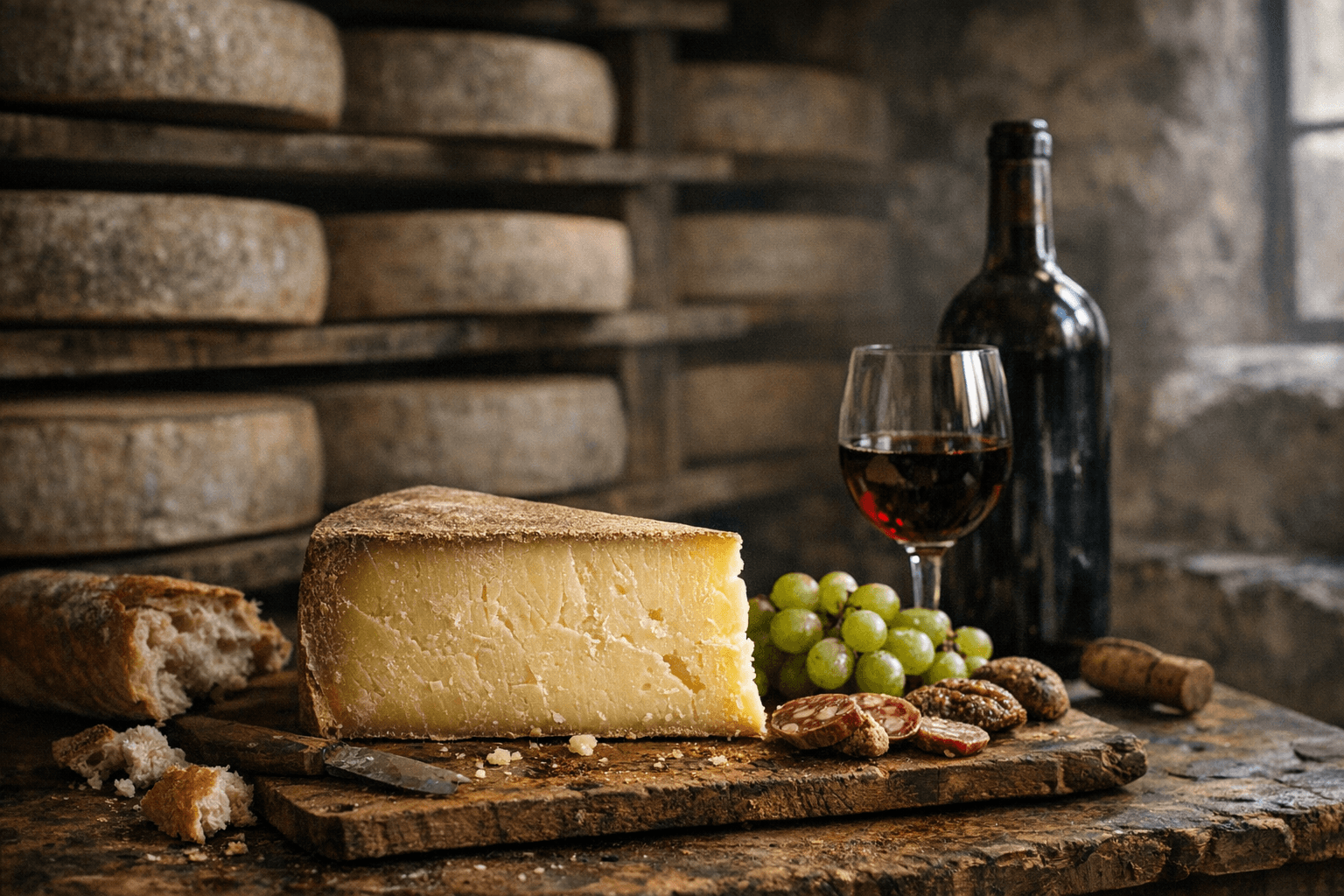
What emerges, after anywhere from twelve months to considerably longer, carries a flavor profile that no fast-casual cheese counter is going to replicate on a compressed timeline. The Comté from Fort des Rousses tends toward creamy firmness with dried fruit, almond, hazelnut, an earthy register that the stone itself seems to contribute, and a citrus-spice finish that arrives late, like a point someone makes after the conversation has moved on. These are not marketing descriptors. They are what happens when a wheel of raw Montbéliard milk ages long enough inside a cold Jura fortress under the supervision of someone who actually knows what he is listening for.
8°C, No Saturdays, Bring a Jacket
The fort offers guided tours of the caves, running ninety minutes to an hour and forty-five, Tuesday through Sunday, with Saturdays conspicuously absent from the schedule. There is no recorded explanation for why Saturday is exempt, and the silence on this point is somehow more Jura than any explanation could be. Visitors are advised to bring warm clothing. The cave is 8°C in July. It is 8°C in January. The cheese requires consistency. The tourist is simply asked to accommodate.
This is, it should be noted, the opposite of every modern wellness protocol, which tends to demand that the environment accommodate you — your comfort level, your schedule, your preference for experiences that end with a gift shop purchase and a feeling of personal growth. Fort des Rousses asks you to show up on its terms, dressed for it, and to spend ninety minutes learning what patience looks like when it is being practiced by someone other than yourself. As field studies go, it is among the more useful ones available in the Jura. The Vin Jaune from the same region, made from Savagnin grapes aged six-plus years under flor, pairs with this particular Comté in a way that is either deeply regional or deeply obvious, and possibly both.
The wellness industry has spent considerable resources convincing people that transformation is available on demand, that the right protocol administered urgently enough will produce the desired result before the weekend. Arnaud's caves are a useful counter-argument, offered without any interest in making a counter-argument. The wheels sit in the dark. The temperature holds. The affineur taps and listens. The cheese arrives, eventually, at exactly what it was always going to be, given sufficient time and someone who knew better than to rush it. This is not a lifestyle philosophy. It is just how Comté works. The fortress happened to be available.
* This article contains opinions, satire, and possibly correct information about wine and cheese. It is not medical advice.