Three crostini recipes — ricotta and honey, fig and blue cheese, goat cheese with roasted garlic — that will make you look like you were expecting company all along. You were not.
Someone is at your door. They texted twelve minutes ago, which is the amount of time it takes to drive from their house to yours, so the text was not really a warning. It was a notification. You have a baguette, some cheese, and a jar of honey, which means you are, against all reasonable odds, prepared. These three crostini recipes are built for exactly this situation — not because entertaining should feel frantic, but because it should not look frantic, and those are two very different things. The stopwatch, for the record, starts once the ingredients are on the counter.
Ricotta and Honey: The One That Looks Fancy Without Trying
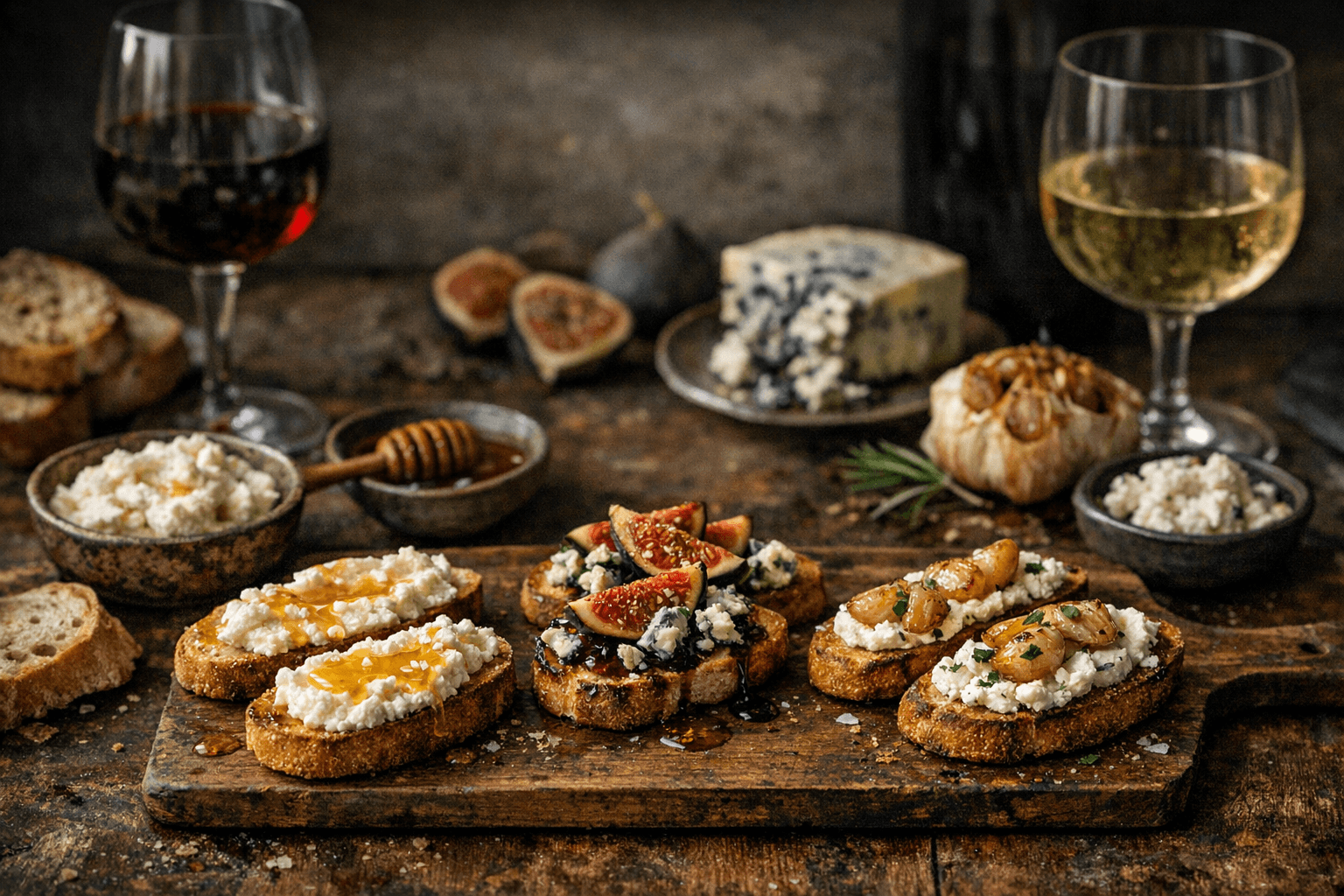
Slice a baguette on the bias, about half an inch thick. Toast the slices in a dry skillet over medium heat, two minutes per side, or run them under a broiler while you open the ricotta. Spread a generous layer of whole-milk ricotta — look for Calabro or BelGioioso, both widely available and made without gums or stabilizers — and finish with a slow drizzle of wildflower or chestnut honey. A few flakes of Maldon sea salt and a crack of black pepper, if you have it. That is the recipe.
The wine pairing here is a Prosecco Superiore DOCG from Conegliano Valdobbiadene — something like Bisol's Crede or Nino Franco's Rustico. The light sweetness in the Glera grape meets the honey without competing, and the acidity cuts through the fat in the ricotta. Italy's Veneto region, where both Prosecco and a meaningful share of the country's Italian-type cheeses originate, has been producing this combination in spirit, if not in name, for a long time. It works because the components understand each other.
Fig and Blue Cheese: The One with Opinions
This crostini has a point of view. Use dried figs rather than fresh — dried Mission or Calimyrna figs are denser, sweeter, and more consistent year-round, and they will not make the toast soggy. Slice them thin. The cheese should be Roquefort, made from raw Lacaune sheep's milk in the Combalou caves of Roquefort-sur-Soulzon in southern France, and aged under AOP regulations that have been in place since 1925. A small wedge goes a long way. Crumble it directly onto the toasted bread, layer the fig slices over the top, and add a small sprig of fresh thyme if you happen to have it. You probably do not, and the crostini will be fine.
Pour a Sauternes — Château Doisy-Daëne from Barsac, or a half-bottle of Château Guiraud if you are feeling committed. The botrytized Sémillon in a good Sauternes brings apricot and marmalade notes that mirror the dried fig's concentrated sweetness, while the wine's acidity manages the salinity and fat in the Roquefort without asking anyone to compromise. If Sauternes is not in the house, a chilled Rivesaltes Ambré from Roussillon will handle the assignment without complaint.
Goat Cheese with Roasted Garlic: The 10-Minute Legal Disclaimer
Conventional oven roasting turns raw garlic into something soft, sweet, and spreadable in about forty-five minutes. This recipe does not have forty-five minutes. What it has is a small skillet, a tablespoon of olive oil, and two or three unpeeled garlic cloves pressed flat with the side of a knife. Cook them over low heat, covered, for seven to eight minutes, turning once. The result is not identical to oven-roasted garlic — it is closer to confit, lightly golden, mellowed but not caramelized. It is still very good, and it will not stop the clock.
Spread chèvre — Bûcheron from the Loire Valley, or a domestic log from Cypress Grove in Arcata, California — onto the toasted bread. Press a softened garlic clove onto the cheese and finish with a thread of good olive oil and a pinch of smoked paprika or fresh thyme. The wine pairing is a Sancerre, specifically Henri Bourgeois's La Bourgeoise or Lucien Crochet's Le Chêne Marchand, both from the Loire's Chavignol appellation. Sauvignon Blanc from this region carries a distinctive minerality and herbaceous edge that mirrors the chèvre's tang and the garlic's softened bite in a way that feels less like a coincidence and more like planning.
The guests are now inside. They are commenting on how put-together everything looks. You have three different crostini on a board, three wines open or ready to open, and the reasonable impression of a person who entertains with intention. None of this required advance warning. It required a baguette, a functional skillet, and the understanding that good cheese and good bread have been solving exactly this problem for longer than either of you has been alive. Set the board down, pour the wine, and do not mention the text.
* This article contains opinions, satire, and possibly correct information about wine and cheese. It is not medical advice.