The wine industry has spent decades convincing you that Champagne belongs at midnight. The cheese drawer disagrees. A sensory argument for opening the bottle on Tuesday.
Somewhere along the way, the wine industry made a category error, and we all agreed to live inside it. Champagne became a ceremonial object — the bottle you retrieve for countdowns, promotions, and the kind of milestones that require a group photograph. This is a remarkable achievement in collective misdirection, because what actually lives inside that bottle is not a trophy. It is, by any sensory measure, one of the most practically useful wines made anywhere on earth. The occasion has been a marketing construct. The utility has been there the whole time.
The Tuesday Test, Administered Clinically
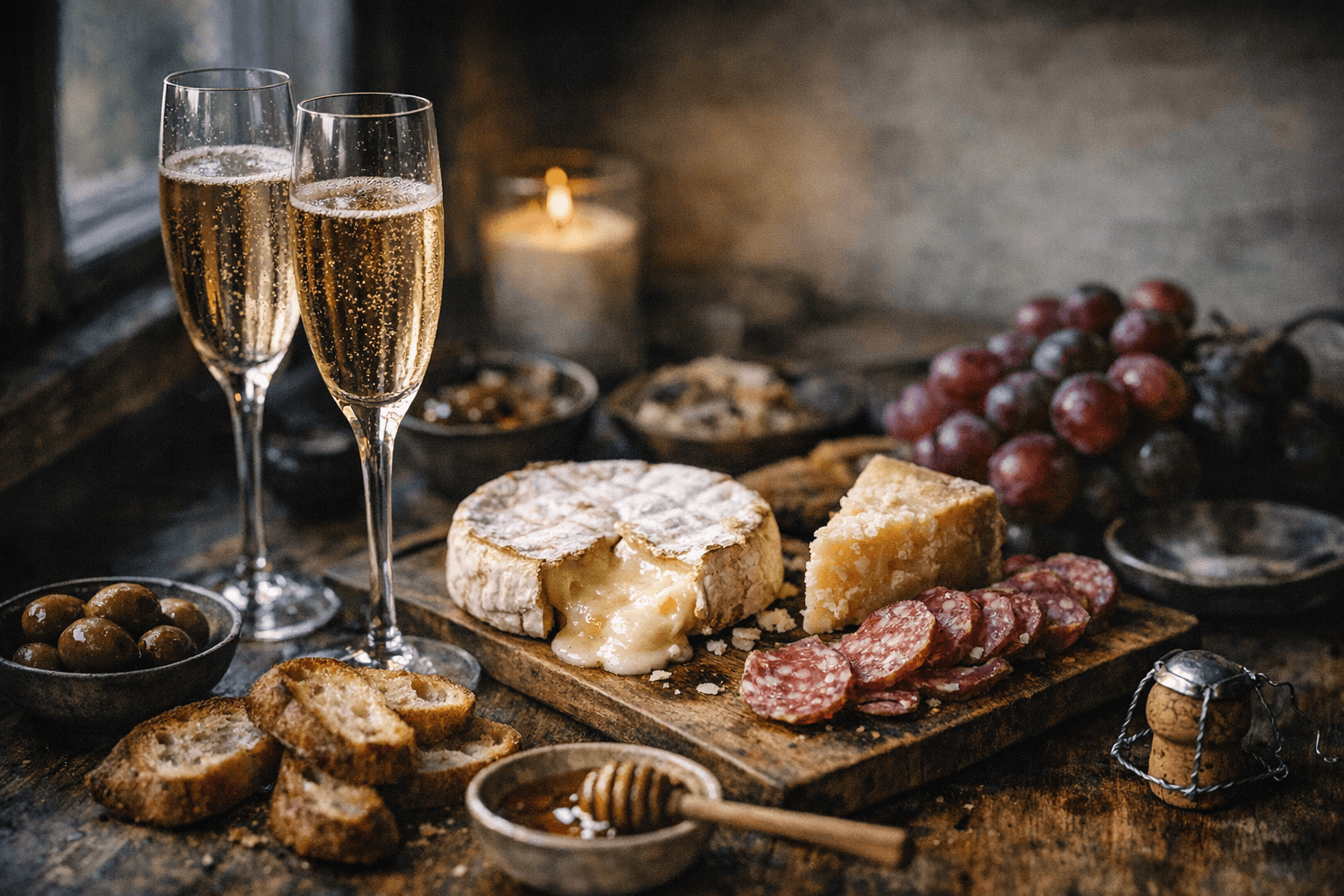
Consider what Champagne actually does in the glass. High acidity cuts through fat — the same function a squeeze of lemon performs over roasted chicken, except the Champagne also brings carbonation, which stimulates the palate between bites of something salty, fried, or aggressively creamy. Brut styles are dry enough to work alongside a broad range of savory foods without competing. And the bottle-fermented complexity that distinguishes Champagne from Crémant, Cava, Prosecco, or American sparkling wine — the brioche, the toasted brioche, the faint nuttiness — echoes the flavors already present in aged cheeses and anything that has spent meaningful time in a hot pan.
This is not a ceremonial profile. This is a utility profile. The wine is doing the same structural work as a good table white, except it arrives with carbonation and three grape varieties — Chardonnay, Pinot Noir, and Meunier — whose combined range spans lean citrus all the way through generous fruit and body, depending on how the house or grower has assembled the blend. The Tuesday test is simple: open it with whatever is actually in the refrigerator. Odds are better than even it works.
A Utility With Considerable Paperwork
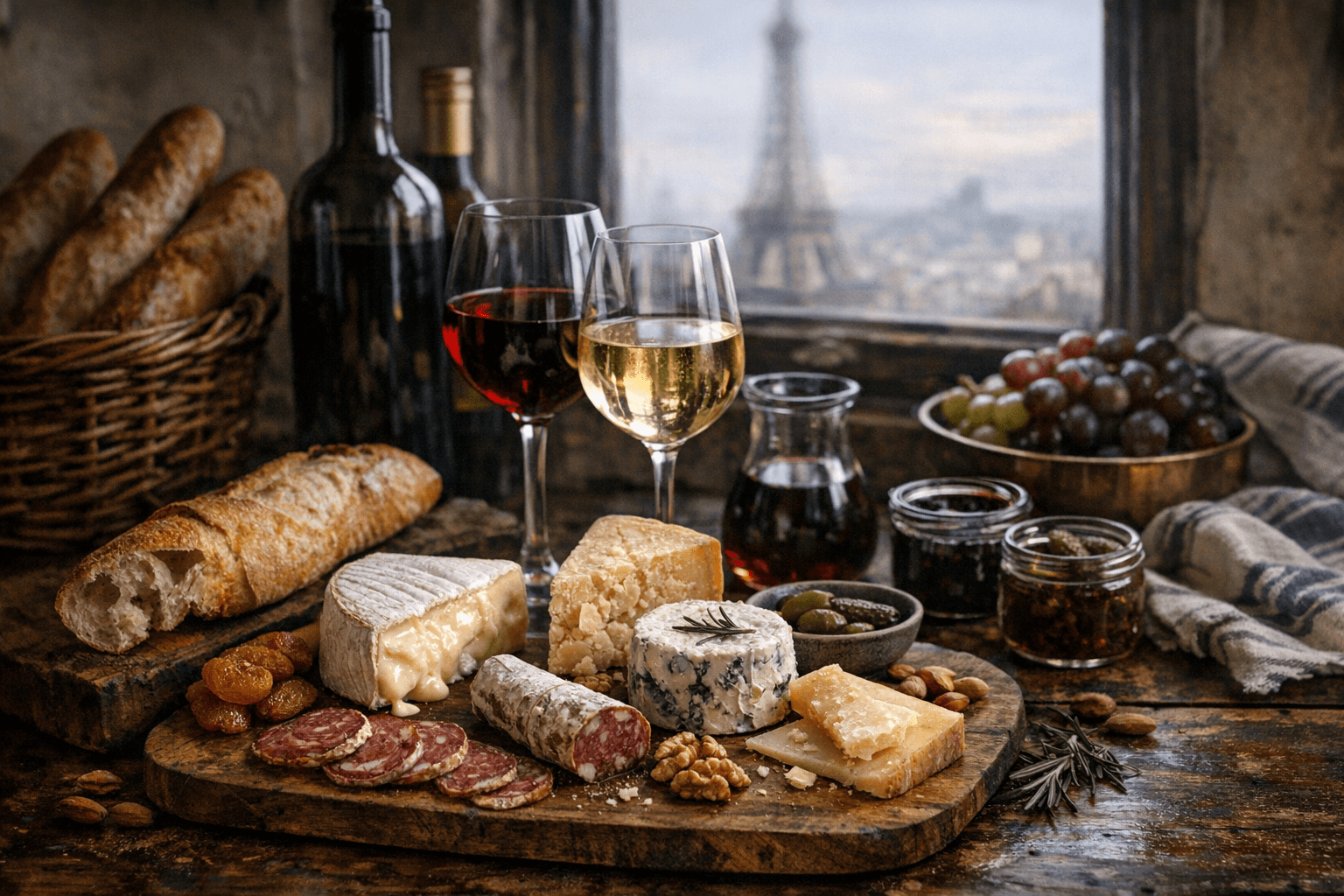
Part of what makes the occasion-only framing so strange is that Champagne is, behind its glamorous reputation, a tightly regulated agricultural product from a specific corner of northeastern France. The appellation covers roughly 34,200 hectares across 319 villages. The region shipped approximately 266 million bottles in 2025 — a large-scale agricultural and commercial system that, by volume alone, suggests the wine was not designed to be opened only when the clock reaches midnight. That is a lot of countdowns.
Champagne represents about 0.5% of global vineyard area but accounts for roughly 31% of sparkling wine consumption by value. The premium, in other words, is real and documented. Which makes the case for deploying it strategically, rather than reservationally, all the more compelling. A bottle sitting in a cabinet waiting for a sufficiently important moment is a bottle depreciating in cultural utility. The cheese has reached ideal ripeness. The laundry is folded. These are occasions. The industry simply forgot to tell you.
Dosage Is the Operating Manual, Not the Label
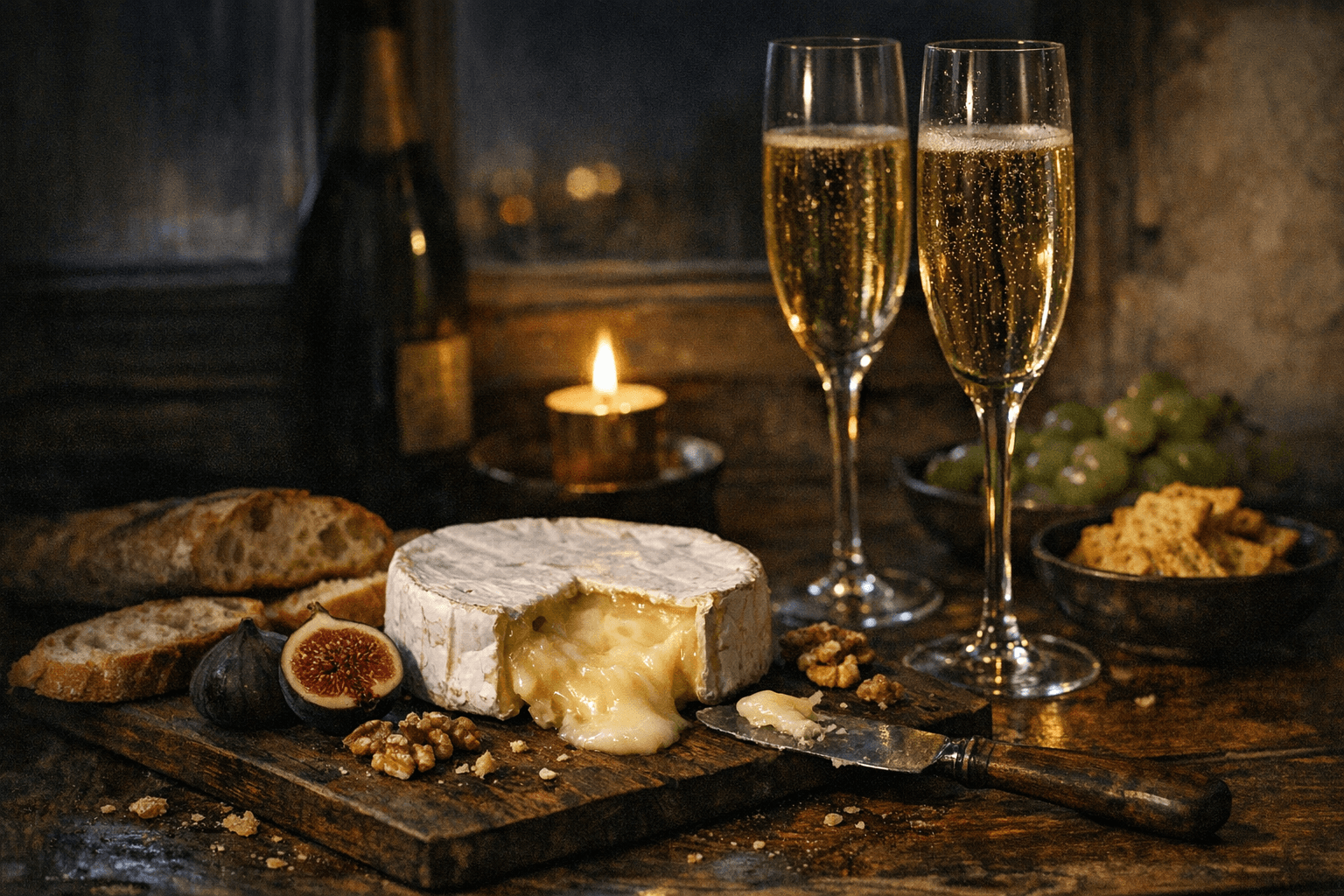
The practical argument for everyday Champagne breaks down immediately if you treat the category as a monolith. It is not. Brut Nature, Extra Brut, Brut, Extra Dry, Sec, and Demi-Sec differ meaningfully in residual sugar, and that difference functions as a food-pairing specification more than a sweetness preference. A Brut Nature — bone dry, no dosage — works differently with a ripe, runny soft-ripened cheese than a Demi-Sec would. A Blanc de Blancs built on Chardonnay brings a different acidity and citrus register than a Blanc de Noirs leaning on Pinot Noir and Meunier. The label is not telling you how formal the dinner should be. It is telling you what to put on the board.
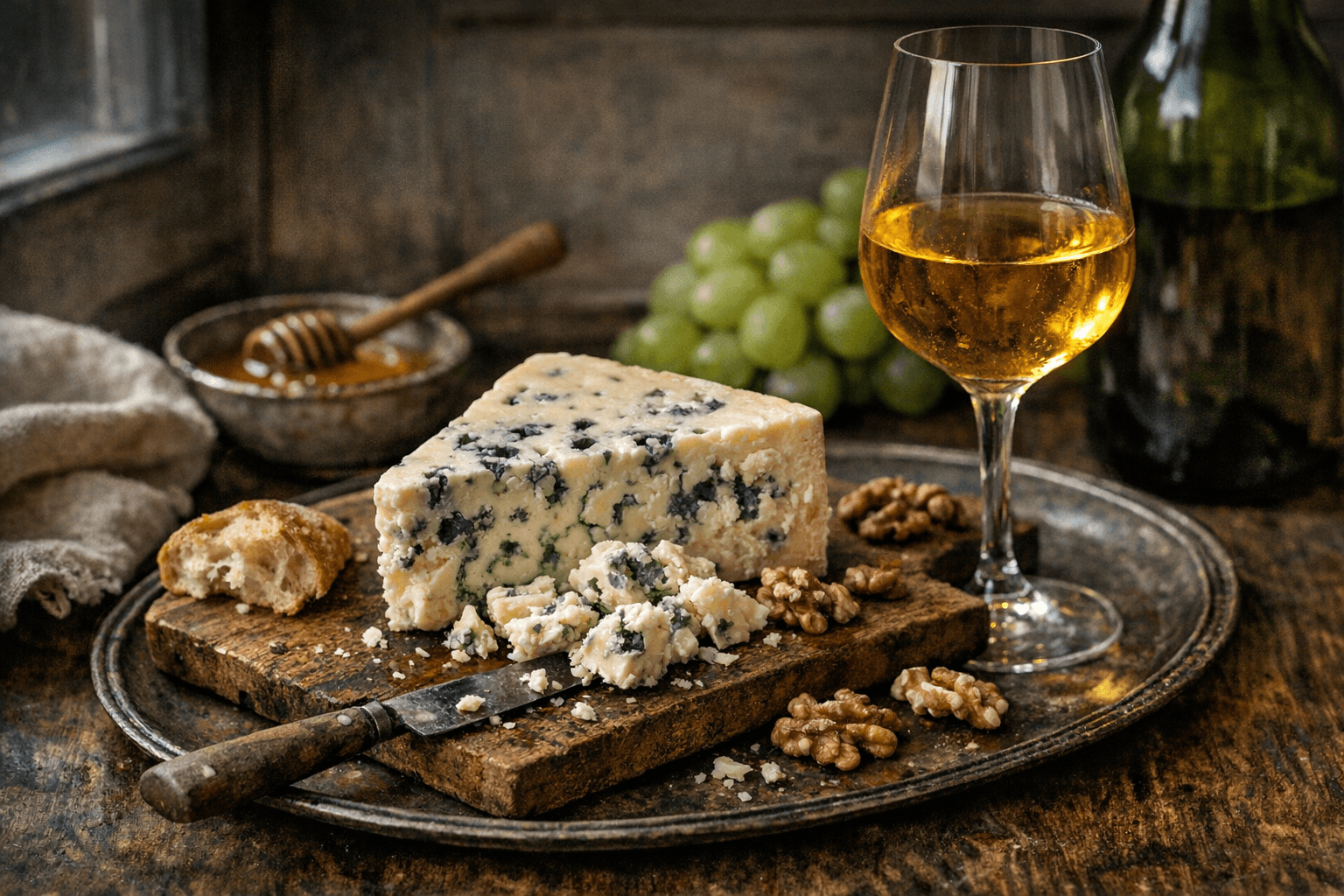
Blue cheeses deserve a brief warning here: salty, pungent styles can overpower a delicate Champagne, and the clinically unverified Field Protocol recommends against pairing a Grand Cru Blanc de Blancs with something that could strip paint. Match intensity to intensity. This is not ceremony. This is engineering.
The $72 billion wellness industry has spent considerable effort convincing people that what they consume should be aspirational, optimized, and timed to achievement. Champagne absorbed that framing and became its sparkling ambassador — the reward at the finish line, the toast at the top. What got lost was the simpler truth that a wine this versatile, this structurally useful, and this honestly delicious with a plate of good cheese and something fried belongs on a weeknight table, not in a cabinet awaiting permission. The occasion was never the point. The acidity, the bubbles, the dosage — that was always the point. The bottle has been waiting patiently for you to figure that out.
* This article contains opinions, satire, and possibly correct information about wine and cheese. It is not medical advice.