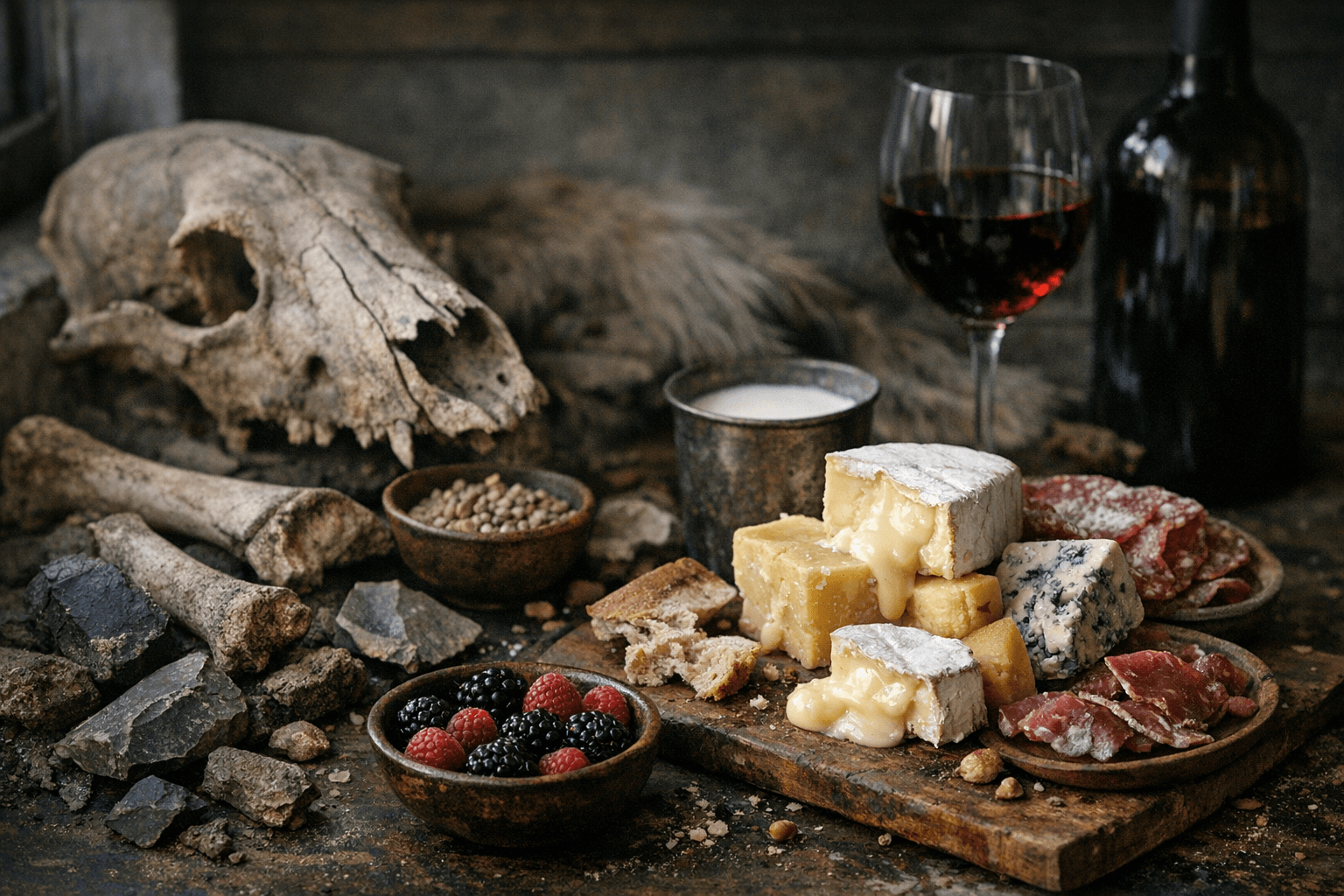
A 2024 isotope study of 15,000-year-old remains from Morocco found that prehistoric hunter-gatherers ate substantial plant protein. The caveman ribeye narrative, it turns out, was always more branding than biography.
The paleo diet has always operated on a particular kind of confidence — the confidence of a brand that believes its own origin story. The pitch is elegant: eat like your ancestors, and your body will recognize the food, reward you accordingly, and presumably develop better posture. The argument rests almost entirely on the phrase 'our ancestors,' which is doing extraordinary lifting for a marketing claim. So it was notable when researchers published a 2024 isotope study of 15,000-year-old human remains from Taforalt Cave in Morocco and found that the Iberomaurusian hunter-gatherers buried there had been getting a substantial share of their protein from plants. Not from a heritage breed brisket. From plants. The bones, as it happens, are not cooperating with the packaging.
The Archive Has Notes
The Taforalt study examined chemical markers in the bones and teeth of at least seven individuals who lived roughly 15,000 years ago. Isotope ratios in human remains reflect what a person ate over their lifetime — the chemistry is reasonably unambiguous. What the researchers found was a diet with meaningful contributions from wild plant sources, which directly contradicts the foundational paleo narrative that pre-agricultural humans were essentially obligate carnivores with a sideline in berries.
To be precise about what the broader archaeological record does support: early hominins were eating meat. Evidence from Gona, Ethiopia, places meat and marrow consumption at least 2.6 million years ago. Persistent carnivory shows up around 2.0 million years ago at Kanjera, Kenya. Nobody is arguing that our ancestors were medieval peasants eating pottage. The actual finding — the one that costs the paleo industry something — is that there was never a single ancestral menu. Diet varied by region, season, and what was available on a given Tuesday. The real historical pattern is flexible foraging, which is a significantly less marketable concept than 'eat like a caveman.'
The Exclusion List Is a Modern Document
Modern paleo guidelines prohibit grains, legumes, and dairy. This is presented as archaeological fact, a faithful recreation of what humans ate before agriculture corrupted everything. It is not. It is a contemporary dietary rule, written recently, by people who were not there. The exclusion of dairy, for instance, is defensible on narrow historical grounds — dairy as a regular food source does require animal domestication, which post-dates the Paleolithic — but the confident prohibition of legumes and grains has considerably less fossil support than its proponents suggest.
The StatPearls clinical review of the paleo diet notes that early humans mainly consumed uncultivated fruits, roots, tubers, vegetables, and sometimes honey, fish, and meat. That list reads less like a meal plan and more like 'whatever was edible within walking distance.' Mayo Clinic has observed that while short-term studies show some possible improvements in weight, blood pressure, and cholesterol markers for paleo-style eating, there are no long-term clinical studies establishing its benefits or risks. The diet may work for some people. The historical claim underwriting it, however, is clinically unverified by the bones themselves.
Our Ancestors Were Not Brand Loyalists
This is the part the paleo industry finds inconvenient: early humans were opportunists. Not in a pejorative sense — in a survival sense. They ate what was there. They ate meat when they could get it, plants when the hunt failed, tubers when plants were scarce, and honey when they found it, because calories were hard and the concept of a dietary philosophy was approximately 14,985 years away. The funniest version of this truth is that the original ancestors probably would have eaten your diet, your neighbor's diet, and whatever was left unattended near the fire.
Selling a diet on the premise that it restores some pure ancestral state requires that ancestral state to have existed and been uniform. The Taforalt remains suggest it was neither. What prehistoric humans actually ate was scarcity plus opportunity — which is a more accurate story, and a more human one, than the caveman ribeye fantasy that currently retails for about $49 per month with a free macros guide.
The $72 billion wellness industry has a complicated relationship with history. It needs the past to be legible, coherent, and conveniently supportive of whatever it is currently selling. The bones of Taforalt Cave are not playing along. They are 15,000 years old, they ate plants, and they have absolutely no interest in your subscription box. If your diet begins with the words 'our ancestors,' you owe the archive a fact check. The archive, it turns out, has been waiting.
* This article contains opinions, satire, and possibly correct information about wine and cheese. It is not medical advice.