The Loire Valley's bone-dry Muscadet Sèvre et Maine delivers mineral-driven precision and oyster-bar sophistication for the price of takeout pizza.
There's a French white wine sitting on store shelves for fourteen dollars that tastes like it should cost twice that. Muscadet Sèvre et Maine from the Loire Valley's western edge near Nantes delivers the kind of bone-dry, mineral-driven precision that makes you feel like you're dining at a coastal bistro instead of eating Tuesday night leftovers. Made from Melon de Bourgogne grapes—not Muscat, despite the name confusion—this is France's answer to the question nobody asked: what if wine could taste like the ocean without being sweet.
Not Your Cousin's Sweet White Wine
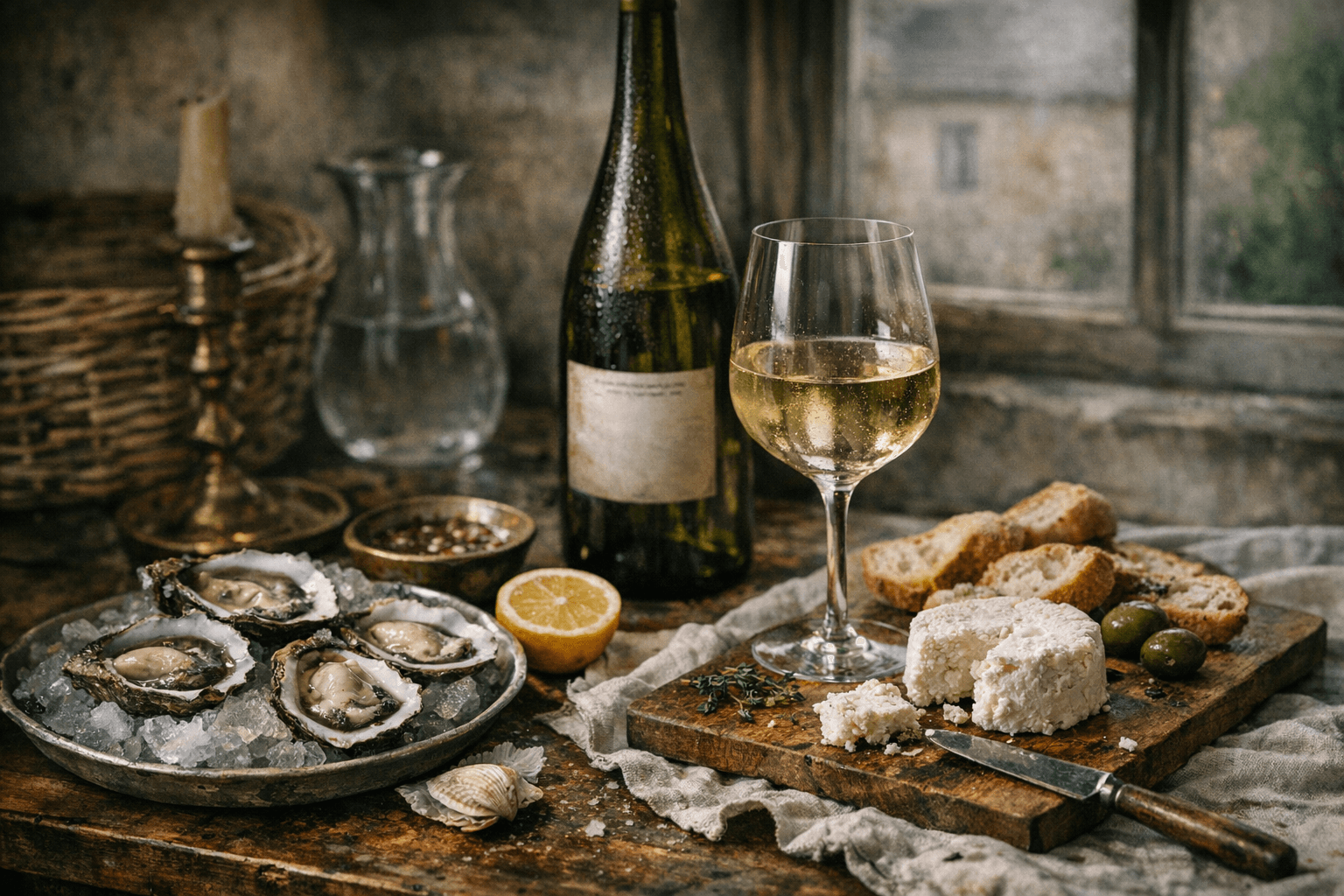
Muscadet earned its reputation as oyster's best friend through pure compatibility, not marketing. The high acidity and saline-like minerality of wines from producers like Domaine de la Pépière or Château du Cléray cut through brine and enhance shellfish without competing for attention. The Melon de Bourgogne grape became dominant in this region after the 1709 freeze killed most other varieties, and what survived was a grape that produces wines with citrusy precision and zero residual sugar.
The Muscadet Sèvre et Maine appellation covers the area between two rivers southeast of Nantes, where Atlantic influence meets Loire terroir. Labels marked 'sur lie' indicate extended lees aging, which adds subtle texture and a faint bread-crust complexity to the otherwise laser-focused profile.
The Cheese Connection Nobody Talks About
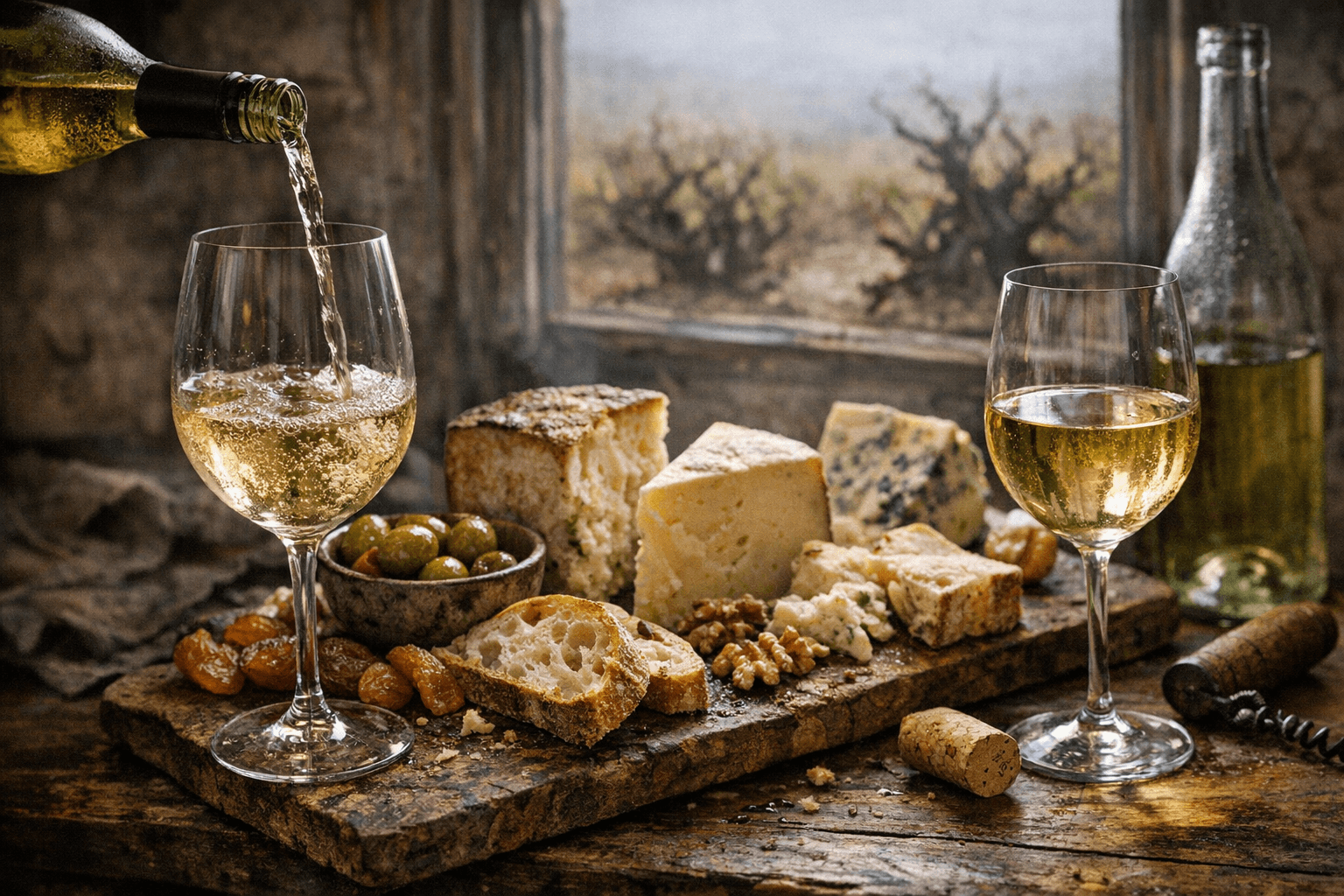
While the wine world obsesses over Muscadet's seafood pairings, the real secret lies in how it handles goat cheese. A 2019 Muscadet Sèvre et Maine sur lie from Domaine Landron cuts through the tang of Loire Valley crottins like Chablis cuts through Comté—cleanly and without drama. The wine's minerality mirrors the terroir these goats graze on, creating one of those pairings that feels inevitable once you try it.
Fresh chèvre benefits from Muscadet's acidity, while aged goat cheeses like Selles-sur-Cher find their earthy funk balanced by the wine's crisp precision. Even neutral cow's milk cheeses like Pont-l'Évêque gain complexity when paired with a well-made Muscadet that brings out subtle nutty notes without overwhelming the cheese's delicate profile.
The Tuesday Night Test
The true measure of any weeknight wine is whether it improves whatever you're eating without requiring special occasion status. Muscadet passes this test with the kind of quiet competence that makes you reach for the same bottle next week. A basic Muscadet Sèvre et Maine from producers like Marc Ollivier or Château de Chasseloir transforms simple grilled fish into something that feels intentional rather than convenient.
Sur lie versions add enough texture to stand up to cream-based pasta dishes or roasted chicken, while maintaining the bright acidity that keeps the wine food-friendly rather than competing with your meal. At fourteen to sixteen dollars, it's the kind of bottle that makes weeknight cooking feel less like obligation and more like choice.
The Loire Valley produces many wines that command attention through power or complexity. Muscadet earns respect through restraint and precision—qualities that become more valuable the more you cook at home. It's the wine equivalent of a well-cut white button-down: understated, versatile, and somehow always appropriate. That it happens to cost less than most restaurant glasses makes it the kind of secret worth keeping, except when it doesn't.
* This article contains opinions, satire, and possibly correct information about wine and cheese. It is not medical advice.