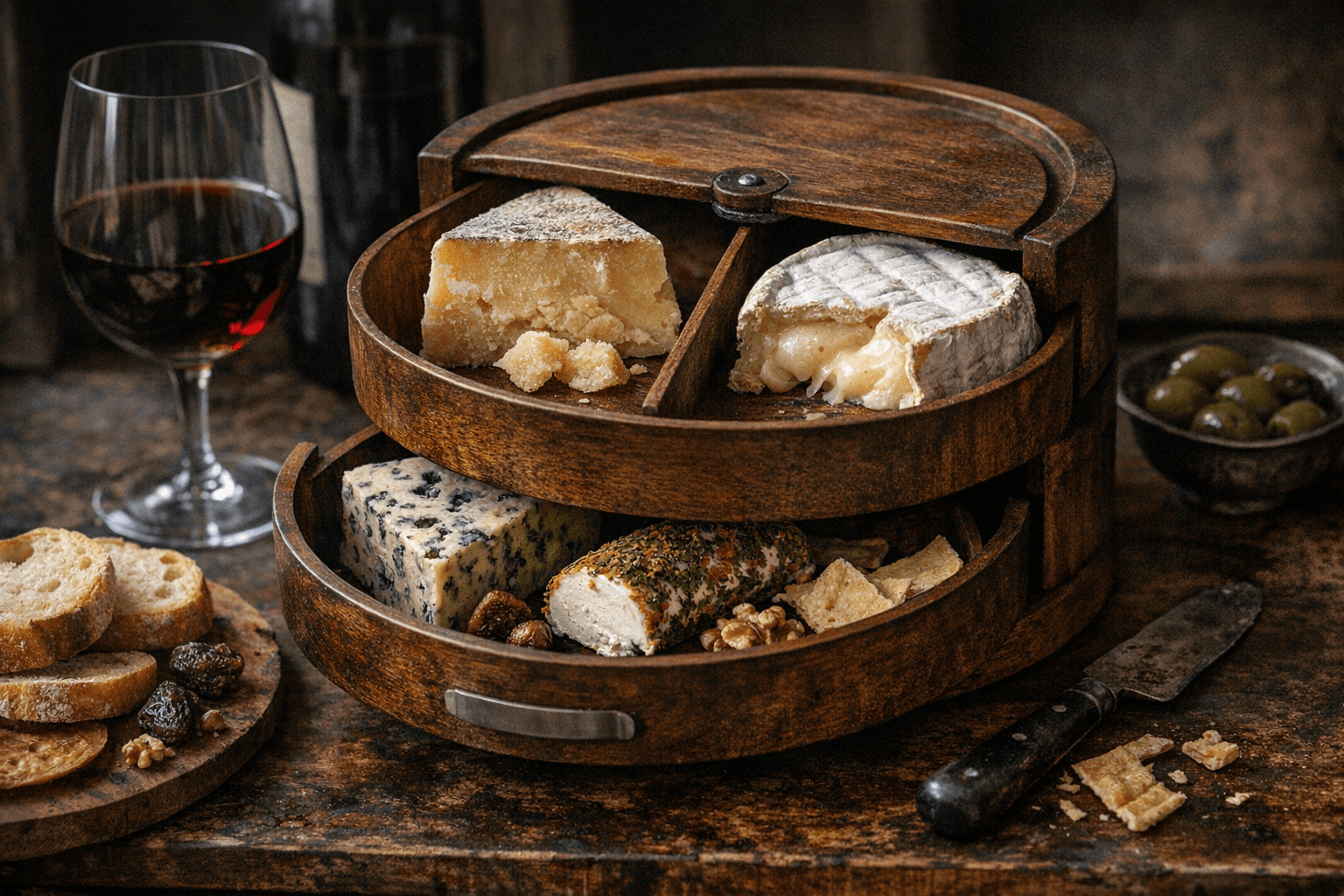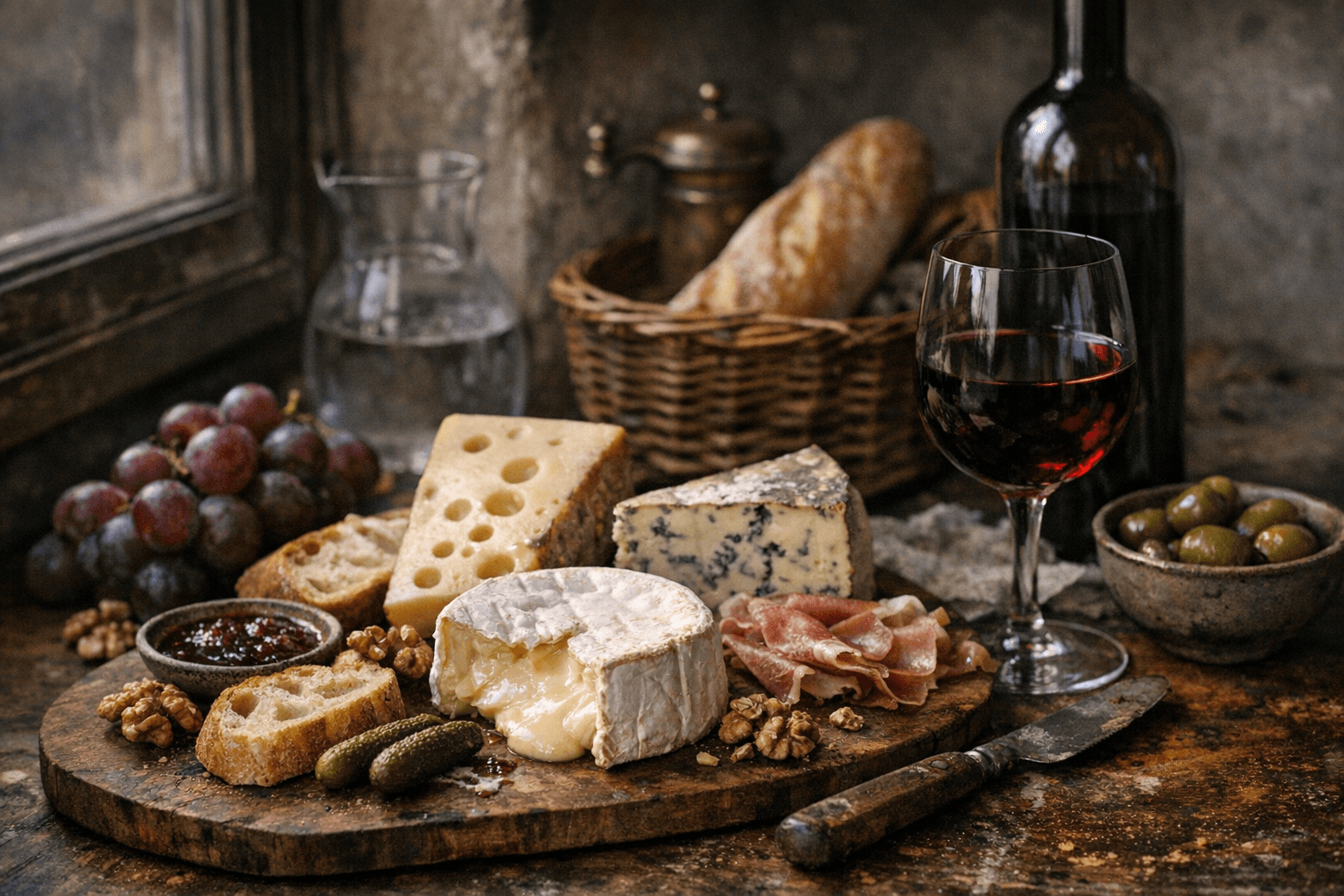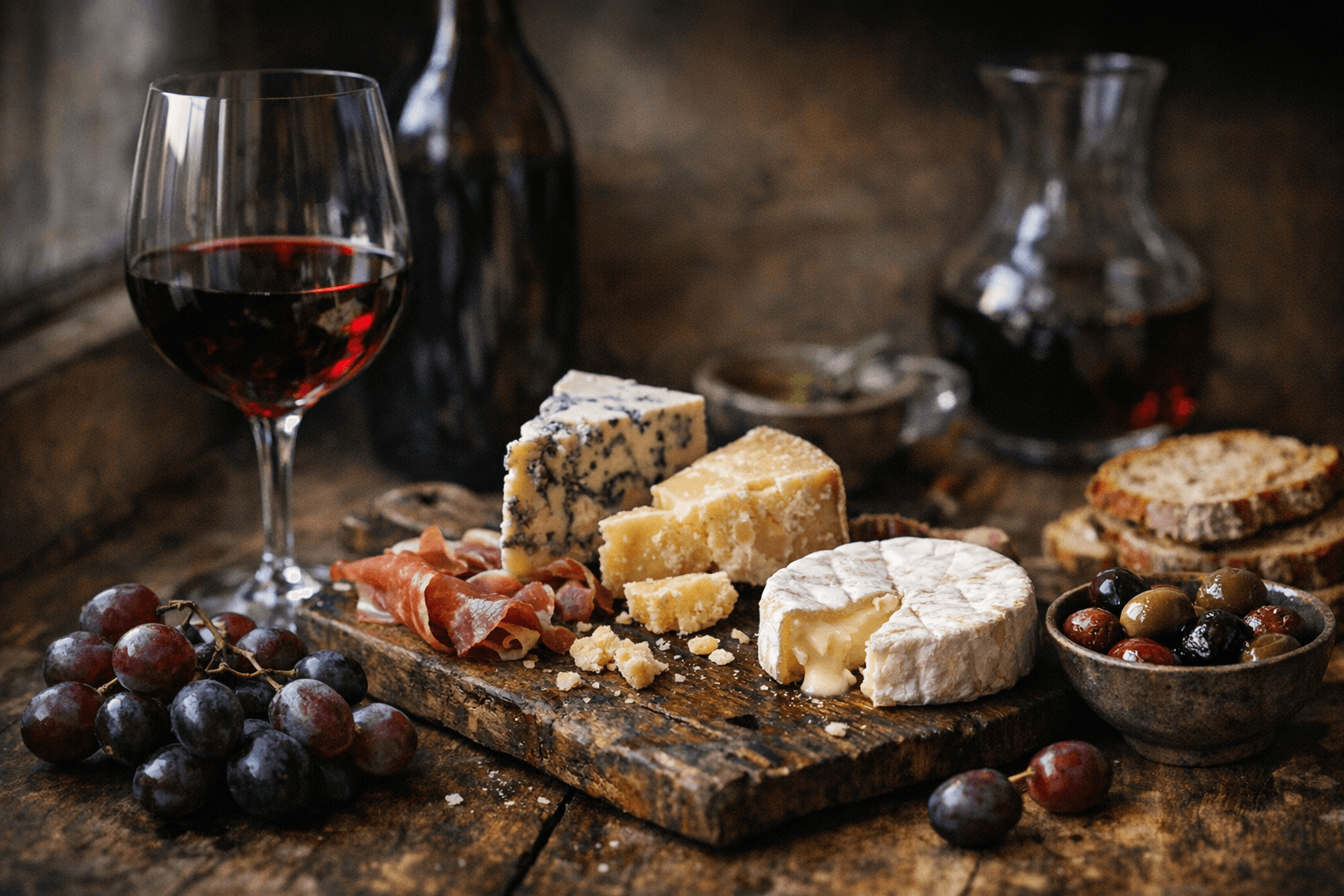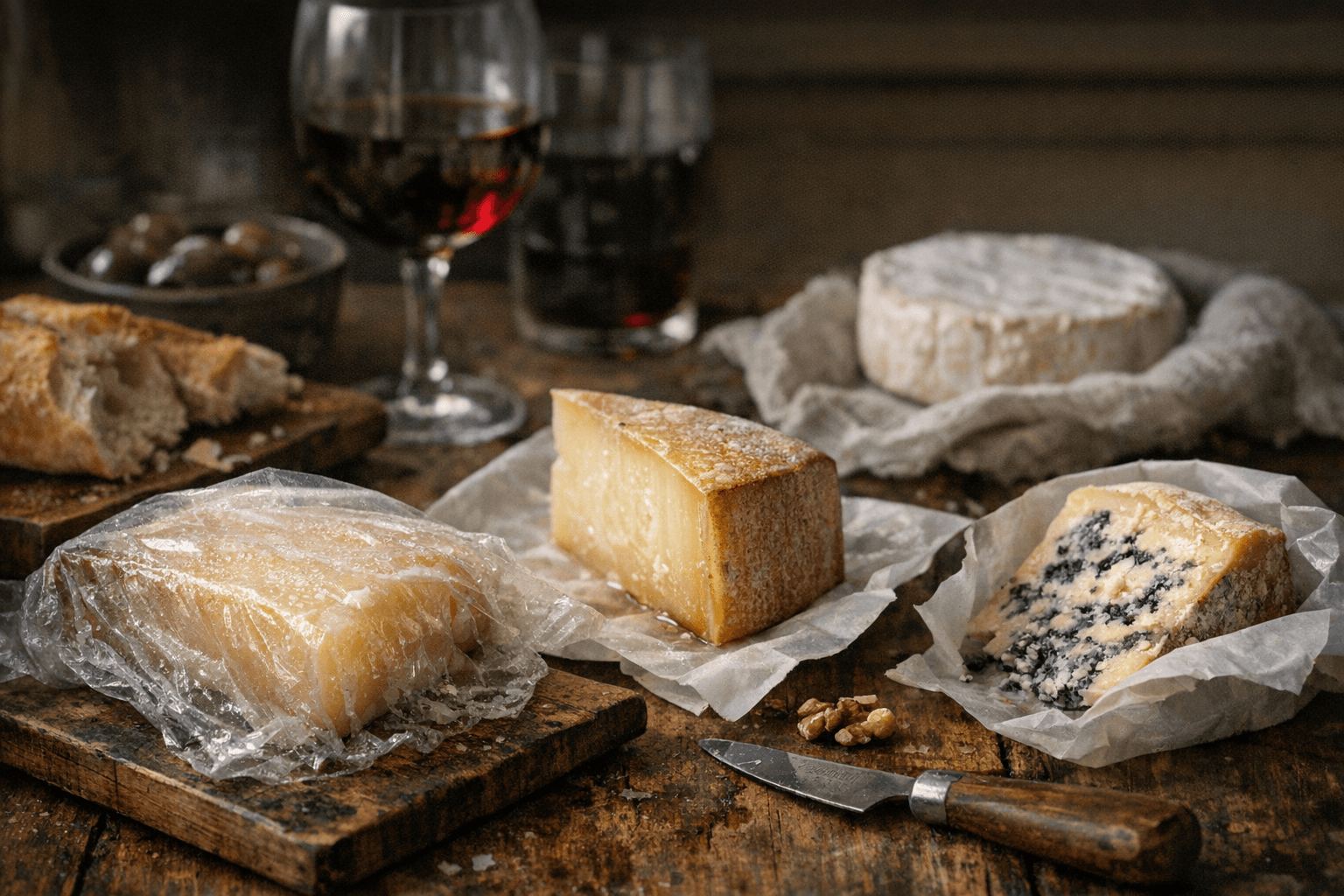
Plastic wrap does not kill cheese — it just creates a small, humid prison where the wrong things thrive. Here is what cheese paper actually does, and why it matters for anything you paid real money for.
The EU is on track to produce 10.72 million metric tons of cheese in 2025, according to a USDA Foreign Agricultural Service report. France alone accounts for roughly 1.9 million tonnes of that — Comté, Reblochon, Époisses, cheeses that spend months in carefully controlled caves with monitored humidity and deliberate handling — and then someone gets home from the cheese shop, pulls out the plastic wrap, and seals a wedge of Comté like it is a leftover half of a sandwich. This is not a moral failing. It is just worth reconsidering.
What Plastic Wrap Actually Does to Cheese
Cheese is a living food in the most literal sense. Even after it leaves the aging cave, its surface microbiota — the bacteria, yeasts, and molds responsible for rind development and flavor — continue operating. Ripening is an ongoing enzymatic and microbial process, and packaging permeability directly affects how that process unfolds. The claim that plastic wrap suffocates cheese is vivid but technically imprecise. Cheese does not breathe the way an animal does. What actually happens is more specific, and arguably more interesting.
Cheese continues releasing moisture after it is cut. When you wrap a wedge tightly in plastic, that moisture has nowhere to go. It pools against the surface and creates a wet microclimate — which, as experts at Serious Eats and The New York Times Cooking have noted, favors the wrong kinds of microbial activity. The mold you see forming under a sweaty sheet of cling film is not the deliberate, controlled kind you find on a rind of Brie de Meaux AOC. It is the unplanned kind. Meanwhile, plastic can also dry cheese unevenly: gaps at cut surfaces still lose moisture while condensation collects elsewhere. It manages to do two opposing things badly at the same time, which is a real achievement.
Cheese Paper Is a Small Climate-Control System
Cheese paper — the waxy, two-layer wrapping sold by brands like Formaticum — is designed around a single, unglamorous principle: controlled permeability. The inner layer is breathable enough to let moisture migrate away from the cheese surface. The outer layer slows that release so the wedge does not dry out entirely. The goal, as outlined by cheese experts cited in The New York Times Cooking, is not to stop moisture exchange but to moderate it. Cheese paper earns its keep precisely because it does less than plastic wrap, in a more careful way.
For most aged cheeses — your Manchego DOP, your Gruyère AOP, your Montgomery's Cheddar — cheese paper is the right call. Wrap the wedge snugly but without compression, label it with the date if you are the kind of person who does that, and put it in the coldest part of your refrigerator that is not the freezer. Replace the paper when it becomes damp or begins to smell strongly of whatever it is storing. This is not complicated. It is just specific.
How to Store Cheese Without Cheese Paper
Parchment or wax paper is an acceptable substitute — not an identical one. Wrap the cheese first in a single layer of parchment, then place it inside a loosely closed bag or container. The goal is protection without an airtight seal. A sealed container can work for a few days if the cheese stays cold and there is enough room for some air movement. What you want to avoid is compression and condensation, which is exactly what tight plastic wrap reliably produces.
A damp cloth is a traditional approach and not a universal recommendation. If you try it, use a clean cloth, make sure it is barely damp rather than wet, and check the cheese within a day or two. It is the kind of method that works beautifully when done carefully and goes sideways quickly when treated as a set-it-and-forget-it solution. Fresh cheeses — ricotta, feta, fresh mozzarella — are a different category entirely. They are more perishable, more moisture-dependent, and more sensitive to handling. Keep them in their original packaging or brine, and treat them on their own terms rather than borrowing the logic of an aged Taleggio DOP. Speaking of which: if you are storing a pungent washed-rind alongside a delicate fresh chèvre, give them separate spaces in the refrigerator. The Taleggio will win that negotiation, and the chèvre will not forget it.
None of this requires a significant life reorganization. A roll of Formaticum cheese paper costs about twelve dollars and handles most of what you will bring home from a good cheese counter. The underlying principle is simple enough: cheese was made in a carefully managed environment, and the wrapping you choose is the last version of that environment it will ever experience. Treating a wedge of well-made aged cheese as a generic perishable is not dangerous. It is just a quiet waste of something that took a long time to become what it is.
* This article contains opinions, satire, and possibly correct information about wine and cheese. It is not medical advice.