Clean eating is a marketing term with no clinical definition. Orthorexia nervosa is a peer-reviewed obsessive eating pattern with real consequences. At some point, one became the other and nobody noticed.
Clean eating does not have an official definition. This is not a minor administrative oversight. Researchers have looked, clinicians have asked, and the honest answer is that clean eating is a marketing term, a cultural idea, a hashtag. It is not a dietary protocol. It is not a clinical category. It is, at its core, a vibe. The problem with building your entire relationship to food around a vibe is that vibes do not have upper limits. And the peer-reviewed literature on orthorexia nervosa — a pattern of obsessive, restrictive eating focused on purity and health — suggests that for a meaningful number of people, the clean-eating vibe does not plateau. It compounds. So if you have ever searched 'is clean eating an eating disorder,' the honest answer is: it depends entirely on what it is doing to your life.
A Slogan With No Ceiling
The common description of clean eating, across the wellness books and Instagram accounts and meal-prep communities that popularized it, centers on avoiding processed or refined foods. Whole foods in, convenience foods out. Beyond that, the rules fracture immediately. Some variants eliminate refined sugar. Others cut gluten, dairy, grains, legumes, cooked food, or some combination of all five, depending on which corner of the internet you wandered into first. There is no governing body. There is no evidence hierarchy. Dr. Giles Yeo, a geneticist at Cambridge who has written and spoken extensively on food science, noted in a widely cited Telegraph piece that clean-eating claims had not been shown superior to a balanced diet and that the research simply was not there to back many of the movement's central assertions.
This is worth sitting with. A cultural movement that reshaped how millions of people shop, cook, eat, and think about their bodies was operating entirely without a scientific foundation anyone could point to. That is not an argument that whole foods are bad. It is an argument that 'clean' as a food category is a moral framing, not a nutritional one. And moral framings, when applied to eating, tend to escalate.
When Food Purity Obsession Takes a Clinical Shape
The peer-reviewed review 'Orthorexia Nervosa: An Obsession With Healthy Eating,' published in Frontiers in Psychiatry and available through the National Institutes of Health (PMC6370446), describes orthorexia nervosa symptoms as an obsessive focus on healthy eating characterized by restrictive behaviors, significant emotional distress around food that falls outside one's self-defined purity rules, compulsive food planning, and in some cases malnourishment. The review also notes, carefully, that orthorexia nervosa currently has no formal diagnostic criteria or classification, and that prevalence estimates remain uncertain because the tools used to identify it struggle to distinguish between someone who is genuinely disordered and someone who is just eating carefully.
That distinction matters, and the review acknowledges it. But what is useful here is the shape of the behavior the literature is describing: a person who experiences real distress, guilt, or social impairment when they cannot control the purity of what they eat. That is not a wellness strategy. That is anxiety organized around food. And the clean-eating framework — with its explicit language of pure and dirty, its moral charge around 'bad' ingredients, and its absence of any defined stopping point — is structurally well-suited to producing exactly that outcome in people who are predisposed to it. Food purity obsession, in other words, is not a character flaw. It is a recognizable pattern with a clinical literature behind it.
What France Already Figured Out
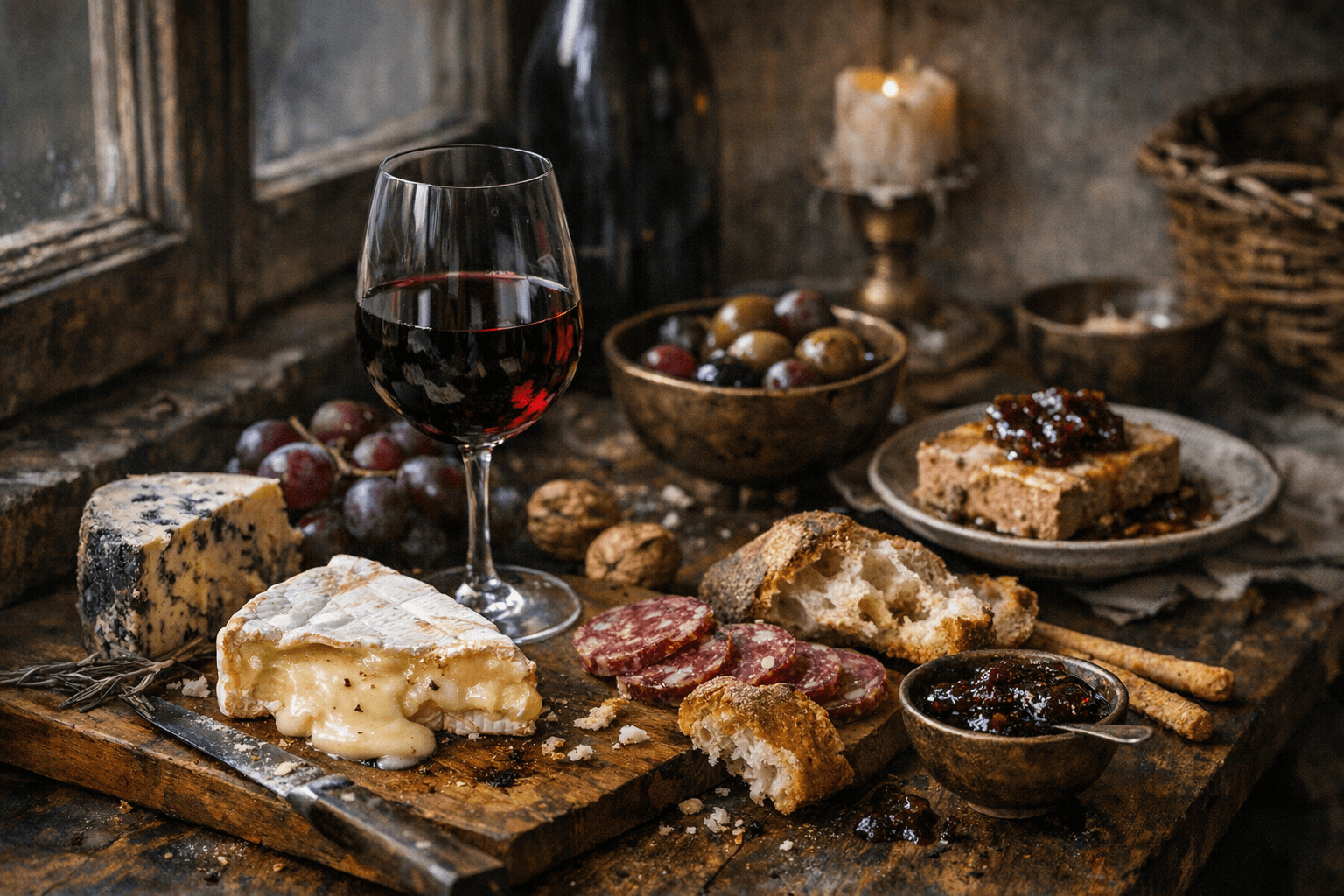
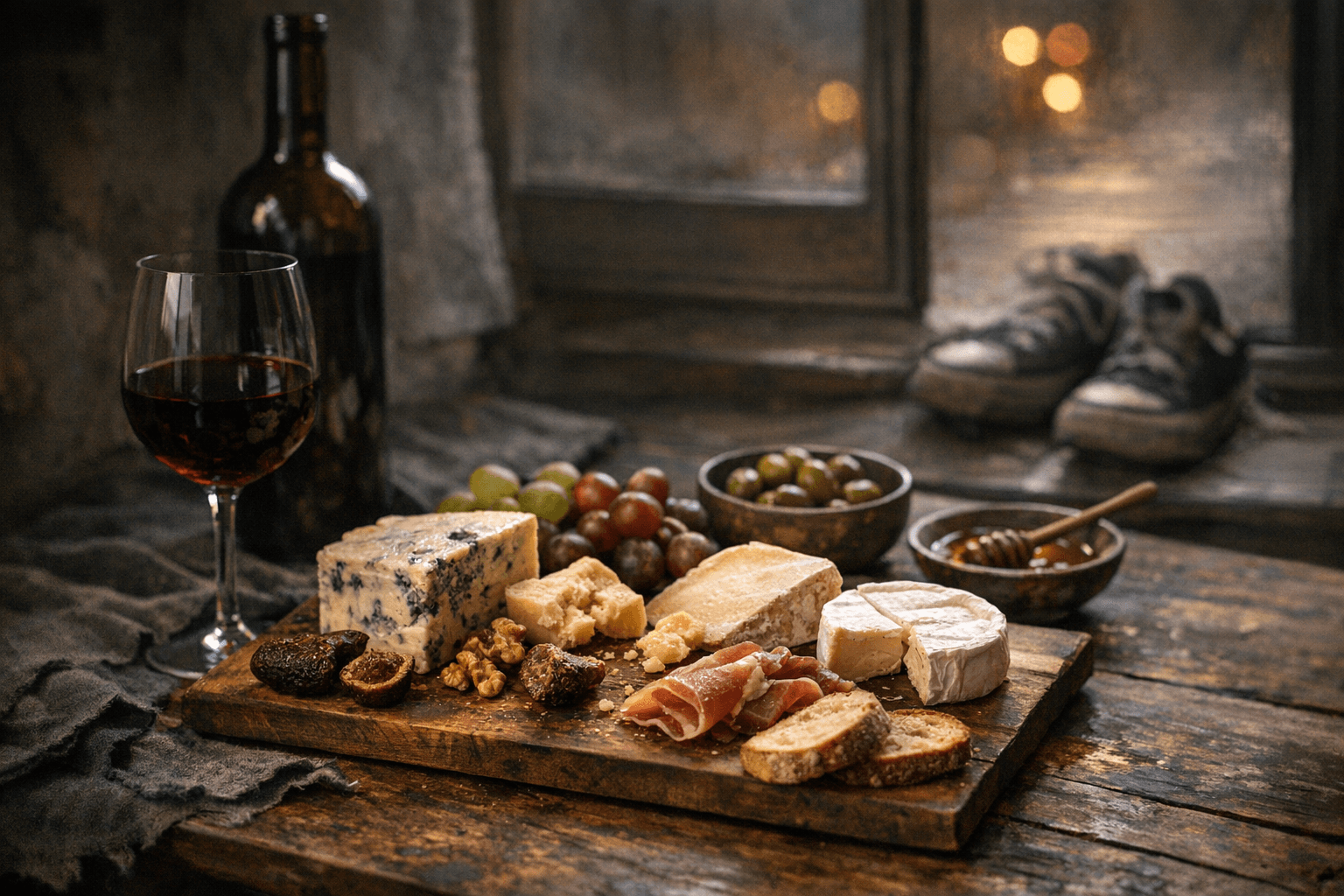
France is one of the world's largest cheese producers. It is also, alongside Italy, one of the world's largest wine producers. The French have been making Roquefort since at least the fifteenth century, Comté for longer than that, and Burgundy's Pinot Noir for so long that the monks who developed the vineyards are no longer available for comment. None of this food is clean by the standards of clean eating. Most of it involves mold, fermentation, animal fat, and in the case of a properly aged Époisses, a smell that would empty a yoga studio without anyone raising their voice.
And yet the populations that built these food traditions do not, as a cultural default, treat eating as a moral performance. They treat it as a practice — social, regional, pleasurable, and bounded by actual mealtimes. The obsessive purity logic that clean eating imported from American wellness culture is largely foreign to the French culinary tradition, which is worth noting not because France is a dietary utopia but because it offers a useful counterexample. You can care deeply about food quality without casting every meal as a test of personal virtue. A glass of Burgundy Pinot Noir and a wedge of aged Comté from the Jura are not a cheat. They are just dinner.
The point is not that clean eating is always harmful, or that everyone who avoids processed food is on a path toward a clinical diagnosis. The peer-reviewed literature is careful about that, and so should everyone else be. The point is that clean eating created a moral vocabulary around food — pure, dirty, clean, toxic — without a scientific framework to contain it, and that vocabulary is precisely what the orthorexia literature identifies as the raw material for disordered eating. A cheese board is not a moral failure. A glass of wine is not a relapse. A diet built on shame has a ceiling problem. One built on genuine pleasure, specific producers, and the occasional piece of very good Roquefort does not.
* This article contains opinions, satire, and possibly correct information about wine and cheese. It is not medical advice.