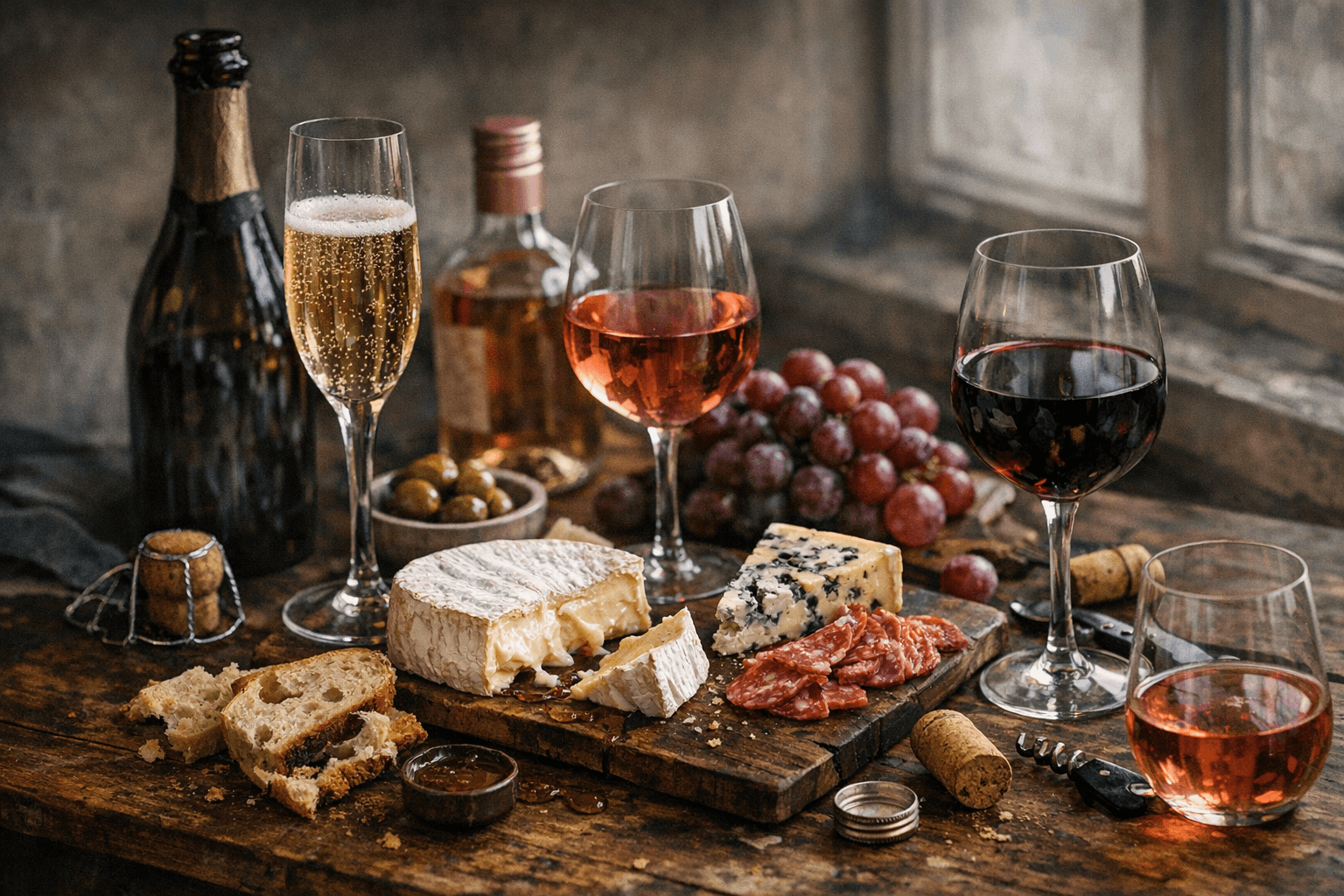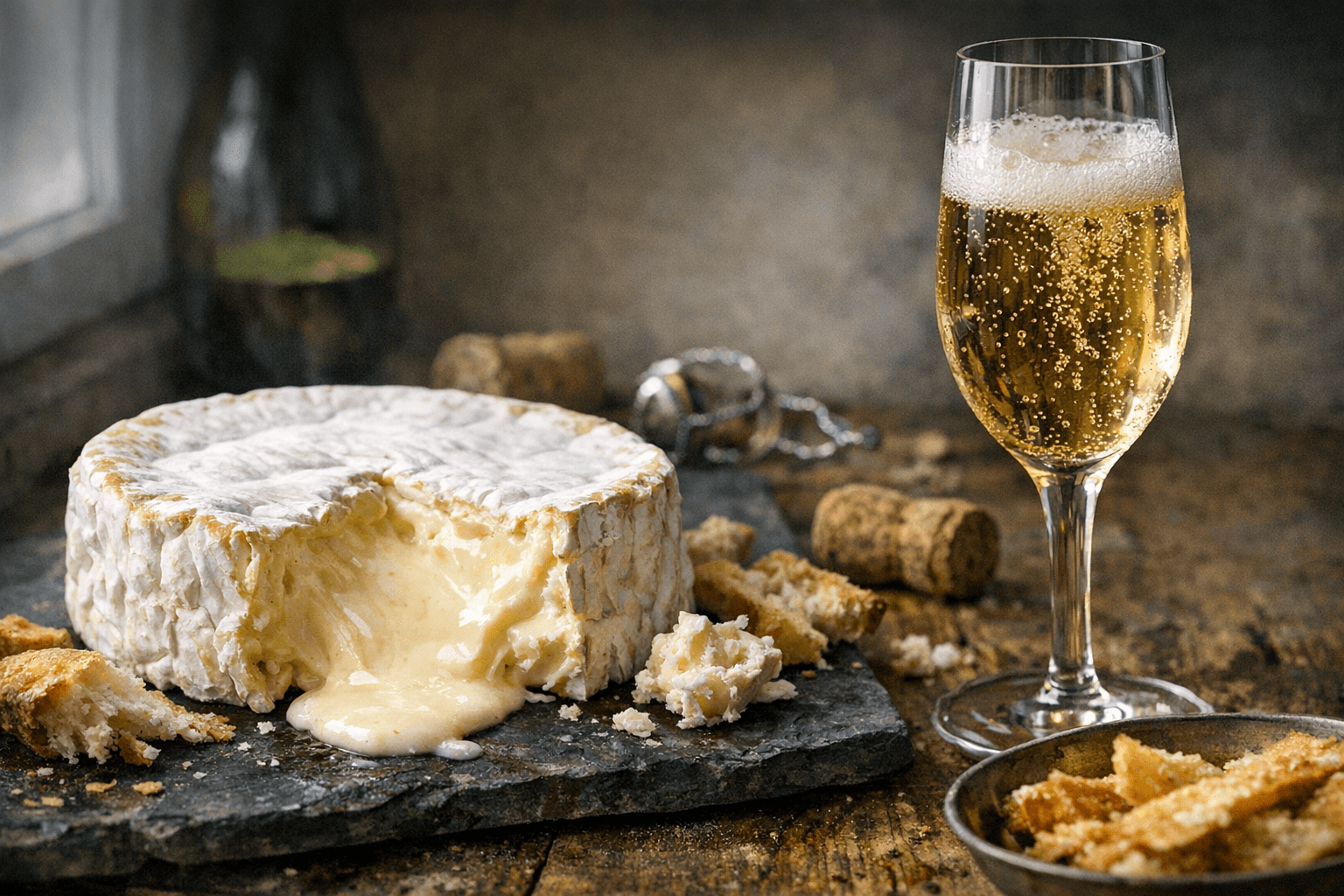
Brut Champagne and triple-crème Brie is not a pairing so much as a loophole — one engineered by acidity, carbonation, and an unseemly amount of butterfat working in perfect, clinically unverified harmony.
There is a category of food pairing that feels, upon first encounter, slightly too convenient — as if someone discovered a tax code exemption and decided to build a lifestyle around it. Brut Champagne with triple-crème Brie is that pairing. It is rich meeting sharp, indulgent meeting austere, a cheese with at least 75% fat in dry matter sitting across from a wine whose entire personality is built around acid and carbonation. On paper, this is not balance. It is a negotiated truce between two extremely confident parties, and the science of why it works so well is, frankly, more interesting than the Champagne house marketing copy that has been describing it for decades.
The Protocol: Butterfat and the Problem It Creates
Triple-crème cheeses — Brillat-Savarin being the canonical example, a bloomy-rind cheese named after history's most quotable gastronome — do not merely taste rich. They coat. The high butterfat content creates a dense, mouth-filling texture that lingers well past the point where the flavor has registered, which is either the point or the problem depending on your tolerance for commitment. Sensory science has documented that fat strongly shapes oral perception and texture in ways that outlast other taste signals. The cheese is, in effect, running a fairly aggressive occupation of your palate.
This is not a complaint. It is a setup. Because what the pairing requires — what the Protocol demands — is not a wine that matches that richness but one that actively works against it. Not in a hostile way. More in the way a good editor works against a writer who has used the word 'sumptuous' four times in a single paragraph.
Why Brut Champagne Pairs With Triple-Crème Brie: Bubble Physics as Palate Intervention
The mechanism here is not mystical. Carbonation activates what sensory researchers call trigeminal sensations — the fizzing, slight sharpness you feel when a sparkling wine with cheese makes contact with a fat-coated palate — which alters how freshness and acidity are perceived. The bubbles do not cut through fat in any metabolic sense. What they do is change the sensory experience of fat, resetting the mouth's texture receptors between bites in a way that still wine cannot. Research into carbonation's effect on mouthfeel confirms that effervescence increases perceived freshness and modifies flavor release. The field study here is your own mouth, and the results are reproducible.
Brut Champagne's acidity adds a second layer of contrast. Dry dosage — extra-brut or brut styles specifically — avoids the trap of competing sweetness, which would turn a textural conversation into a muddle. The acid lifts. The bubbles reset. The cheese, temporarily unburdened, reveals the mushroomy, cultured-cream complexity that was always there underneath the richness. This is the pairing's actual achievement: not that it makes the cheese taste different, but that it makes the cheese taste like itself. <a href="https://ragingwine.com/?utm_source=wineandcheesediet&utm_medium=referral&utm_campaign=champagne-brie-pairing">Explore the wine side on RagingWine</a>.
The Edible Tuxedo Effect, Clinically Described
What distinguishes this pairing from clever is that it works primarily through texture rather than flavor. Most people, when they describe why they enjoy it, reach for flavor language — creamy, bright, toasty, fresh — because flavor language is what we have been given. But the real seduction is happening at the level of mouthfeel. Mouthfeel is a major determinant of food preference, as documented in food science literature, and the champagne and brie pairing is essentially a masterclass in textural contrast: dense against effervescent, coating against cleansing, soft against sharp. Flavor is the story we tell afterward. Texture is what actually happened.
This is also why Brillat-Savarin works better here than a more pungent washed-rind cheese, which would introduce flavor competition the Champagne cannot win. Triple-crème cheeses are notably mild in their aromatics — rich and buttery without aggression — which means the wine's structural qualities get to do their work without interference. It is not a delicate pairing. It is a conspicuously engineered one. The fact that it appears effortless is, in a sense, the whole point.
The $72 billion wellness industry would prefer that you approach eating as a series of difficult trade-offs, each one requiring a new supplement, a proprietary app, or at minimum a subscription to something. The Champagne and triple-crème Brie pairing is a useful corrective to that worldview. Two ingredients, both of which have existed for centuries, locked into a relationship that sensory science can now describe with reasonable precision and that you can verify personally, in under four minutes, with no equipment. The Protocol, in this case, requires only a bottle of brut and a cheese knife. Side effects include satisfaction and the mild suspicion that the hard version of things is rarely as mandatory as advertised.
* This article contains opinions, satire, and possibly correct information about wine and cheese. It is not medical advice.