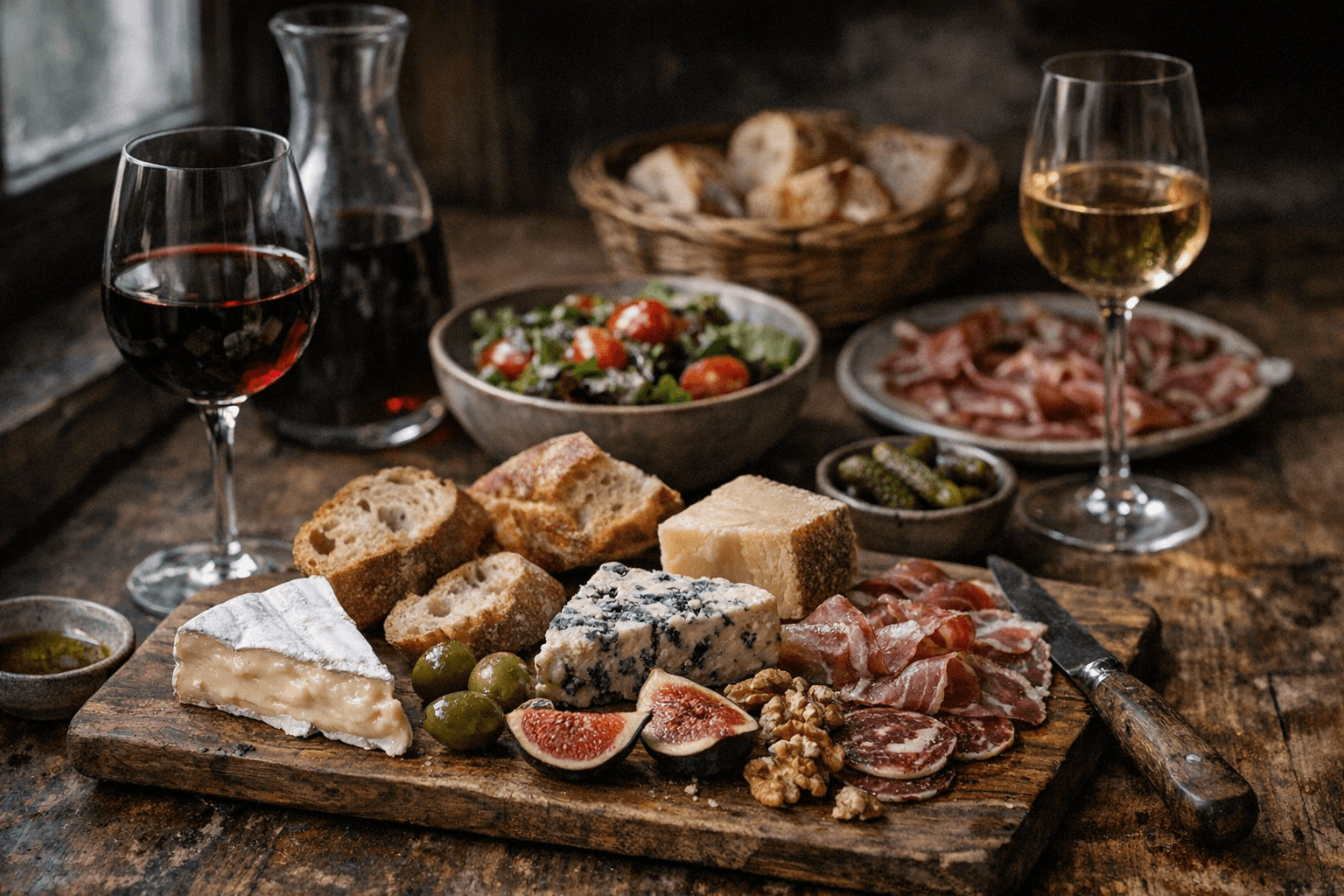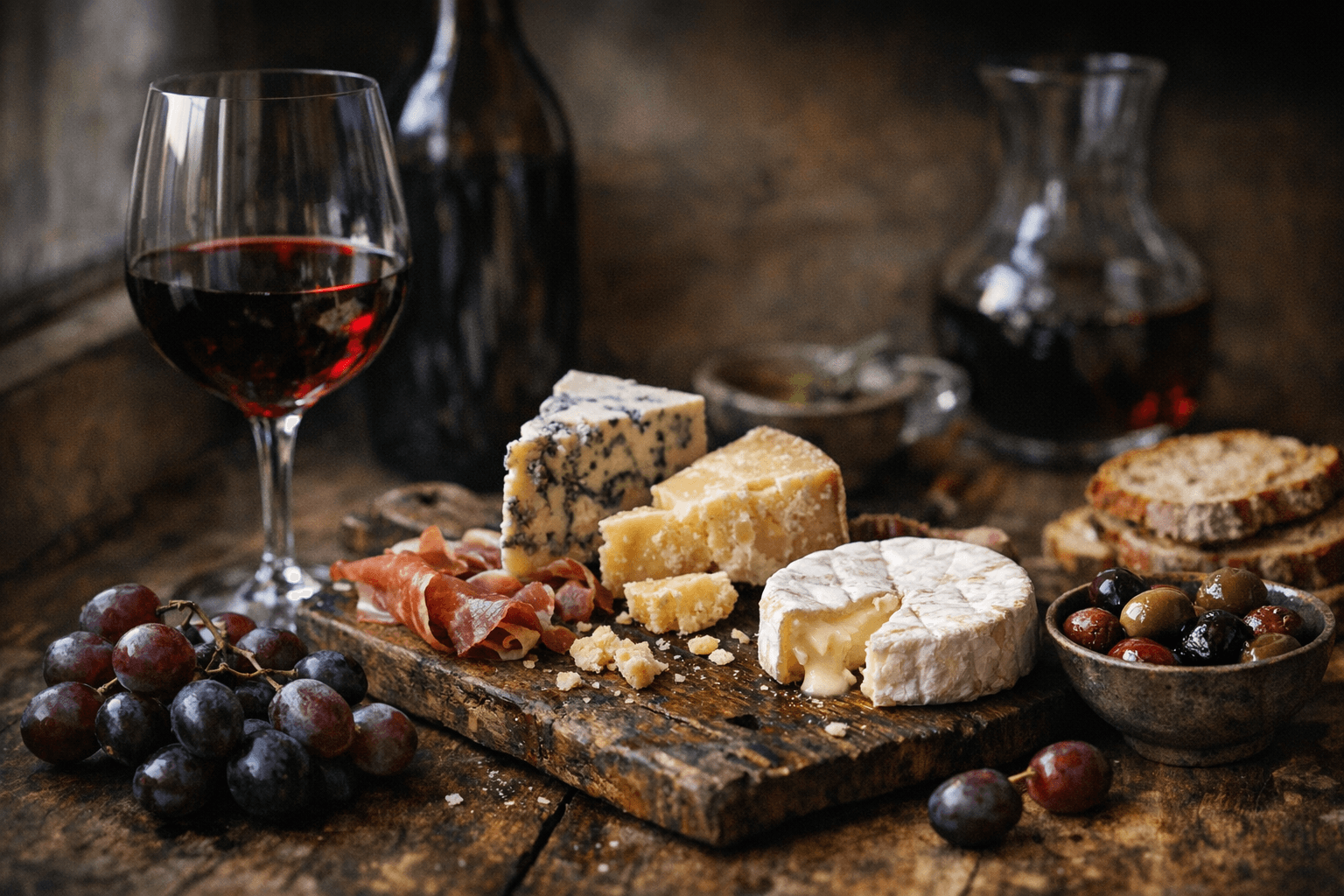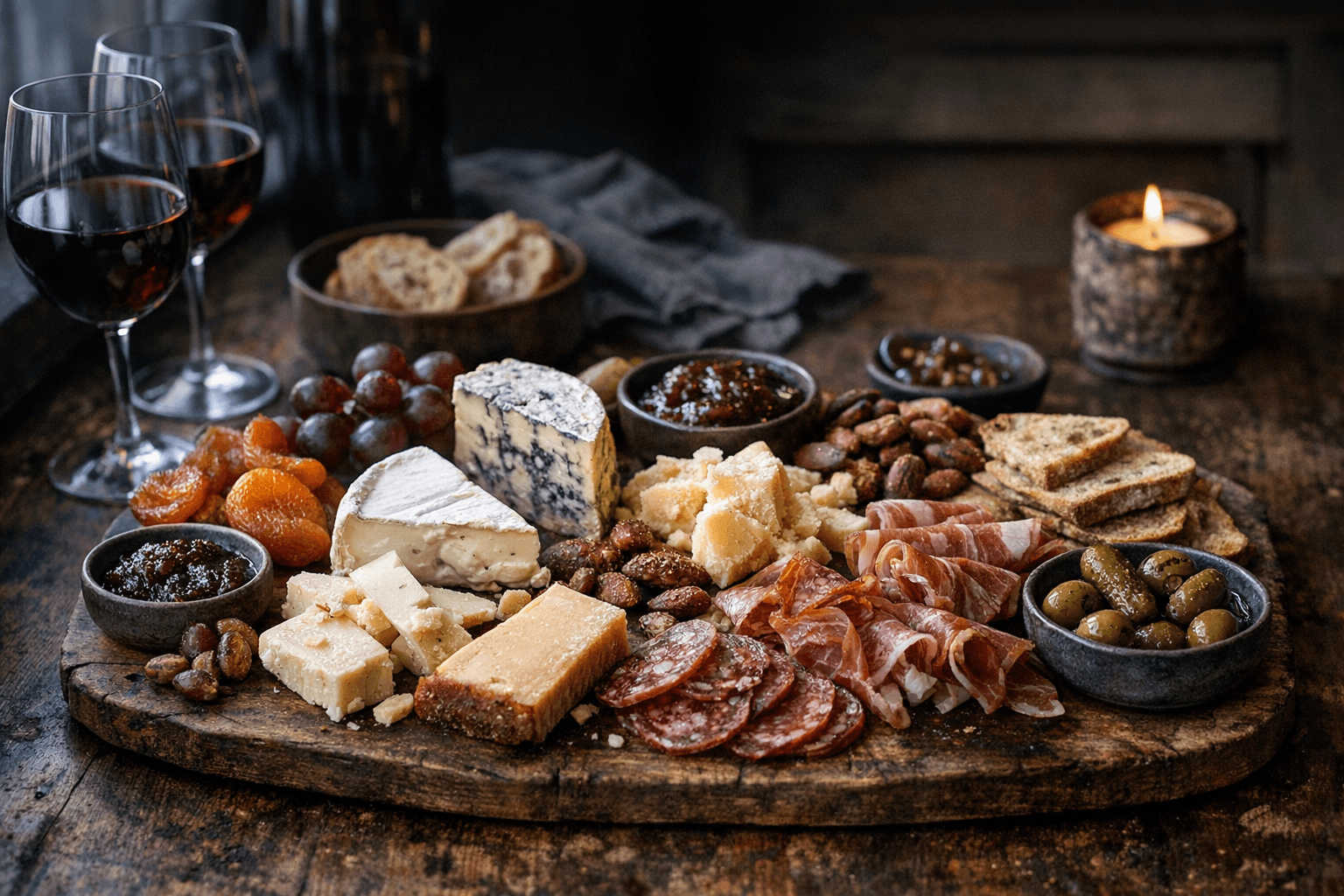
The data on shared meals in America is not great. Only 38% of younger working-class Americans grew up eating together daily. A well-assembled cheese board is not a policy solution, but it is something you can do this weekend.
There is a 2022 study published in the International Journal of Environmental Research and Public Health that looked at shared meal programs for older adults across multiple community sites. It found that participants showed improved health impact scores and better meal patterns. It did not find, in every case, a significant association with actual nutrient intake. Which means eating together made people feel better and eat more consistently, but the food itself was almost beside the point. The researchers at that point had not yet considered a Comté and a glass of Jura Chardonnay, but the implication holds. What we get from eating with other people is not primarily calories. It is something harder to measure and, apparently, harder to hold onto.
What the Data Actually Says, Which Is Not Nothing
The claim that Americans have cut social eating in half is not well-supported by any single clean dataset. What is supported, clearly and in multiple places, is that the erosion is real and it tracks along predictable lines. A 2023 Pew Research survey found that only 38% of younger Americans without a college education were raised in households that shared meals daily. That number climbs considerably among college-educated households, which tells you something about who gets to maintain the ritual and who does not. Communal eating, it turns out, has always been partially a class variable.
The pandemic years briefly scrambled this. Federal funding expanded school meal access dramatically, and participation rose. When that funding expired, school meal participation dropped 5 to 7 percent within a single academic year, according to reporting on USDA program data. Children did not suddenly stop wanting lunch. The infrastructure for eating together got defunded — quietly, in a budget line, with no particular announcement. This is a meaningful distinction. The decline of the shared meal in American life is not a story about cultural indifference. It is, in many places, a story about what happens when the structural support for eating together disappears and no one is assigned to notice.
What a Cheese Board Can and Cannot Do
A cheese board cannot fix food insecurity. Approximately 13.7% of U.S. households, or about 18.3 million, were food insecure in 2024, according to USDA Economic Research Service data. That includes roughly 14.1 million children. A slate of aged Manchego, some honeycomb, and a jar of Calabrian chilies is not a response to that number. It is important to say this directly so we can then say the next thing without being ridiculous.
The next thing is: for people who do have access, the invitation itself is the point — and a cheese board is one of the more effective low-effort ways to extend one. It requires no host timeline, no coordinated serving, no anxiety about whether the salmon is done. You put things on a board, you open something to drink, and people stand around it for two hours talking. A 2019 Oxford University study led by Robin Dunbar found that people who eat socially report higher levels of satisfaction with life and feel more embedded in their communities than those who eat alone, regardless of income level. The mechanism, Dunbar's team argued, is not the food. It is the synchrony of the shared act. The cheese board, structurally, is very good at producing synchrony with almost no preparation required.
The Specific Things Worth Putting on the Board
If we are treating the cheese board as a genuine social instrument and not just an appetizer, then the selection matters in the same way that a playlist matters. You want range. A young Manchego from Castilla-La Mancha, produced by Dehesa de Los Llanos, gives you something approachable and slightly grassy that works for people who are still figuring out whether they like cheese. An Époisses de Bourgogne, washed-rind and produced in Burgundy under AOC rules by Berthaut-Gaugry, gives you the person at the party who says they do not like strong cheese immediately reconsidering their entire position. A good aged Cheddar, something like a 24-month Cabot Clothbound finished at the Cellars at Jasper Hill in Greensboro, Vermont, anchors the board with something crystalline and familiar.
For wine, a Pinot Noir from the Willamette Valley threads the needle. Domaine Drouhin Oregon's Dundee Hills Pinot Noir has enough acid to cut through the fat of the Époisses without overwhelming the Manchego. If you are serving the board before a meal, a sparkling Crémant de Bourgogne from Louis Bouillot gives people something to hold while they figure out where they want to stand. The goal is that no one leaves the board. You have succeeded when someone says, forty minutes in, that they should probably go sit down, and then does not.
The research on shared meals is consistent enough that its conclusions are not really in dispute: eating with other people is associated with better reported wellbeing, stronger social ties, and more regular eating patterns. The reasons Americans are eating together less are structural and economic and not easily solved by anything available at a cheese shop. But the cheese shop is still open. The board takes twenty minutes to assemble. And the study from the International Journal of Environmental Research and Public Health, published through the National Institutes of Health at pmc.ncbi.nlm.nih.gov/articles/PMC9795837, found that what shared meals improve most reliably is not nutrition. It is the sense that someone thought to put something out and invite you over. That part, at least, remains within reach.
* This article contains opinions, satire, and possibly correct information about wine and cheese. It is not medical advice.